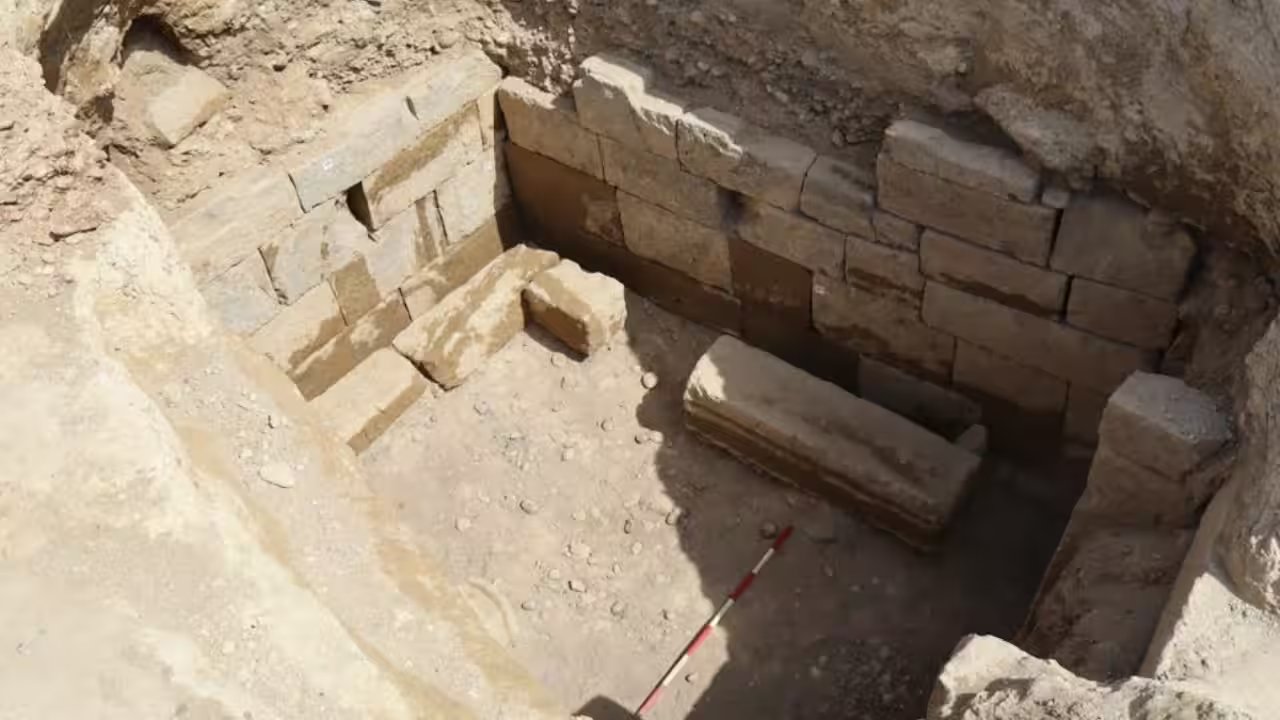
In 2026, the Return to Vulci team unearthed the Tomb of the Stone Chamber at the Polledrara necropolis, a mound first mapped by French archaeologist Stéphane Gsell in 1889.
The tomb comprises three chambers whose walls are built from large nenfro blocks set into the ancient Fiora River bed, suggesting a monumental scale. Its dimensions may exceed earlier estimates, a fact the team aims to clarify in ongoing work.
Inside, intact assemblages of weapons, chariot fittings, gold and bronze sheets, bone and ivory artefacts, Corinthian pottery, bucchero wares, and a bronze tripod with an alabaster lamp were uncovered; a banquet set made of Polledrara Ware—dinoi, cups, and a wine‑grater—underscores the elite nature of the burial.
Christian Mazet, scientific director of the project, called the burial the "tomb of the very highest rank," a view echoed by the Italian Superintendency, which said the find deepens understanding of Vulci’s aristocracy during its late‑seventh‑century boom.
The team will continue excavations to establish the tumulus’s full dimensions and plan to publish a comprehensive report in early 2027, potentially leading to a new exhibit at the National Museum of Antiquities.