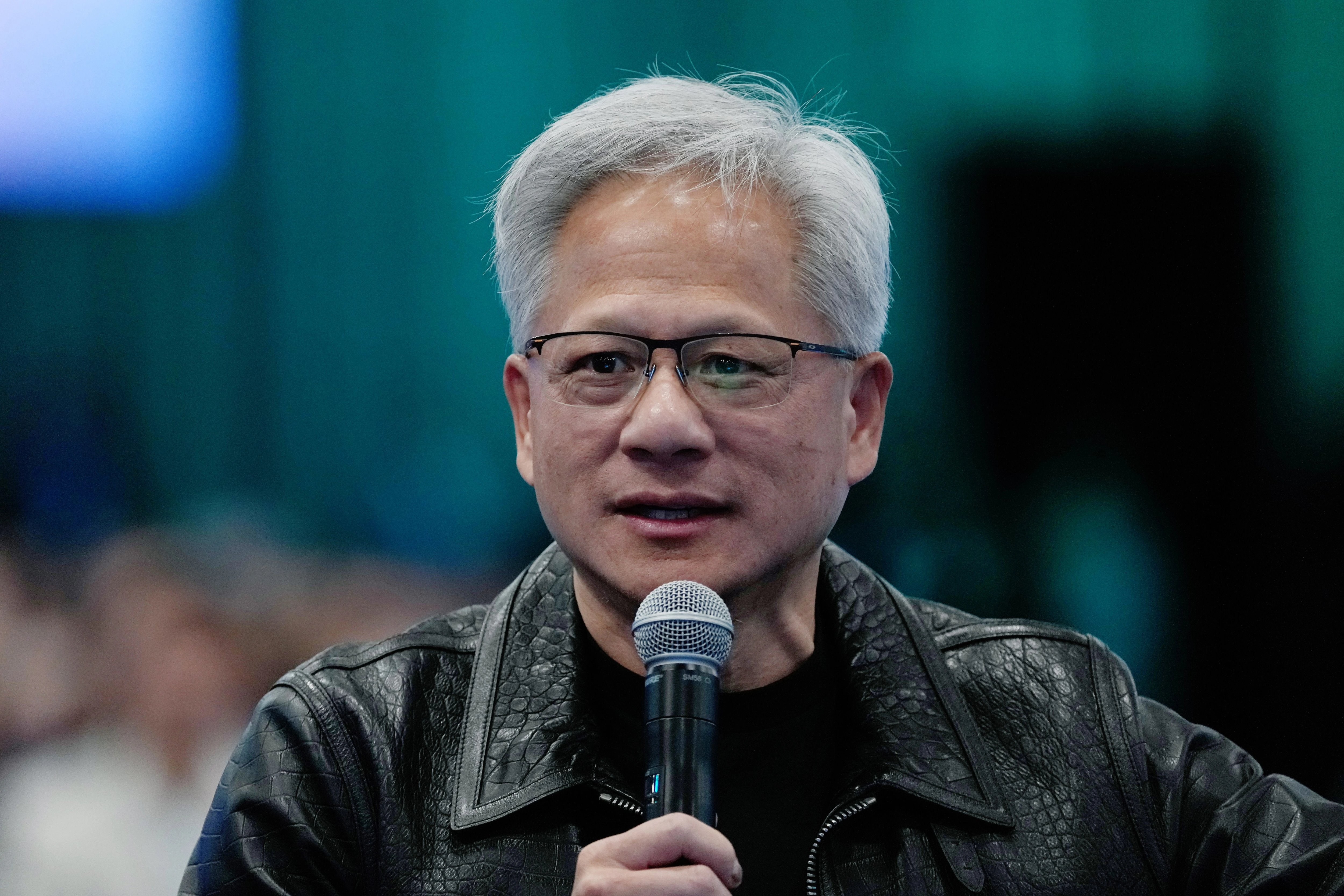
SANTA CLARA — Jensen Huang stepped down as chief executive of Nvidia on Thursday, November 12, 2026, abruptly ending his 33-year leadership of the semiconductor giant as newly resurfaced recordings laid bare his aggressive lobbying to sell advanced artificial intelligence hardware to China.
The departure followed mounting pressure over Huang's personal conduct and undisclosed romantic relationships, including one involving an alleged Chinese state asset. Yet the scandal rapidly collided with national security debates over Nvidia's core business. Archived audio clips from an appearance on the Dwarkesh Patel podcast gained renewed traction online, showcasing Huang dismissing national security warnings against exporting top-tier processors to Washington's fiercest geopolitical adversary.
He pulled no punches.
"Why is it that we don't come up with a regulation that's more balanced so that NVIDIA can win around the world instead of giving up the world?" Huang asked during the interview. "Why would you want the United States to give up the world?"
Huang's private lobbying previously prompted the Trump administration to clear exports of Nvidia's H-200 processors to Beijing, dismantling export barriers established during late 2022 under the Biden administration to blunt Chinese technological expansion. When Patel pressed Huang on whether selling cutting-edge silicon to Beijing resembled handing atomic weapons to North Korea, the former chief executive dismissed the parallel outright.
He called it a "lousy" analogy that made no practical sense.
The premise that even if we competed in China, that we're going to lose that market anyways. You're not talking to somebody who woke up a loser. That loser attitude, that loser premise makes no sense to me.
Jensen Huang, Former Nvidia Chief Executive
Patel pressed Huang on a hypothetical scenario where Chinese laboratories, equipped with American compute, match frontier models like Claude Mythos to challenge Western commercial and military superiority. Huang brushed aside the anxiety, stating that Mythos required "fairly mundane capacity, and a fairly mundane amount of it," delivered by an exceptional team.
"The amount of capacity and the type of compute it was trained on is abundantly available in China," Huang told Patel. "So you just have to first realise that chips exist in China. Victimising them, turning them into an enemy, likely isn't the best answer. They are an adversary. We want the United States to win. But I think having a dialogue and having research dialogue is probably the safest thing to do."
| Executive & Transition Parameter | Official Status |
|---|---|
| Outgoing Executive | Jensen Huang (Co-founder & CEO, 1993–2026) |
| Interim Chief Executive | Colette Kress (Nvidia Chief Financial Officer) |
| Founding Cohort | Jensen Huang, Chris Malachowsky, Curtis Priem |
| Core Hardware in Contention | Nvidia H-200 Artificial Intelligence Accelerators |
| Regulatory Precedent Reversed | Biden Administration late-2022 Export Controls |
Huang founded Nvidia in 1993 alongside Chris Malachowsky and Curtis Priem, seeking to bring 3D graphics processing to gaming and PC multimedia. Over three decades, he transformed the Santa Clara firm from an obscure graphics outfit into the primary hardware architect of the global artificial intelligence boom.
His departure unraveled with staggering speed.
Scrutiny centered on Huang's personal ties, notably allegations involving Kimberly Powell, Nvidia's vice president of health care, and an affair with a Chinese tech entrepreneur flagged as a foreign asset. Additional disclosures indicated a third relationship with an unnamed Nvidia staff member. Facing an untenable governance crisis, Huang relinquished his post.
The Strategic Context: The revelations link corporate governance failures directly to high-stakes semiconductor policy. Washington national security hawks have long argued that unrestricted chip sales surrender Western technical advantages, while Huang consistently maintained that locking American firms out of the Chinese market merely accelerates Beijing's self-reliance.
Nvidia's board of directors installed Chief Financial Officer Colette Kress as interim chief executive. The board is screening internal division leaders alongside external industry executives, with formal succession proceedings underway to stabilize the company's regulatory standing in Washington and Wall Street.