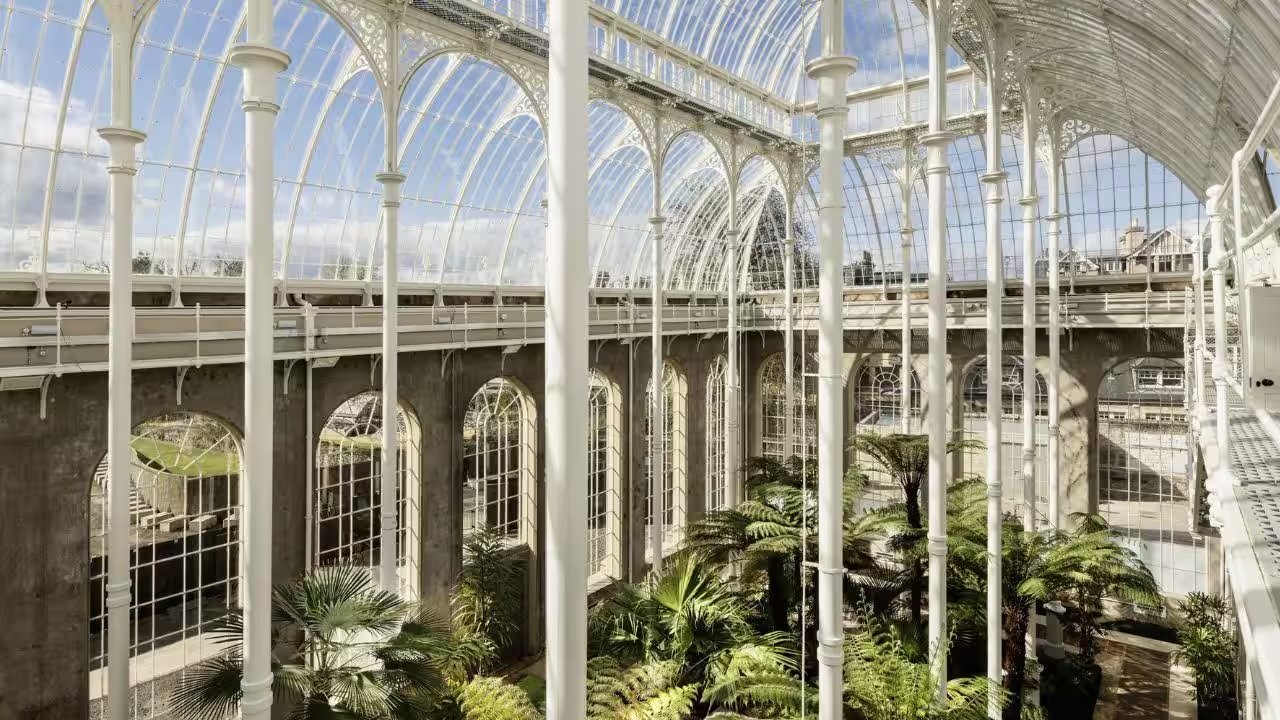
The Royal Botanic Garden Edinburgh officially threw open the doors to its Octagonal and Victorian Palm Houses on May 28, 2026, ending a five-year closure. The £23.5 million overhaul, funded largely by the Scottish Government and private donors, was a massive logistical feat. It required the precise removal and replacement of every single one of the 5,750 original glass panes across both structures.
But it wasn't just about the glass. Contractors repaired 600 square metres of crumbling Georgian and Victorian ironwork. They also restored 500 square metres of sandstone, hauling in replacement stones weighing up to 250 kilograms each. The new glass templates are designed to withstand the increasingly erratic weather patterns of the current climate. This structural reinforcement ensures the Victorian building—still the tallest traditional stone-built Palm House in the world—can survive the next century of storms.
Inside, the living collection is back. Before construction began in 2021, horticulturists carefully relocated 800 valuable plants to temporary holding areas. Now, nearly 600 of those specimens have returned to their permanent homes. Among them is a stone gate palm (Trachycarpus princeps) standing over eight metres tall. Botanists believe it is the largest specimen of its kind grown outside China. There is also a ten-year-old sabal palm, grown from a seed harvested from a 200-year-old ancestor that had to be cut down in 2021.
Gill Martin MSP, the Scottish Cabinet Secretary for Climate Action and Rural Affairs, attended the final planting ceremony to mark the occasion. She placed the last specimen, a Chilean lion plant grown from wild sources, into the soil. "The restoration of these heritage glasshouses helps to safeguard the globally important plant collections here for the future," Martin said. The garden now houses 13,500 species from 152 countries, including the critically endangered Catkin yew and the ultra-rare Three Kings vine from New Zealand.
Visitors must now book timed tickets to enter the restored glasshouses. The reopening is a key milestone in the broader £58 million Edinburgh Biomes development programme. The next stage of that project will focus on upgrading the site’s research glasshouses, ensuring the garden remains a global hub for plant science and conservation.