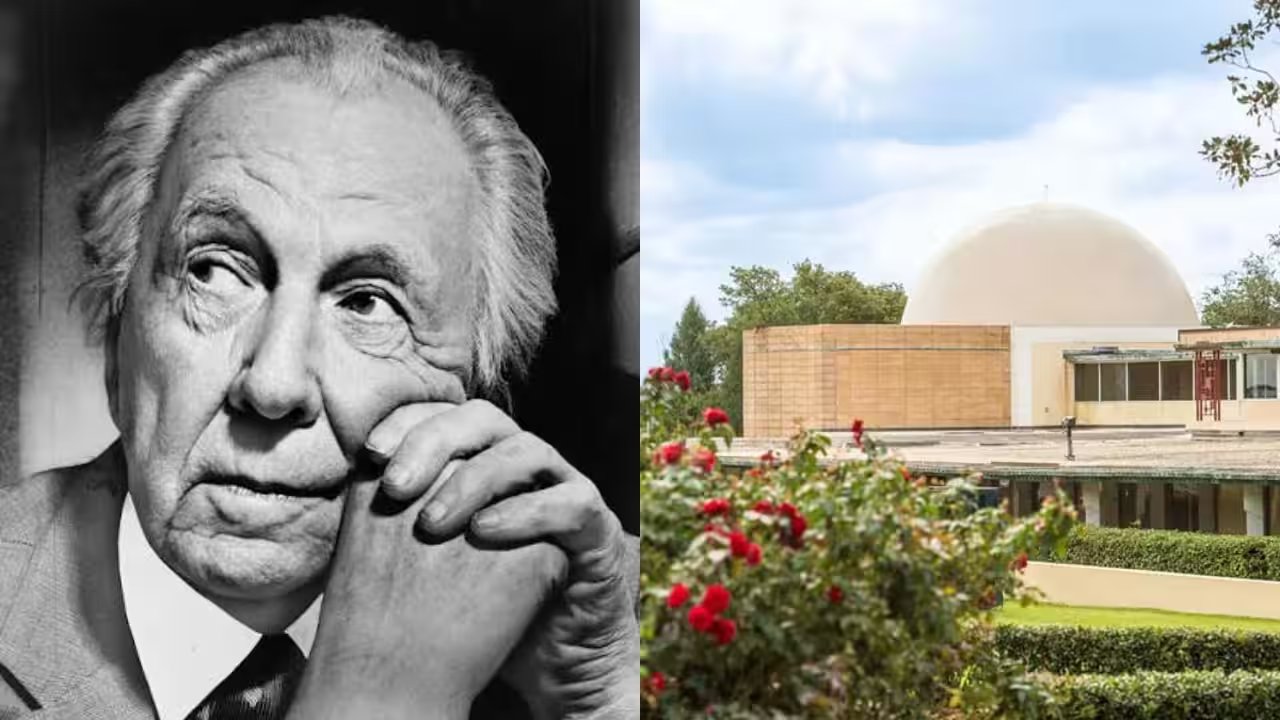
The stars are back. After sitting dark and dormant since 2004, the planetarium inside the Polk Science Building at Florida Southern College in Lakeland, Florida, has reopened its doors. This is no ordinary dome; it is the only planetarium ever built by Frank Lloyd Wright, a structure that sat silent for two decades while engineers and historians fought to save it. The reopening marks the final phase of a massive, multi-source restoration effort that blended state support with federal grants.
Wright spent years obsessing over this specific design before finalizing it for the science building, constructed between 1954 and 1958. The space first lit up on April 7, 1960. For half a century, it served as the beating heart of the university’s astronomy program, hosting everything from serious academic lectures to curious school groups. When the original projection gear died in 2004, the room didn’t fall into total ruin, but it certainly lost its soul. The building remained a static museum piece rather than a living classroom.
The revival wasn’t cheap. Exterior repairs relied on State of Florida funds and private donors, while the interior overhaul depended on a federal Save America’s Treasures grant. The goal was tricky: install 21st-century technology without erasing the 1950s architectural integrity. The team installed a new COSM projection system and a Bowen sound setup. The result is a hybrid. It feels like Wright’s original vision, but it can now render exoplanets and deep-space nebulae with a clarity the 1960s hardware never dreamed of.
Tickets are $20 for individuals, or $15 per person for families and groups of four. Shows run Tuesdays, Thursdays, Saturdays, and Sundays. Each session lasts 20 to 32 minutes, though the full visitor experience—including a guided tour of the architectural history—takes 60 to 90 minutes. The curriculum rotates through six distinct programs, covering Mars exploration, the solar system, and the search for extraterrestrial life. It’s a rare chance to see Wright’s work not just as a static object, but as a functional machine for education.
Florida Southern College now holds the largest single-site collection of Wright architecture in the world, with 13 structures on campus. This planetarium is the wildest card in that hand. The college hopes the reopening will drive traffic from local schools and community organizations, fulfilling Wright’s original intent that these spaces serve the public, not just the faculty. The first public shows are scheduled to begin next week, with a full calendar of dates available on the university’s website.