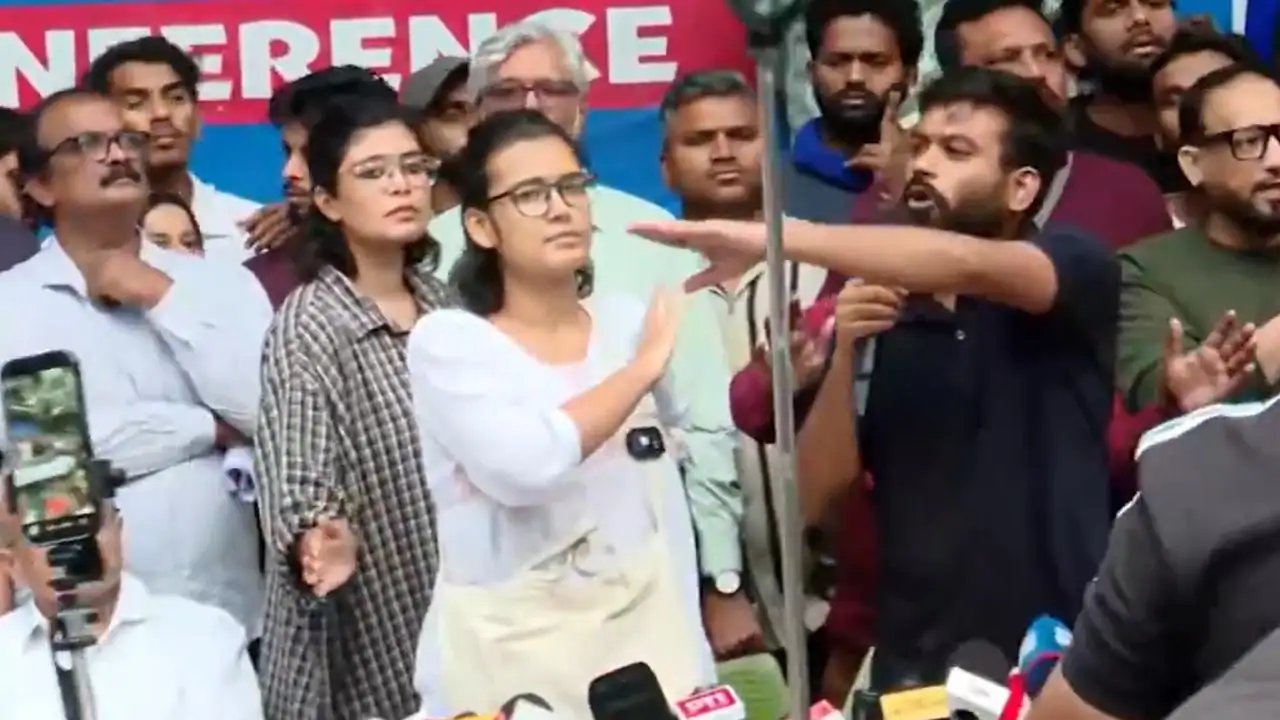
Delhi Police released All India Students' Association (AISA) national president Neha Bora on Saturday after completing formal procedures under Section 65 of the Delhi Police Act, providing a stark contrast to the fate of her counterpart in the movement. While Bora walked free, Cockroach Janta Party (CJP) founder Abhijeet Dipke remains in custody under the preventive provisions of the Bharatiya Nagarik Suraksha Sanhita (BNSS). Police initiated action under Sections 126 and 170 of the BNSS against Dipke and confirmed he will be produced before the Special Executive Magistrate (SEM) court. This divergent treatment emerged after hours of public outcry over the whereabouts of both activists, who were detained ahead of the 'Lehra Do Tiranga' protest.
The detention sites were distinct. Police sources indicated Dipke was picked up from Jhandewalan while en route to Connaught Place, whereas Bora was held at Mandi House. The crackdown was extensive, with police reporting the detention of approximately 150 individuals to maintain law and order. Security forces cordoned off Central Park in Connaught Place, deploying Rapid Action Force personnel inside the area and stationing additional units in the surrounding zones to manage traffic and crowd control.
Before the official statement, both organizations alleged systemic harassment. AISA claimed Bora was shifted across multiple locations in Delhi for five hours and denied access to lawyers who arrived at RK Puram police station around midnight. The organization further alleged police refused to provide Bora with medication, despite her known medical condition. "The police is not allowing lawyers to meet Neha at RK Puram. They are not allowing medication to be given too," AISA stated on X, questioning the basis of holding a student leader overnight.
CJP faced similar allegations regarding Dipke, claiming the police took him to an undisclosed location and severed all contact. CJP leader Rohan Deshpande sent a letter to the Mandir Marg station house officer, demanding immediate disclosure of Dipke's location and the specific legal grounds for his preventive detention. Deshpande criticized the handling, asking, "Abhijeet was just walking out of his home with a Tiranga in his hand! How can walking with a tiranga be a crime?" The party asserted that these actions would not deter public participation in the protests.
The immediate next step is Dipke's production before the SEM court, where the validity of his preventive detention under the BNSS will be scrutinized. Meanwhile, the release of Bora serves as a tactical move by the Delhi Police to defuse potential human rights violations while maintaining a hardline stance against the broader anti-CAA/anti-NRC movement. The legal challenge to Dipke's detention will likely set a precedent for how authorities handle preventive measures against student activists in the upcoming weeks.