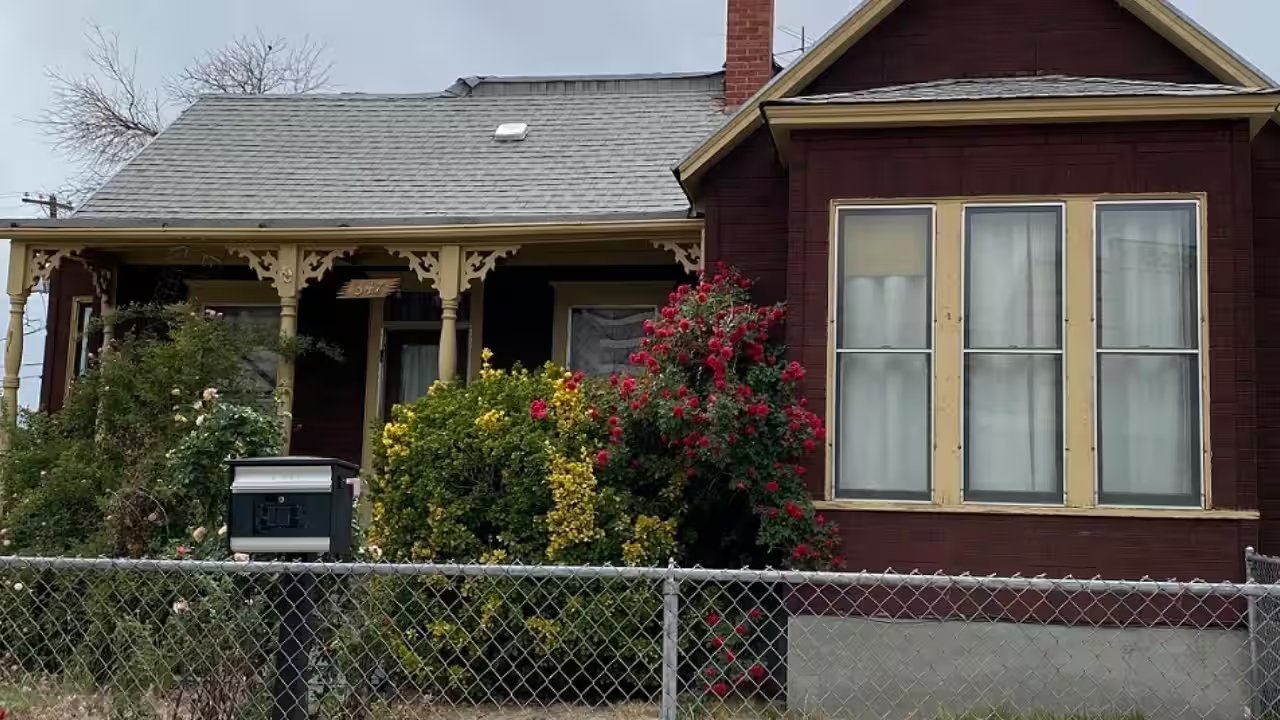
Reno’s architectural heritage shifted permanently on a July 10, 2025 morning. Crews dismantled the Benham-Belz House—believed to be the oldest surviving structure in the city—into two massive sections and loaded them onto trailers. The 150-year-old home left Lot 8 of Block E on the original townsite, ending a residency that spanned from its construction in 1868 to the present day. The move wasn’t a demolition. It was a rescue.
The transaction itself was a legal oddity. Jacobs Entertainment, the developer behind the Reno Neon Line District, acquired the property for $1.2 million in early 2024. CEO Jeff Jacobs publicly committed to selling it for a single dollar to any buyer willing to relocate and preserve it. After a vetting process, Jacobs selected Logan and Angelina Needham, a Reno couple. The condition was absolute: the house had to move.
The structure carries the weight of the city’s founding. I.T. Benham, a stonemason and one of Reno’s earliest builders, purchased the lot for $200 from Charles Crocker of the Central Pacific Railroad in June 1868. Benham later built the Central School, which became the city’s first high school. The house changed hands in 1883 when barber John Belz bought it. Belz’s business was reportedly the first in Reno to install electric lights. His daughter, Florence, lived in the home until her death in 1981 at age 87.
The physical transfer was complex. The house arrived on its new private site near Mayberry Drive and McCarran Boulevard, miles from its original West Street address. Photos from the move showed the two halves resting on trailers and the empty lot behind them. For the Needhams, the work is just beginning. As a custom steel fabricator, Logan Needham faces the task of bringing the 19th-century frame up to modern code. That means replacing lead pipes, installing grounded outlets, and addressing exterior appearance.
The next phase is construction. The Needhams must complete the code upgrades and stabilize the structure at its new location. The Historic Reno Preservation Society has documented the move, but the house’s future now rests in private hands rather than public view. The 1868 wood frame survives, but the neighborhood it defined for a century and a half is now just a memory on a map.