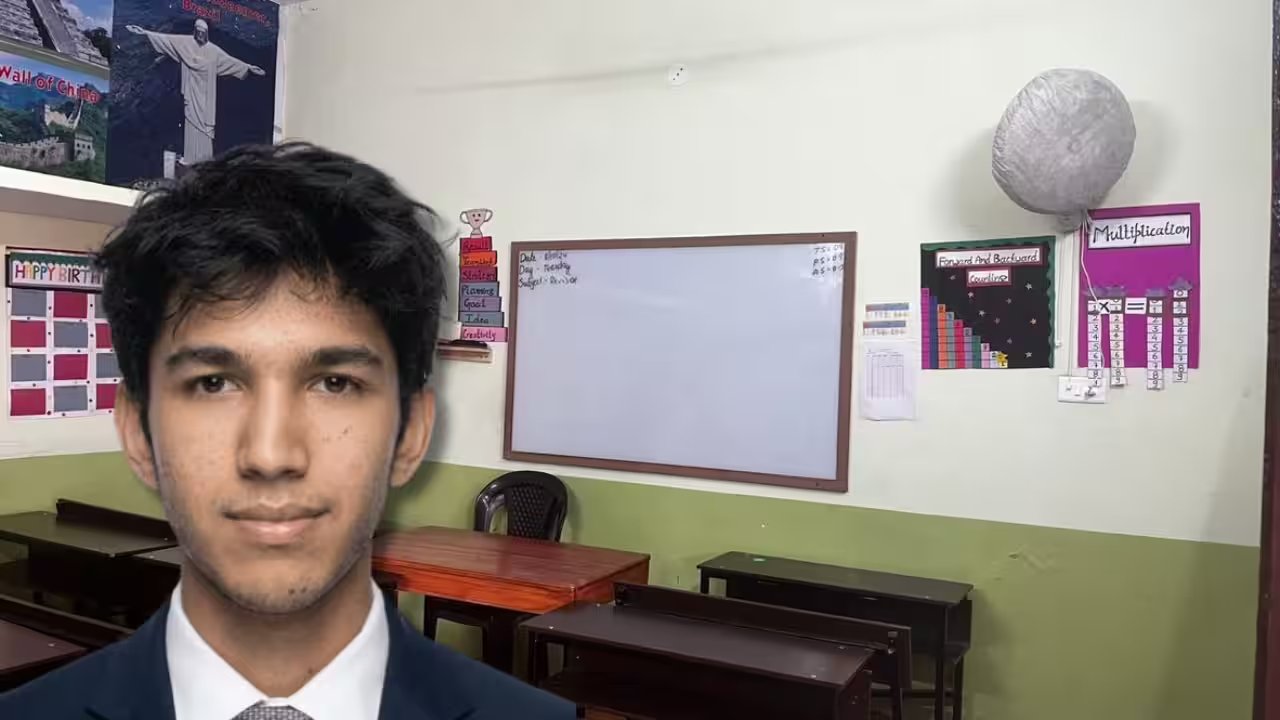
Clean air should not cost a fortune. Delhi teenager Krish Aggarwal proved that reality by turning basic ceiling and table fans into functional air purifiers using a custom ₹140 filter. That grassroots engineering feat earned Aggarwal a place on the prestigious 2026 Diana Award Roll of Honour, recognizing youth-driven humanitarian solutions. Together with co-founder Samarth Meattle, Aggarwal launched Project Vayu to shield children trapped in unventilated, smog-choked classrooms across the capital. To date, the low-cost initiative has distributed free filters to under-resourced schools, safeguarding more than 10,000 students from toxic particulate spikes.
The challenge was immediate and structural. Winter across New Delhi regularly brings hazardous spikes in airborne PM2.5, driving microscopic soot straight through unsealed classroom windows. Commercial purifiers carry steep price tags that shut out public schools entirely. Looking at rows of conventional classroom fans, the founders posed a blunt question: why not convert the hardware schools already own? Savya Meattle helped shape the project's early trajectory before departing for Stanford University, setting up an open path toward affordable indoor filtration.
Simplicity drives the build. Aggarwal partnered directly with Massachusetts-based filtration manufacturer Hollingsworth & Vose, securing joint development work and 700 metres of specialized electret filter media. Instead of buying a noisy standalone motor, the team stitched electrostatically charged fibres directly into an elastic border that snaps over an ordinary fan grille in under a minute. No screwdrivers. No glue. When power flips on, air pressure inflates the fabric into an active balloon-like pouch, expanding the filtration boundary from an ordinary 1.4 square feet to more than five square feet of active surface.
The numbers held up under scrutiny. During closed-room trials spanning 168 square feet, baseline PM2.5 levels registered a dangerous 158 micrograms per cubic metre. Within 60 minutes of fan operation, particulate counts plunged to 11 micrograms per cubic metre—a verified reduction exceeding 90 percent.
| Project Vayu Metric | Recorded Value | Details |
|---|---|---|
| Unit Production Cost | ₹140 | Includes electret media, elastic border, stitching, transport |
| Effective Surface Area | 5+ sq ft | Expands from 1.4 sq ft standard fan face when inflated |
| PM2.5 Concentration Drop | 158 to 11 µg/m³ | 90%+ drop in 60 minutes inside 168 sq ft room |
| Pilot Reach | 295 classrooms | 602 active fan filters installed free of cost |
Cost discipline governed every decision. Producing each filter requires roughly ₹140, covering the raw media, stitching, and regional delivery. Yet schools pay nothing. Where a classroom lacks a basic fan, Project Vayu donates the appliance alongside the filtration kit. After deploying 602 units across 295 rooms during initial pilot runs, the team is now moving supplies to outfit 45 additional schools across New Delhi.
| Student Footprint |
| 10,000+ children |
| Reached across underprivileged Delhi campuses |