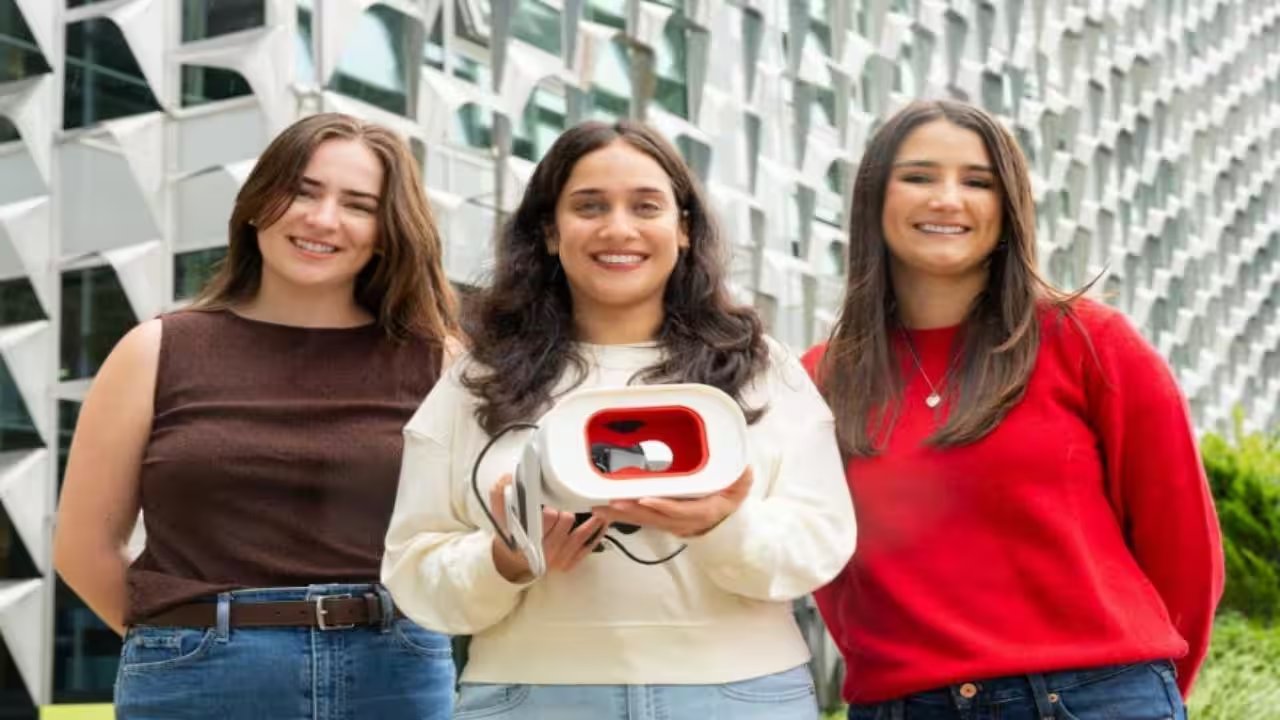
Sideline concussion checks in contact sports still lean on a crude, century-old ritual: follow the trainer's waving finger. That guesswork may soon end. On November 4, 2026, Sir James Dyson selected 'Rumble Rims'—a low-cost diagnostic headset built by Indian-origin Harvard student Radhika Saran and teammates Cleo Pontone and Sophia DeVito—as a global winner of the 2026 James Dyson Award. The Harvard engineering trio picked up £30,000 in seed capital to refine a device assembled for under $350.
Diagnosing a traumatic brain injury remains notoriously difficult during the heat of competition. An athlete absorbs a crushing hit in rugby or football, steps off the pitch, and insists they feel fine. Yet neurological trauma can take up to 72 hours to reveal its full footprint. With clock pressure mounting and basic medical gear on hand, coaches make split-second clearance calls in the dark. Miscalculations risk catastrophic second-impact syndrome.
The Harvard engineers tackled the problem through the eyes. Neurological disruption scrambles the brain's ocular pathways, impairing how pupils track moving targets. Rumble Rims deploys miniature infrared cameras mounted directly onto a headset frame. An athlete slips on the gear and tracks a moving visual target displayed on an iPad screen held at arm's length. Over a two- to three-minute screening, the infrared sensors capture ocular focus and micro-movements, piping raw telemetry directly into a mobile dashboard for immediate analysis.
Cost stood as the team's central hurdle. Commercial eye-tracking hardware capable of clinical-grade precision routinely runs upwards of $25,000—a price tag that shuts out high schools, youth leagues, and rural athletic clubs. The Harvard crew spent months testing configurations across helmets, mouthguards, and chin rests before locking down a standalone headset design that slashed production costs below $350.
Saran, Pontone, and DeVito will deploy their £30,000 windfall to build a field-ready second prototype. The team's immediate pipeline centers on tightening eye-tracking calibration algorithms and beginning formal trials alongside athletic trainers, sports physicians, and clinical advisers.