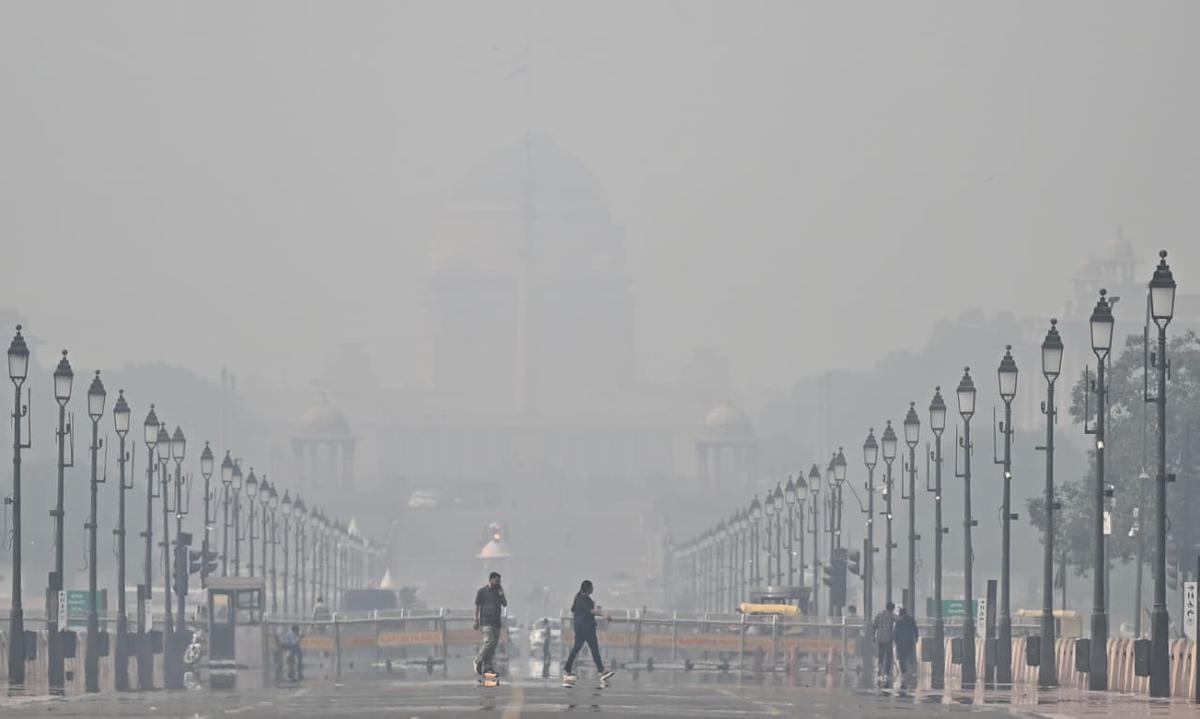
Fresh surface winds swept through the National Capital Region on Tuesday, granting Delhi a temporary breather from suffocating post-Diwali smog. The city’s benchmark Air Quality Index settled at 299 on November 10, crossing out of the 'very poor' zone and into the upper boundary of the 'poor' category, according to official Central Pollution Control Board data. The shift marks a visible dip from Monday’s choking citywide average of 376. Yet medical reality dictates caution. The air remains unsafe.
A numerical drop on the CPCB index provides environmental relief, but for human lungs, an AQI of 299 offers little genuine comfort. Official standards classify readings between 201 and 300 as 'poor', an atmospheric bracket known to trigger acute breathing discomfort upon prolonged exposure—particularly for individuals managing asthma, bronchitis, or cardiovascular conditions. Combustion from firecrackers releases fine particulate matter and suspended hazardous gases directly into surface air. These fine particles easily bypass nasal filtration, irritate mucosal airways, and penetrate deep into lung tissue, provoking inflammatory flare-ups that can persist long after visible smoke clears.
Localized air quality varied sharply across the capital. While regional averages drifted downward, 23 of the 57 reporting monitoring stations remained locked in the 'very poor' bracket. Pusa Road recorded the capital’s most hazardous air with an AQI of 385, followed closely by Chandni Chowk at 381. Weather conditions continue to dictate whether these airborne pollutants lift or linger. Safdarjung, Delhi’s base weather observatory, logged a morning low of 15.7 degrees Celsius, while the India Meteorological Department forecast moderate daytime fog and a maximum temperature near 28 degrees Celsius.
| Air Quality Category | Index Range | Tuesday Air Quality Status |
|---|---|---|
| Good / Satisfactory | 0 – 100 | No stations recorded |
| Moderate | 101 – 200 | Unrecorded across the capital |
| Poor | 201 – 300 | Citywide average reached 299 |
| Very Poor | 301 – 400 | 23 monitoring stations (Pusa Road at 385) |
| Severe | 401 – 500 | Cleared following holiday night spikes |
Health Guidance: Sustained morning exposure remains hazardous for high-risk residents, including young children, senior citizens, and people with pre-existing pulmonary conditions. Residents should shift intense outdoor cardio routines indoors, run high-efficiency particulate air purifiers where available, and use certified N95 or equivalent respirators when navigating high-density traffic corridors during early morning hours.
As winter tightens its grip and temperatures continue to slide toward mid-November seasonal lows, thermal inversions risk trapping residual surface particulates close to the ground. Unless regional wind speeds hold firm over the coming days, Delhi’s marginal step into the 'poor' tier will serve as a brief pause rather than a seasonal turnaround.