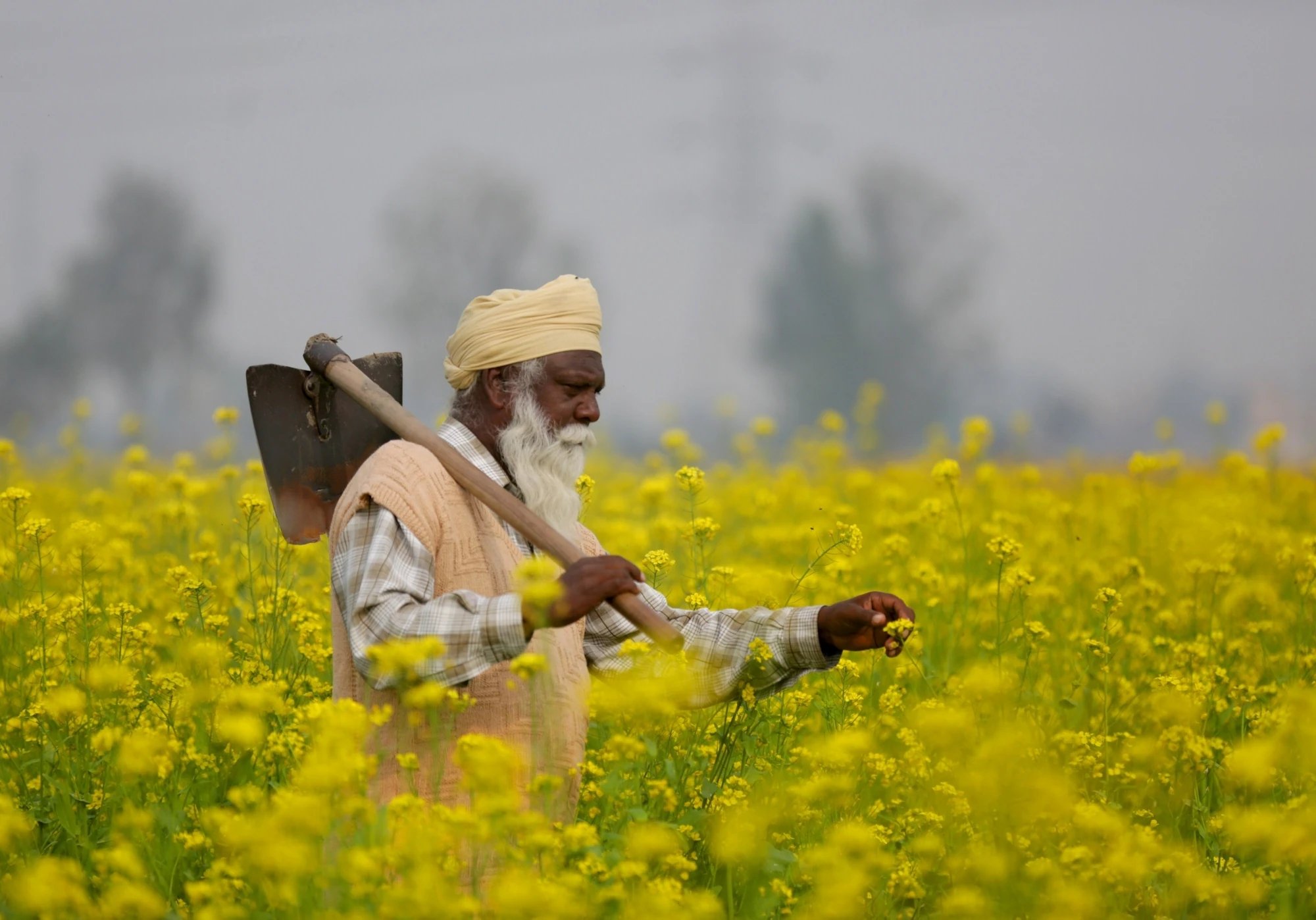
The Cabinet Committee on Economic Affairs, chaired by Prime Minister Narendra Modi, gave the final nod on Wednesday to raise Minimum Support Prices for all mandated Rabi crops heading into the 2027-28 marketing season. The decision is a direct follow-through on a long-standing promise to shield farmers from market volatility by guaranteeing a floor price that covers their production costs with a buffer.
Safflower stands out as the clear winner in this revision. The oilseed gets a massive jump of Rs 675 per quintal, far outpacing rapeseed and mustard, which see a Rs 413 hike. Lentils follow closely with a Rs 390 increase, while barley, gram, and wheat receive smaller boosts of Rs 136, Rs 83, and Rs 25 per quintal respectively. The disparity in hikes signals a strategic push to encourage diversification away from water-intensive cereals towards oilseeds and pulses.
This pricing structure isn't arbitrary. It strictly adheres to the formula set in the 2018-19 Union Budget: the MSP must be at least 1.5 times the All-India weighted average Cost of Production (C2). By locking in these rates, the government aims to make marginal crops like safflower and lentils economically viable for smallholders who often bear the highest risk in agricultural markets.
The financial commitment behind these prices is staggering. Between 2014-15 and 2025-26, the state has disbursed Rs 7.31 lakh crore to wheat farmers alone, up from just Rs 2.56 lakh crore in the previous decade. Total outgo for the six mandated Rabi crops has surged to Rs 8.36 lakh crore, reflecting both the rising cost of inputs and the expanding procurement net.
Procurement volumes have mirrored this financial growth. Wheat purchases have climbed to 3,715 lakh metric tonnes over the last decade, compared to 2,254 LMT in the years prior. The combined intake for six Rabi crops has jumped to 3,921 LMT from 2,302 LMT. With the prices now fixed, the focus shifts to the efficiency of the procurement machinery as the 2027-28 season approaches, ensuring these figures translate into actual cash in farmers' hands without significant delays.