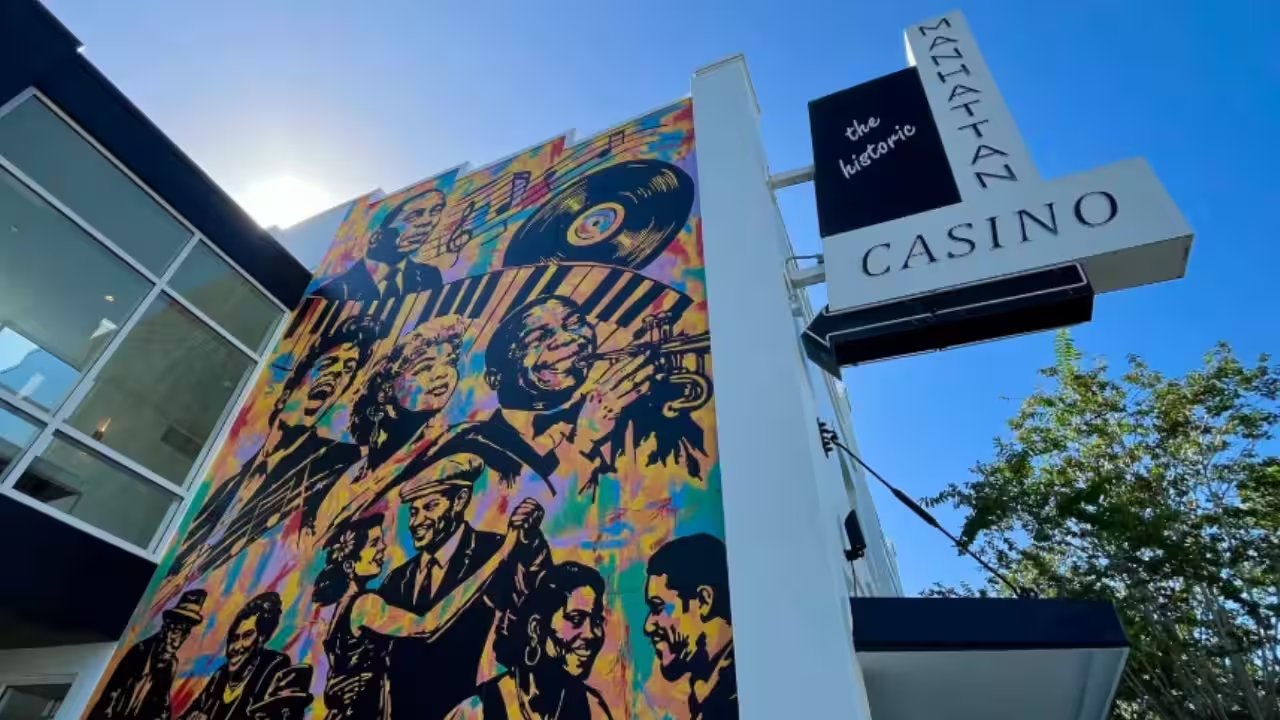
The Manhattan Casino, a 101‑year‑old two‑storey brick edifice at 642 22nd St. S., was erected in 1925 by Black entrepreneur Elder Jordan as the Jordan Dance Hall. It served as a hub for St. Petersburg’s African‑American community, hosting weekend dance nights and Sunday gospel shows. In the 1940s and 1950s, the upstairs hall became a stop on the Chitlin’ Circuit, drawing luminaries such as Louis Armstrong, Ella Fitzgerald, Ray Charles, and B.B. King. The venue closed in 1968 amid shifting demographics and economic pressures. Subsequent attempts to revive the building faltered, leaving the storied structure dormant for decades.
The city’s four‑year overhaul, billed at $4.8 million, re‑imagined the space as a community event hub. The 12,000‑sq‑ft venue now includes a ground‑floor reception area, a conference room, a bar, and a kitchen, while the refurbished second‑floor ballroom retains the original ballroom’s acoustics after floors were refinished and the ceiling raised. A new mural by local artist Egypt Hagan graces the lobby, tying contemporary art to the hall’s storied past.
Mayor Ken Welch, present at the ribbon‑cutting, emphasized the project’s role in revitalising the Deuces district and the adjacent Warehouse Arts District. 'This is a totally different model. It’s a community event space that can serve so many constituencies,' Welch said. He added that the venue will anchor future cultural and commercial initiatives in the area, ensuring the city’s heritage informs its growth.
St. Petersburg Poet Laureate Denzel Johnson‑Green delivered a poem that echoed the hall’s musical legacy, while former residents recalled the rhythms that once filled the ballroom. 'The Get Down, the Boogie, and the Hope of Sweat' captured the spirit of a place where music bridged segregation, and the reopening signals a new chapter for the neighborhood.