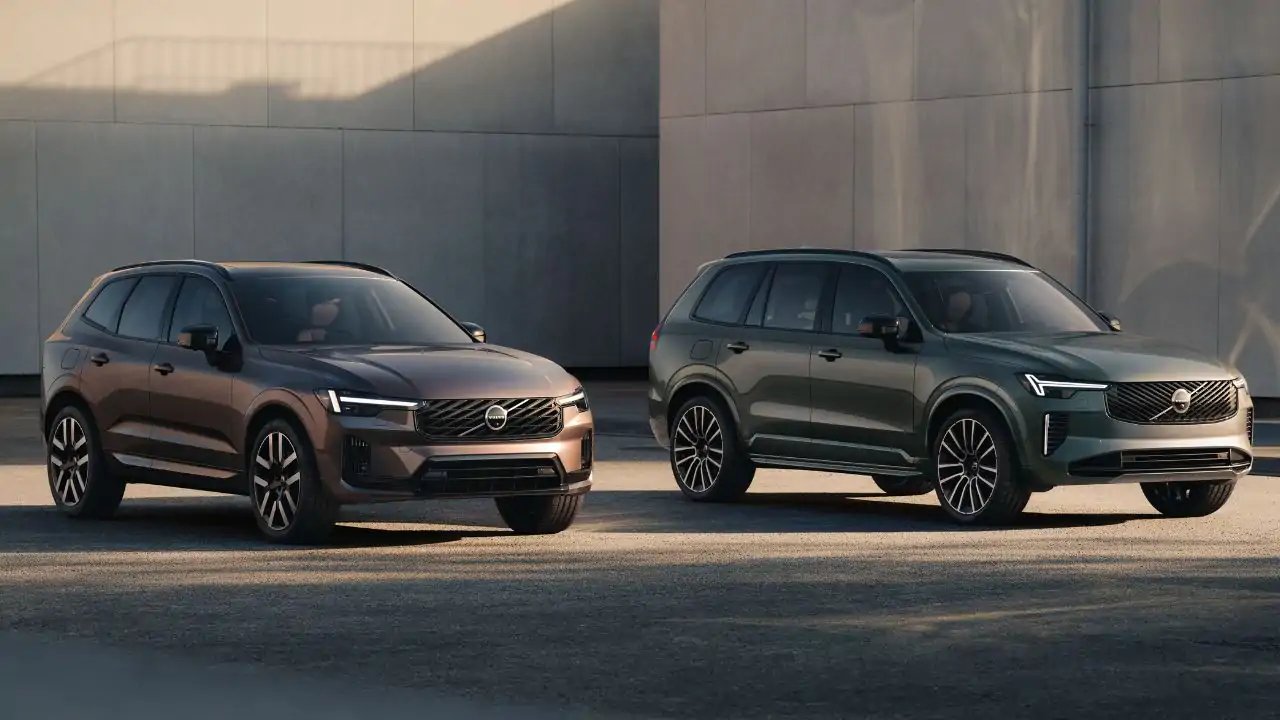
If you’re hunting an SUV that can switch to zero‑emission after a quick charge, the new Volvo XC60 PHEV gives you 200 km on a single plug—big enough for most daily commutes and short road trips. The 41.2 kWh pack sits under the floor, powering a 461‑hp, 759‑Nm rear‑motor that propels the car from 0 to 100 km/h in 4.8 seconds.
The XC90 follows suit with a 162‑km electric range, 461‑hp output, and a 751‑Nm torque figure. Both models keep Volvo’s 2.0‑litre four‑cylinder petrol engine, but now they’re coupled with a stronger electric motor and a larger battery. The cabin gets an 11.2‑inch touchscreen with the new Car‑UX interface, and the XC60’s front fascia gets a fresh grille, bumper, and LED “Thor’s Hammer” headlights.
How does that stack against the competition? The BMW X3 xDrive30e offers roughly 140 km of pure electric range, the Mercedes‑GLC 300e about 120 km, and the Polestar 2 tops out near 150 km. Volvo’s 200‑km figure places it ahead in daily range, though the price—currently undisclosed for India—will be a deciding factor. Power‑to‑weight is also favourable; the XC60’s 0‑100 time of 4.8 seconds beats the GLC 300e’s 5.8 seconds.
In India, Volvo’s current lineup uses a 48‑V mild‑hybrid system that produces 250 hp and 360 Nm, so customers have yet to see a full PHEV version. That means the 41.2‑kWh battery and 200‑km range are still a world‑wide preview, not a take‑away for Indian buyers. However, the Indian EV mandate is tightening, and PHEVs could qualify for the 15 % tax rebate offered to plug‑in hybrids with an electric range above 150 km.
The global launch of the revamped XC60 and XC90 PHEVs came in March 2024, with production already ramping up in Sweden. Volvo has hinted that India might receive the PHEV variants in late 2025 or early 2026, pending regulatory approvals and local battery sourcing agreements. Keep an eye on the official launch calendar and any announcements from Volvo India’s sales network for the exact city‑wise rollout.