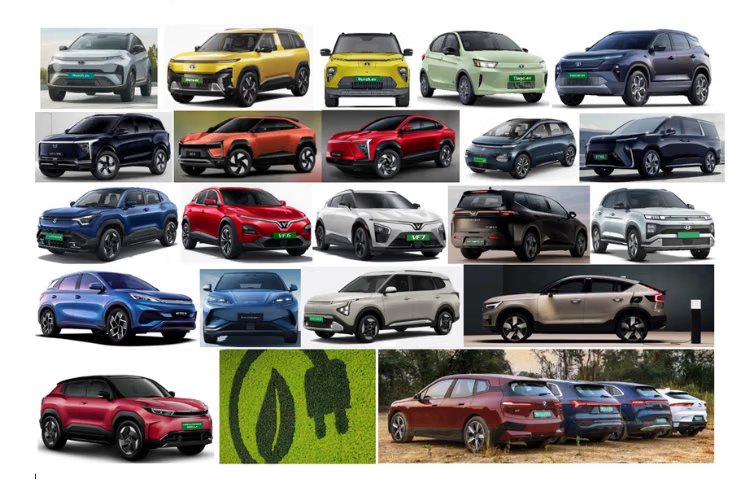
The electric‑vehicle segment in India shattered previous records this month, with 35,995 units delivered—nearly 100% growth on a year‑on‑year basis. It marks the fourth consecutive month where retail sales crossed the 30,000‑unit threshold, pushing the first‑half 2027 total to 190,946. The momentum reflects a broader shift in consumer preference, as more buyers look beyond conventional fuels for cost‑effective, low‑emission alternatives.
Tata Motors led the charge, delivering 14,769 EVs, a staggering 101% increase from 7,353 last year. Its market share climbed to 41%, cementing its dominance in the mass‑market segment. The Nexon EV remains the flagship, while the refreshed Tiago EV and Punch EV have carved a niche among first‑time EV buyers, especially as petrol, diesel, and CNG prices continue to climb.
Mahindra & Mahindra followed with 7,779 units, keeping the number two spot with a 22% share. JSW MG Motor added 5,242 units, its share slipping to 15% after a 9% YoY rise. Vinfast logged 2,963 units (8% share), while Kia’s Syros EV pushed the brand to fifth place with 1,263 units (3.5% share). Maruti Suzuki and BYD trailed with 1,103 and 836 units respectively, holding 1.8% and 1.1% of the market.
The sales spike underscores the impact of recent policy shifts: the government’s duty exemption on domestically manufactured EVs and the new Bharat EV mandate have reduced ownership costs. Import duty reductions on fully imported models like Kia’s EV6 and Tesla’s offerings also helped broaden the choice for budget‑conscious buyers. These measures, coupled with falling battery prices, are gradually eroding the price barrier that once limited EV adoption.
Looking ahead, Tata’s lineup will see a refreshed battery‑upgrade for the Nexon EV in early 2027, while MG’s Hector Tomahawk EV is set to launch in March, offering a three‑row SUV with battery‑as‑a‑service options. Vinfast plans to roll out the VF6 and VF7 SUVs by Q4, and BYD will introduce the Seal U later this year. For buyers, the window is opening wider, with more models and financing options arriving across metros and tier‑2 cities by the end of the year.