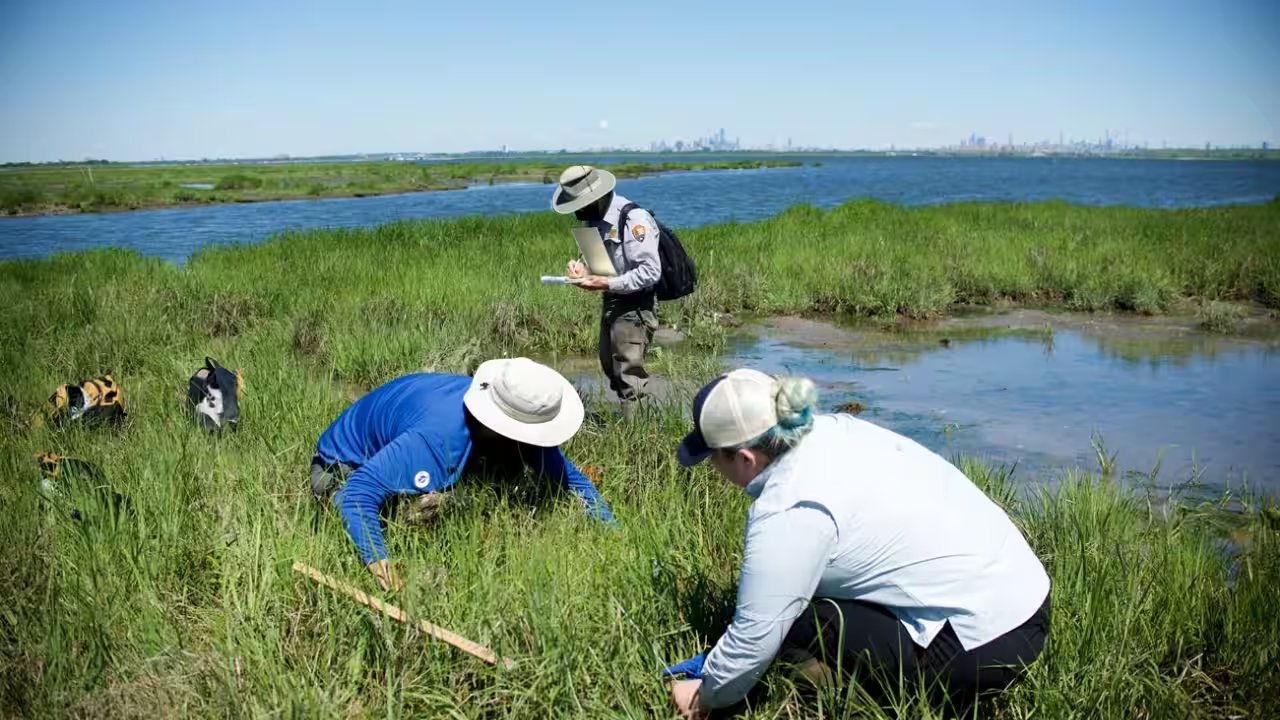
In October 2003, 100 volunteers and National Park Service scientists knelt in the sand of Big Egg Marsh, pressing 20,000 smooth cordgrass (Spartina alterniflora) seedlings into the soil. It was a gamble. The site, part of Jamaica Bay, had been stripped of its natural vegetation for decades. The team raised the marsh bed with clean sand first, then layered the young plants on top, hoping the roots would hold the ground together.
The early days were brutal. Geese tore through the new growth. Tides dragged seedlings away. Marine debris—plastic bags, logs, straws—buried others. Yet the grass held. By 2005, just two years later, more than 80% of the experimental site was vegetated and healthy. The data was undeniable: the ecosystem was coming back.
Why smooth cordgrass? According to the National Park Service, its roots trap sediment, building up nutrient-rich peat. That peat creates a stable foundation for other species, like saltmeadow cordgrass (Spartina patens), which began establishing naturally after the initial planting. Scientists monitored one-metre-by-one-metre plots repeatedly from 2004 through 2008, tracking elevation, soil health, and animal activity to confirm the trend wasn’t a fluke.
Dr. George W. Frame returned in 2021, nearly two decades after the project began, to verify the long-term stability. The result? Big Egg Marsh wasn’t just surviving; it was thriving. This specific experiment became the blueprint. Restoration efforts across Jamaica Bay have since recovered more than 150 acres of marshland, proving that targeted, science-backed intervention can reverse decades of ecological damage.
The next step is scaling. Park officials are currently evaluating adjacent degraded zones for similar sand-raising and planting interventions. The goal: expand the continuous marsh habitat to buffer the bay against storm surges more effectively by 2030.