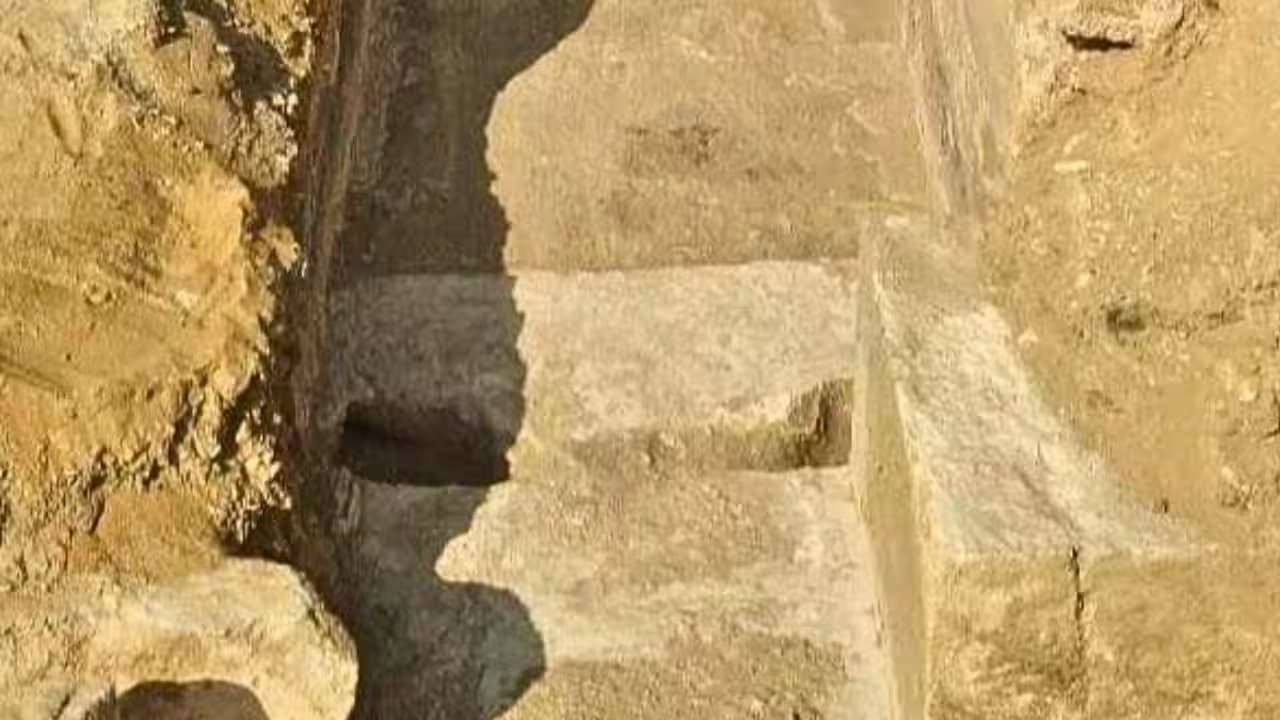
An Egyptian archaeological mission has cracked open a sealed chapter of the Old Kingdom, pinpointing the final resting place of Sekhentyu-Ptah, a high-ranking royal chamberlain. The find sits in the western Bubasteion necropolis at Saqqara, a site that has largely resisted the looters who stripped nearby tombs in antiquity. The team’s first excavation season yielded a surprise: a funerary chapel preserved in its original position, complete with a false door and alabaster objects that still bear the official’s name.
The inscriptions on the offering table and purification basin do more than just name the dead man. They map his life’s work. Sekhentyu-Ptah wasn’t just a bureaucrat; he was a supervisor of the king’s works, a priest of the goddess Maat, and the overseer of royal scribes. That combination of religious and administrative power paints a picture of a man who sat at the very heart of the pharaoh’s court. For historians, these hieroglyphs are a Rosetta Stone for understanding how the state machine actually functioned thousands of years ago.
But the story doesn’t end with one man’s grave. The excavation uncovered a tangled web of interconnected burial shafts, suggesting this was a community of the elite, not just a single individual’s plot. Among the debris, archaeologists pulled out more than 100 faience ushabti figurines, small worker statues meant to serve the dead in the afterlife. They also recovered a wooden falcon figure and pottery vessels that hint at ritual practices we only partially understand. Three stone sarcophagi remained sealed, untouched by the ancient tomb robbers who clearly breached other parts of the complex, creating openings to move between chambers.
The physical evidence of that looting is stark. Human remains scattered across the shafts show a history of intrusion that spans centuries. Yet, the preservation of Sekhentyu-Ptah’s chapel is a testament to the site’s layered history. The area didn’t just die when the Old Kingdom fell; it was reused, altered, and partially protected by the very chaos that destroyed its neighbors. The mission now turns its attention to those three sealed sarcophagi. Opening them will be the next major step, potentially yielding mummies and organic materials that could rewrite our understanding of mummification techniques from that era. The team expects to finish analyzing the current haul before moving to the deeper shafts next season.