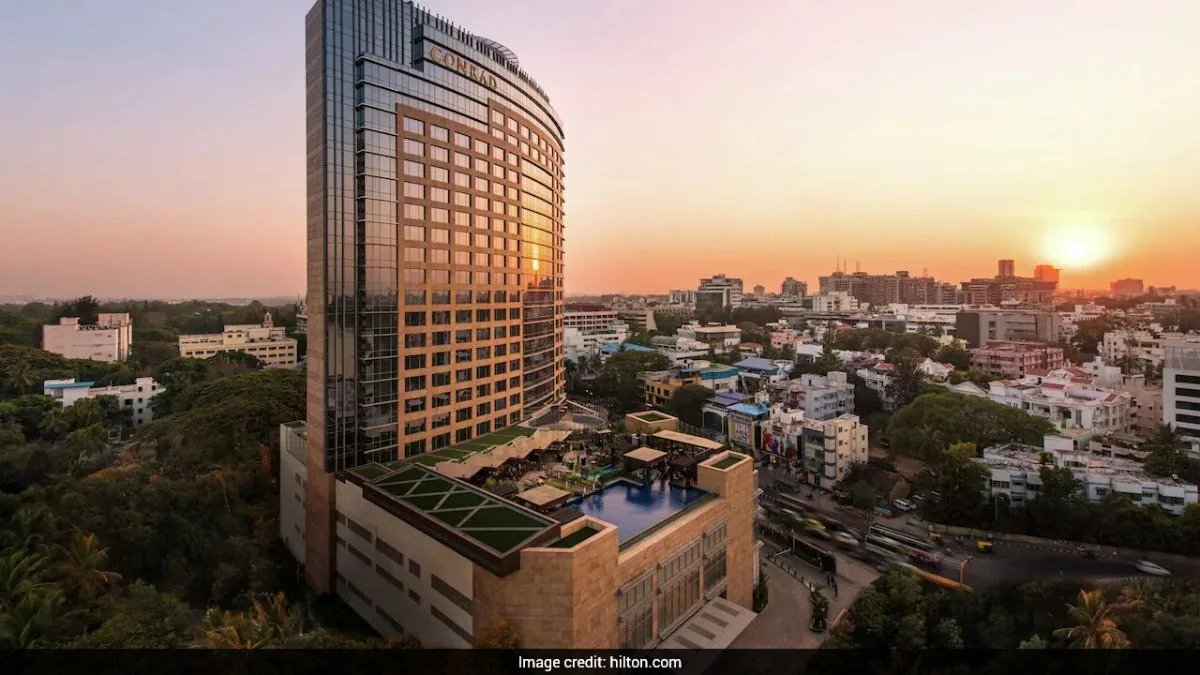
Two foreign nationals, Alexander Maximilian Theiss and Juraj Horvat, suffered fatal electric shocks while exiting the swimming pool at the Conrad Hotel in Bengaluru on Friday evening. The incident occurred on the hotel’s third-floor pool deck. Theiss, a 57-year-old crew member for Lufthansa Airlines, and Horvat, a 45-year-old project manager at IBM, were staying at the property when the current struck them. Their bodies were recovered from the water shortly after the shock.
The attempt to save them resulted in further casualties. Mathew Desantis, a 41-year-old US citizen and guest at the hotel, and Rahul Tiwari, a 28-year-old Indian pool attendant, sustained injuries while trying to pull the men from the water. Both were rushed to Manipal Hospital. Medical staff reported them out of danger as of Saturday morning. Desantis and Tiwari remain under observation for electric burn and shock-related complications.
Silvia Ottawa, Theiss’s wife, filed a complaint with local police alleging that the hotel failed to maintain the pool’s electrical systems. The complaint explicitly cites negligence by the Conrad management. Police registered a case under relevant sections of the IPC for causing death by negligence. An investigation is underway to determine if a faulty wiring or maintenance lapse caused the live current in the pool water.
The Conrad, a 24-storey luxury property under the Hilton group, notified its website on Saturday that the pool would remain closed from October 31 to November 30 for “maintenance.” This closure follows the incident directly. Hotel management has not issued a public statement addressing the specific cause of the electrocution or the safety protocols in place at the time. Standard room rates at the property start at ₹25,000 per night, raising questions about the maintenance standards expected at such a high-end establishment.
Police will question hotel engineering staff and review maintenance logs in the coming days. The victims’ families are seeking legal recourse. The case highlights potential safety gaps in high-profile hospitality infrastructure in the city.