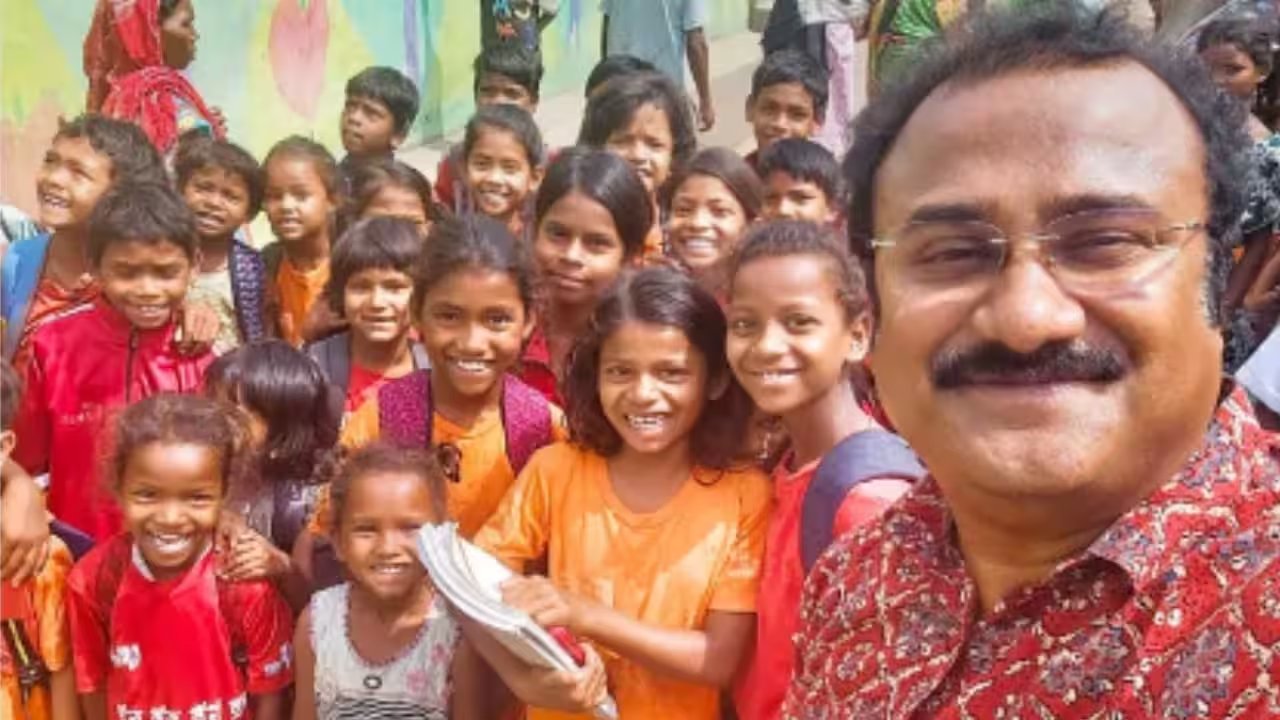
A discarded parcel of biryani rotting in a rubbish heap sparked an educational lifeline across rural Bengal.
Ten years ago, Chandrashekhar Kundu walked out of his son Srideep’s eighth birthday party into an alley in Asansol. Edible banquet leftovers filled the bins. Inches away, two barefoot children dug through the trash, picking stray shreds of chicken off grease-stained paper while keeping stray dogs at bay with sticks. Kundu froze. The computer science lecturer brought both boys home, fed them, and could not sleep. That single scene shattered his routine. He filed Right to Information requests with the Food Corporation of India to map grain wastage, carried steel tiffins to his college canteen every afternoon, and ferried leftover meals to children huddled near Asansol railway platform.
Private charity quickly outgrew spare tiffins. In 2016, Kundu formed Food, Education and Economic Development—known as FEED. Colleagues and students joined the runs. Partnerships with IIM Calcutta, Vesuvius India, and the Central Industrial Security Force followed, helping formalise logistics. Yet logistics brought harsh lessons. Midnight food runs spoiled quickly in summer heat, risking food poisoning among the young. Kundu pivoted, shutting down dependency on banquet scraps to set up direct community kitchens where volunteers cook fresh, hot meals daily.
Hunger, Kundu discovered, formed only the outer wall of poverty. Most children in the surrounding mining tracts came from stone-quarry and daily-wage families. Parents left for shifts at dawn; classrooms remained empty. Without home tutoring, dropout rates spiked.
So he tied nutrition directly to the blackboard. In 2018, FEED rolled out 'Boi Toi Hoi Choi', an evening coaching network where children receive academic tutoring followed by a hot meal. That evening plate gave struggling parents a direct reason to send their sons and daughters to class instead of quarry trenches. Today, FEED operates 21 functioning coaching schools spanning the tribal corridors of Asansol and Purulia, teaching more than 1,200 first-generation students.
Beyond the primary curriculum, the initiative funds sports and vocational projects across three core villages. Its 'Bengal Tigress' wing trains tribal girls in competitive football, while the 'Matangini Vahini' unit teaches regular karate and practical self-defence. For Kundu, the mission remains fixed on steady rural expansion, keeping kitchens open and desks full across Bengal's most neglected industrial fringes.