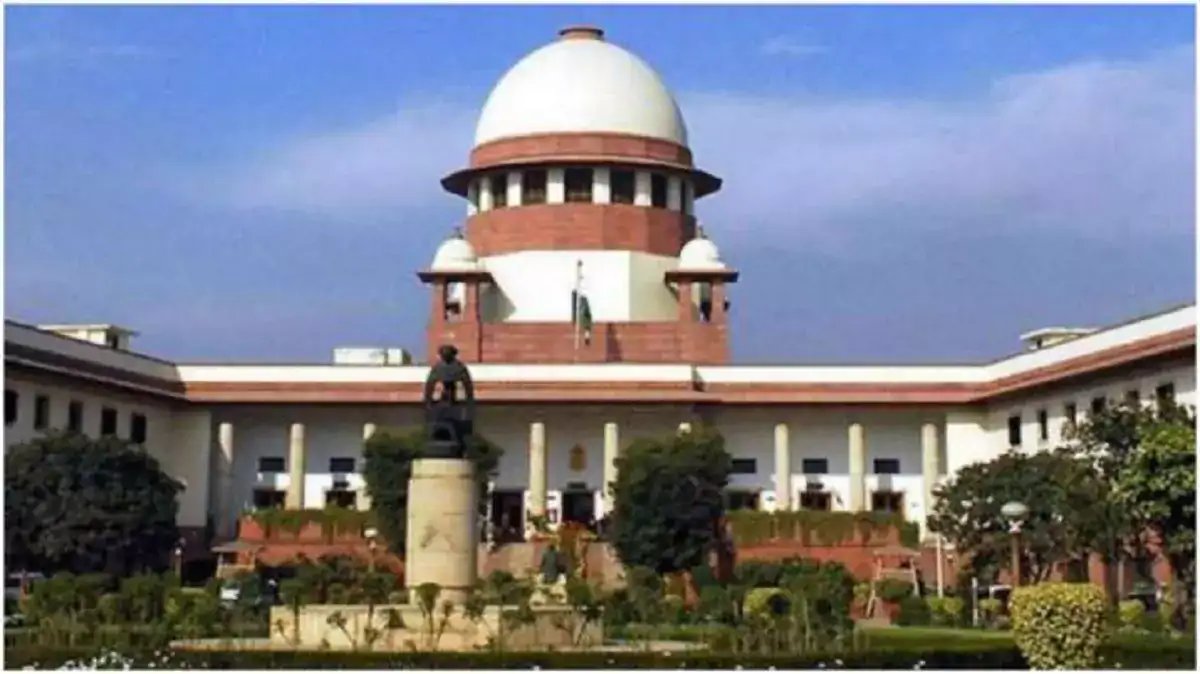
The bench, comprised of Justices Vikram Nath, Sandeep Mehta and Vijay Bishnoi, declared on Thursday that a man convicted of murdering his six‑year‑old step‑daughter and repeatedly assaulting her in Indore, Madhya Pradesh, would no longer face the death penalty. The decision follows an appeal filed against a November 2019 judgment that had upheld the death sentence. The court’s verdict is anchored in a broader critique of how silence by abused women is treated in Indian courts.
NFHS‑5 data—drawn from 2019‑21—reveals that 29.3 % of ever‑married women aged 18‑49 report experiencing spousal violence, and roughly 75 % of those victims never seek help or disclose abuse. The apex court used these figures to argue that silence is not an anomaly but a systemic response shaped by fear, shame and social constraints. It cautioned judges against treating a woman’s reticence as evidence of falsehood. But the court warns that a lack of immediate disclosure should not be seen as a sign of guilt.
In this case, the victim’s mother, a widowed woman with no independent means, had been locked into a second marriage with the accused. Her movements were tightly monitored, her telephone access limited to numbers the husband sanctioned, and she lived under a regime that left her effectively captive. The court noted that such control explains why she did not report the abuse to police or family.
By commending the reality that abused women often remain silent, the Supreme Court signals a shift that may alter how future cases are adjudicated. The bench’s opinion rejects the notion that a victim’s silence can be weaponised to undermine their testimony. It underscores that a woman’s inability to seek help does not equate to complicity.
With the death sentence now commuted, the convict will serve a life imprisonment term until death. The High Court of Madhya Pradesh may revisit the case on appeal, but the Supreme Court’s ruling sets a precedent that silence will not automatically be construed as evidence of innocence. Legal scholars say the decision could prompt a re‑evaluation of spousal‑abuse cases across India.