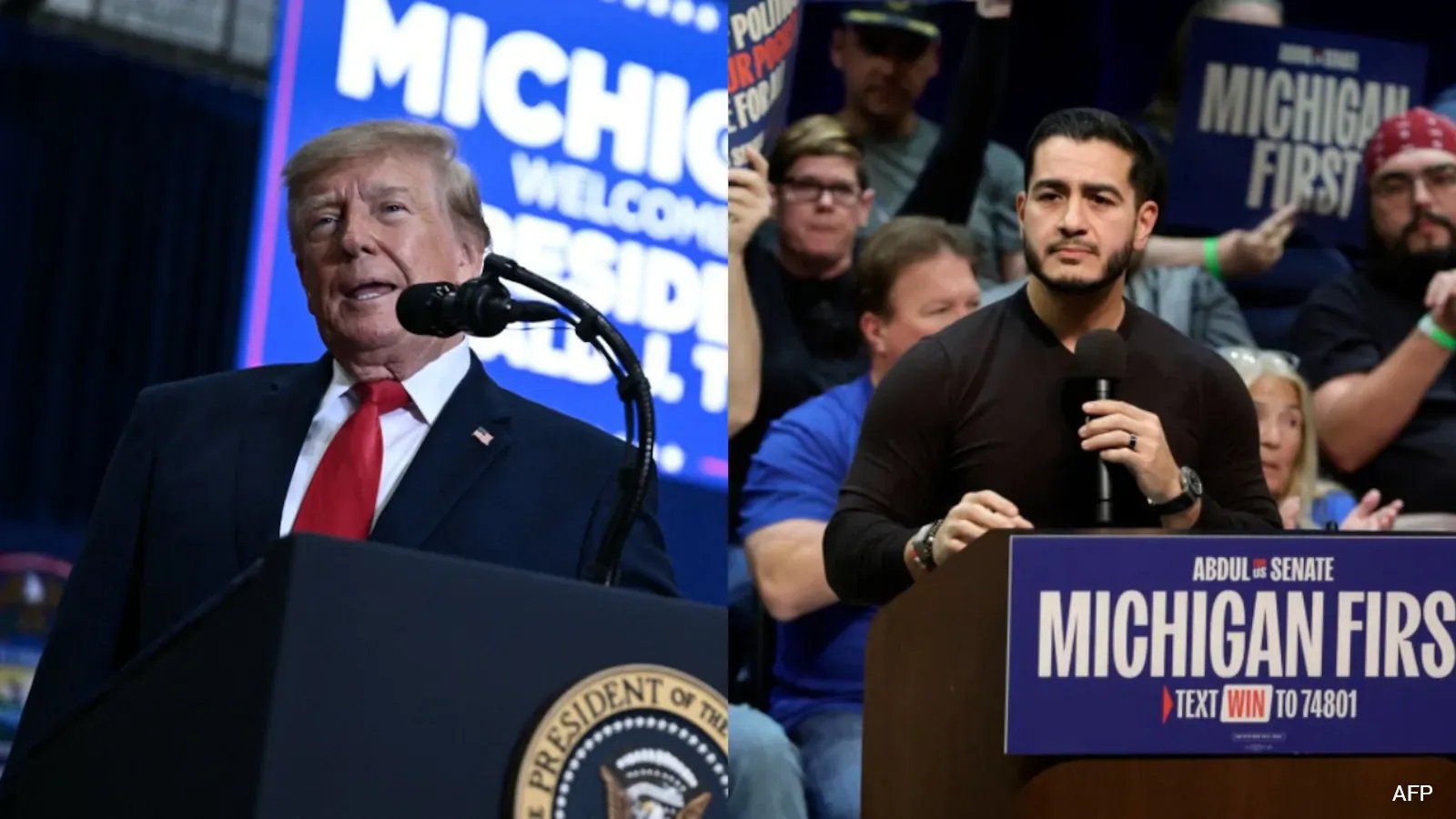
On Sunday, President Donald Trump voiced a new wave of anti‑Muslim rhetoric at a rally in Port Huron, Michigan, calling Senate hopeful Abdul El‑Sayed a ‘jihadist’ and ‘terrorist’ and insisting he would need a metal detector before entering the chamber.
El‑Sayed, a former Detroit health commissioner, is campaigning to become the United States’ first Muslim senator. He has repeatedly denied ties to extremist groups and has been a vocal critic of the Muslim Brotherhood, a movement the U.S. has designated as a terrorist organization. His campaign has faced persistent attacks from Republican operatives linking him to the Brotherhood, despite a lack of evidence.
Bishara Bahbah, founder of Arab Americans for Peace, immediately condemned the comments, calling them racist and a crossing of a red line. “They are crossing a red line. They are racist,” Bahbah told reporters, adding that the remarks were unacceptable to Arab and Muslim communities across the state.
Republican strategist Mike Rogers, Michigan’s other Senate candidate, is capitalizing on the controversy, framing El‑Sayed as an existential threat to America. The GOP has intensified anti‑Muslim language to boost turnout, especially in Arab‑American strongholds like Dearborn, after Trump’s 2024 victory there. This rhetoric comes amid broader party struggles with inflation, fuel prices, and the Iran war.
In response, the Michigan Democratic Party has filed a formal complaint with the Federal Election Commission alleging that Trump’s statements violate the Fair Election Act and could influence the upcoming election.
A local Arab‑American voter, Fatima Hassan, told reporters she felt the rhetoric was a personal attack, saying, “I grew up in this city, and I’m tired of being accused of being a threat because of my faith.”