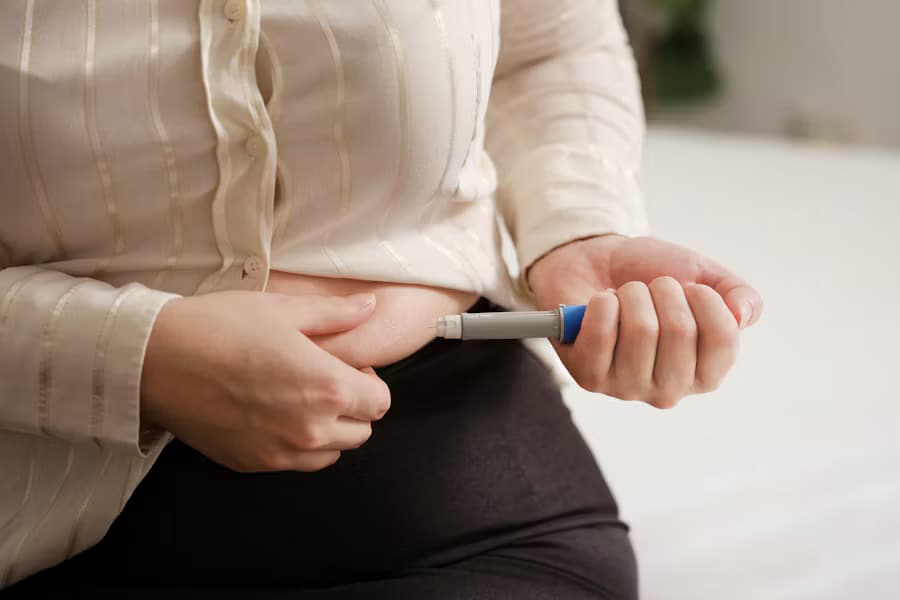
The US Food and Drug Administration has ordered drugmakers to slap a new warning label across all GLP-1 medications, alerting doctors and patients to a rare condition that triggers sudden, irreversible blindness. The mandate targets the entire class of blockbuster diabetes and weight-loss treatments, including Novo Nordisk's Ozempic and Wegovy, alongside Eli Lilly's Mounjaro and Zepbound.
Pat濡ients usually notice the damage the moment they wake up. The disorder, known medically as non-arteritic anterior ischemic optic neuropathy, or NAION, acts like an eye stroke. It strikes without physical pain when blood flow to the front of the optic nerve suddenly chokes off. The damage is permanent. Doctors currently have no proven medical treatment or surgery to reverse it once vision fades. Beyond total sight loss in one eye, warning signs include cloudy patches, missing zones in the visual field, tunnel vision, or sudden trouble distinguishing colors.
Federal regulators issued the order after combing through clinical trial registries, observational studies, and real-world adverse patient reports. The FDA announced that while the absolute statistical risk of contracting NAION remains tiny, the sheer volume of prescriptions written globally makes even a minor safety signal a serious public health matter. Millions now inject the weekly peptides to manage type-2 diabetes and shed excess weight.
"We don't want patients to really get overly concerned and anxious and to stop these medications," said Dr Manjot Gill, an ophthalmologist at Northwestern Medicine in Chicago, backing the federal directive. Gill explained that the warning serves primarily as a public alert, ensuring people who notice subtle optical shifts head straight to an eye specialist instead of waiting. Abruptly halting metabolic medications without physician oversight can create immediate blood sugar spikes.
The drug manufacturers confirmed they are reviewing the updated federal guidance to adjust packaging inserts and safety documentation. For patients currently on GLP-1 therapy, the practical advice remains clear: continue prescribed doses, watch for unilateral vision changes upon waking, and book an immediate ophthalmological checkup at the first sign of blurring.