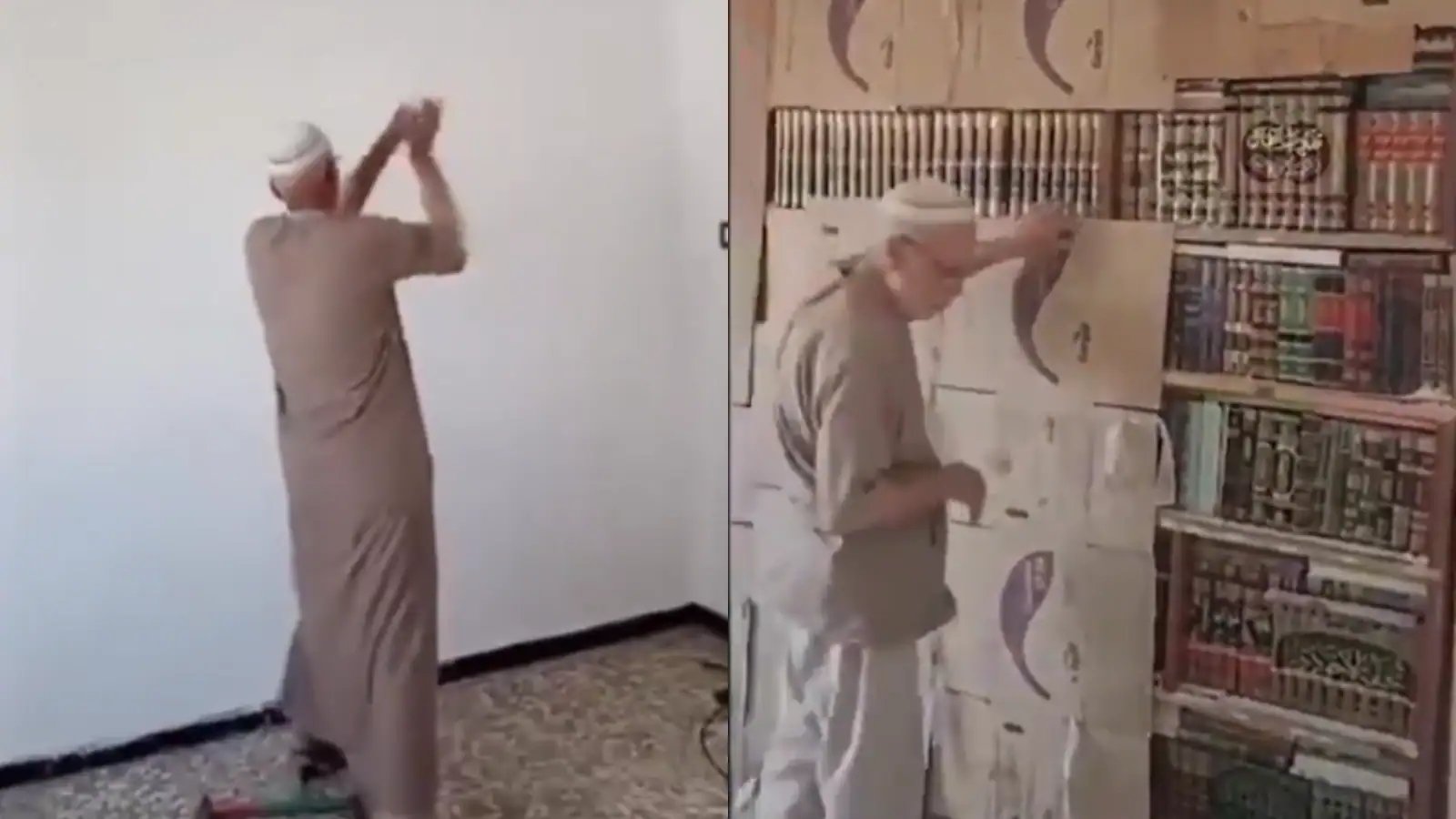
Abu Bilal, a Homs native, broke through a false wall in a ruined house on September 17, 2026, uncovering a private library that had been sealed since the outbreak of civil war in 2011.
The books—mostly leather‑bound religious texts and a complete set of Jami’ al‑Usul—were hidden to protect them from the regime’s censorship, which condemned works on prisons, radical Islam and politics.
While dust swirled, Bilal also retrieved a cache of cash wrapped in cardboard, remarking that he had hidden money there years earlier.
The recovery echoes a wider trend, as books once banned under Assad now reappear in Damascus bookshops and on pavements, indicating a shift toward cultural openness.