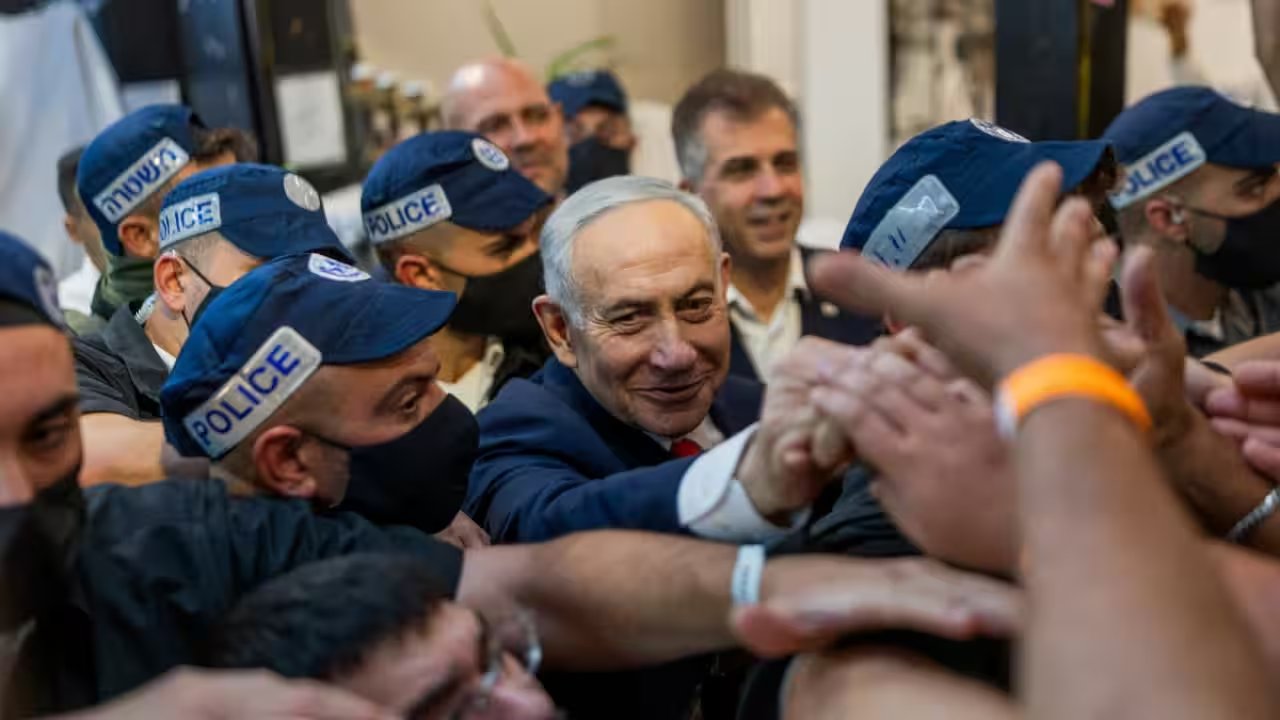
Prime Minister Benjamin Netanyahu, Israel’s longest‑tenured leader since 2009, faces mounting scrutiny over the security gaps that led to Hamas’ October 7 assault, a corruption trial that has rattled his supporters, and an International Criminal Court arrest warrant he denies.
Former Chief of the Israel Defense Forces Gadi Eisenkot, who lost his son in Gaza, is positioning himself as a security‑focused alternative, pledging to abolish the ultra‑Orthodox exemption that has sparked resentment among secular voters.
Naftali Bennett and Yair Lapid have fused their political legacies into the Together party, presenting a platform of national unity and a return to stability after years of political fragmentation.
Likud’s far‑right allies—Finance Minister Bezalel Smotrich and National Security Minister Itamar Ben‑Gvir—remain steadfast, but recent polls indicate a decline in Likud’s support, forcing Netanyahu to seek coalition partners beyond his traditional base.
In a Jerusalem suburb, a displaced family whose home was demolished on October 7 recounts that the upcoming vote offers a glimmer of hope for decisive security leadership, underscoring the electorate’s deep fear; coalition negotiations are slated to begin immediately after the results.