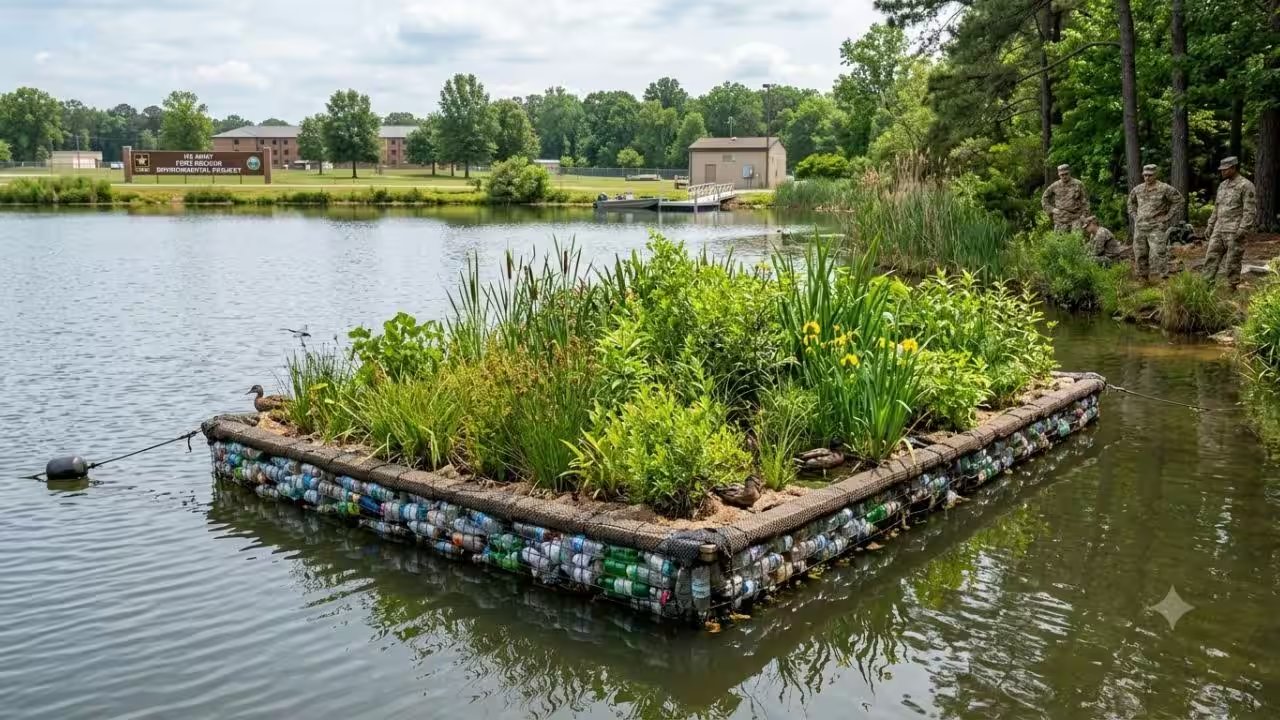
In March 2024, Fort Cavazos' Directorate of Plans, Training, Mobilization and Security built and launched an 11‑by‑8‑foot floating wetland prototype—U.S.S. Eddy—in the base's vehicle‑wash catchment basin in Texas. The platform, assembled from corrugated pipes packed with recycled plastic bottles, covered with coconut fibre and screened, was planted with native horsetail, pennywort and sedge to create a miniature wetland.
The wash basin recycles high‑pressure water used to clean tracked vehicles, but the system leaves fine, emulsified contaminants that can fuel algae growth. The floating island was designed to filter those contaminants naturally, while also providing shade and food for the ducks, frogs and turtles that already frequent the basin.
"The idea emerged from a team looking for a dual benefit—cleaner water and wildlife habitat," said a DPTMS spokesperson. The structure's roots and surrounding material create a natural filter that captures nutrients and reduces algae, offering a low‑maintenance alternative to mechanical treatment.
DPTMS and its Adaptive and Integrative Management Team will monitor the island's performance for the next 12 months, assessing plant growth, water clarity and durability. Lessons learned will inform a larger rollout, with the base planning to deploy up to 20 islands across its wash facilities.
For soldiers working the wash station, the prototype has already become a point of interest. "I see ducks nesting on the island and it makes the workday feel a bit more connected to nature," shared a volunteer from Fort Cavazos' logistics unit.