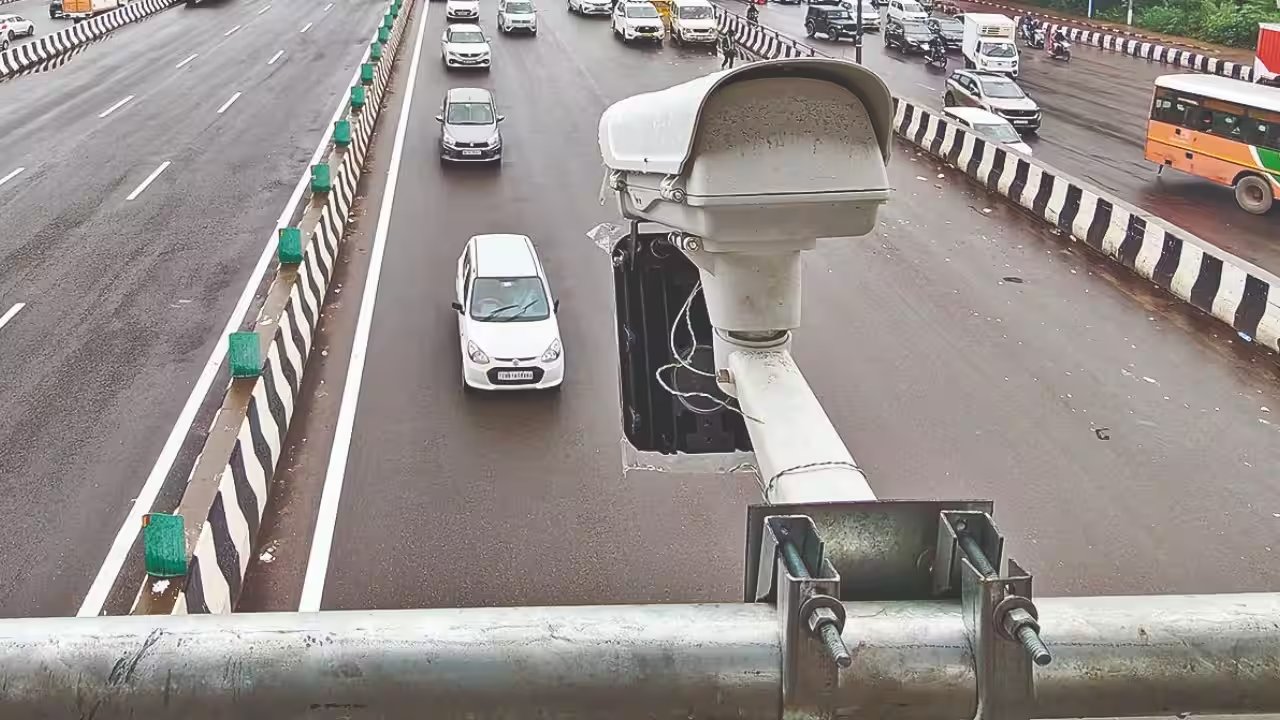
New Delhi — The National Highways Authority of India (NHAI) has scrapped the era of sprawling toll plazas, capping all future highway projects at a maximum of eight lanes. Officials confirmed that Multi-Lane Free Flow (MLFF) tolling is no longer an option; it is the standard. Gantry-mounted high-performance RFID readers and Automatic Number Plate Recognition (ANPR) cameras will identify vehicles in motion, deducting tolls via FASTag without stopping traffic. This applies to every project, from those in the detailed project report (DPR) stage to those already awarded but not yet built.
The change is a direct response to the absurdity of current infrastructure. Today, toll plazas on six- and eight-lane highways around major metros stretch to 20 or even 32 lanes. That requires massive land acquisition. Under the new regime, NHAI estimates each lane can handle 600 vehicles per hour. One spare lane handles over-dimension vehicles or emergencies. The result? No extra land for tolling. No more traffic snarls at booths.
Safety and visibility are non-negotiable in the new design. The circular mandates a minimum six-metre clearance for gantries, variable message signs starting one kilometre before the plaza, and high-mast lighting. Plazas must sit on straight stretches of highway wherever feasible. For projects under construction where toll plaza work hasn't begun, the scope of work will change to reflect this. Two-lane highways with paved shoulders remain on the old system.
NHAI has instructed regional officers, project implementation units, and DPR consultants to embed these provisions immediately. The policy supersedes all earlier guidelines for four-lane and wider highways. The agency aims to cut costs and clear the backlog of land acquisition disputes that have stalled projects for years. The first wave of these compact, high-speed toll plazas will appear in upcoming tender documents within months.