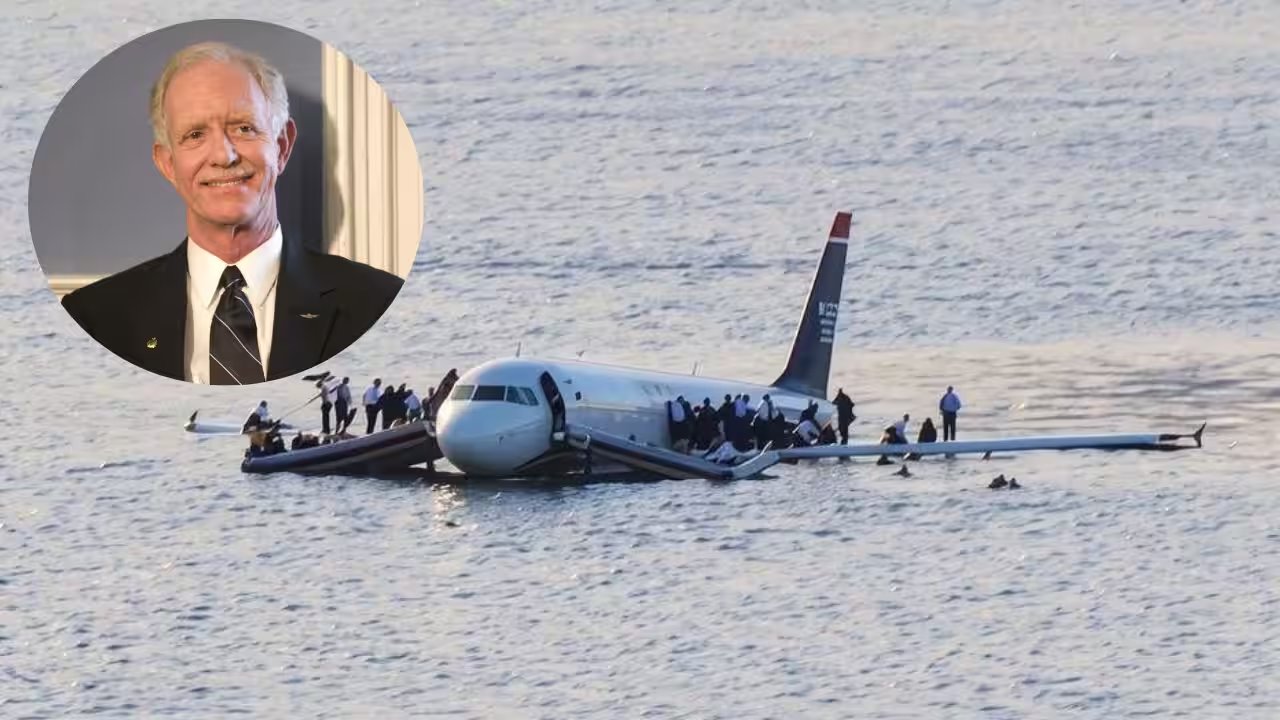
Captain Chesley “Sully” Sullenberger was formally welcomed into the National Aviation Hall of Fame on September 24, 2026, in Washington, DC, a full 17 years after the 2009 incident that ended with an Airbus A320 safely ditching into the Hudson River and rescuing all 155 aboard.
On January 15, 2009, Flight 1549 took off from LaGuardia with Sullenberger at the controls and First Officer Jeffrey Skiles beside him. A flock of Canada geese slammed into both engines, crippling thrust and forcing the crew to decide between a rushed return to LaGuardia, a diversion to Teterboro, or an emergency landing on the river. With only minutes to act, the pilot chose the Hudson, and the aircraft touched water just 3½ minutes after liftoff, allowing every passenger and crew member to evacuate.
The National Transportation Safety Board’s investigation linked the crash solely to the bird strike, confirming that the loss of engine power left the aircraft at a perilously low altitude with no viable recovery options. The event reshaped crew‑resource management training and cemented the second‑engine‑failure protocol that is taught in flight schools worldwide.
Sullenberger’s 40‑year career, spanning fighter pilot duties in the U.S. Air Force to commercial stints with Pacific Southwest Airlines and US Airways, culminated in his 2010 retirement. He later served as the U.S. ambassador to the International Civil Aviation Organization, pushing for tighter global safety standards. His advocacy work has been credited with influencing reforms that reduce in‑flight emergencies.
Induction into the Hall of Fame not only honors the moment that saved a small city’s lives but also acknowledges Sullenberger’s ongoing influence on aviation safety. The ceremony’s closing remarks will set the stage for a symposium on modern pilot training slated for October, inviting regulators, educators, and industry leaders to discuss the next frontier in flight safety.
The National Aviation Hall of Fame’s announcement comes as the industry prepares for a series of international conferences on aviation resilience, positioning Sullenberger’s legacy at the heart of future safety dialogues.