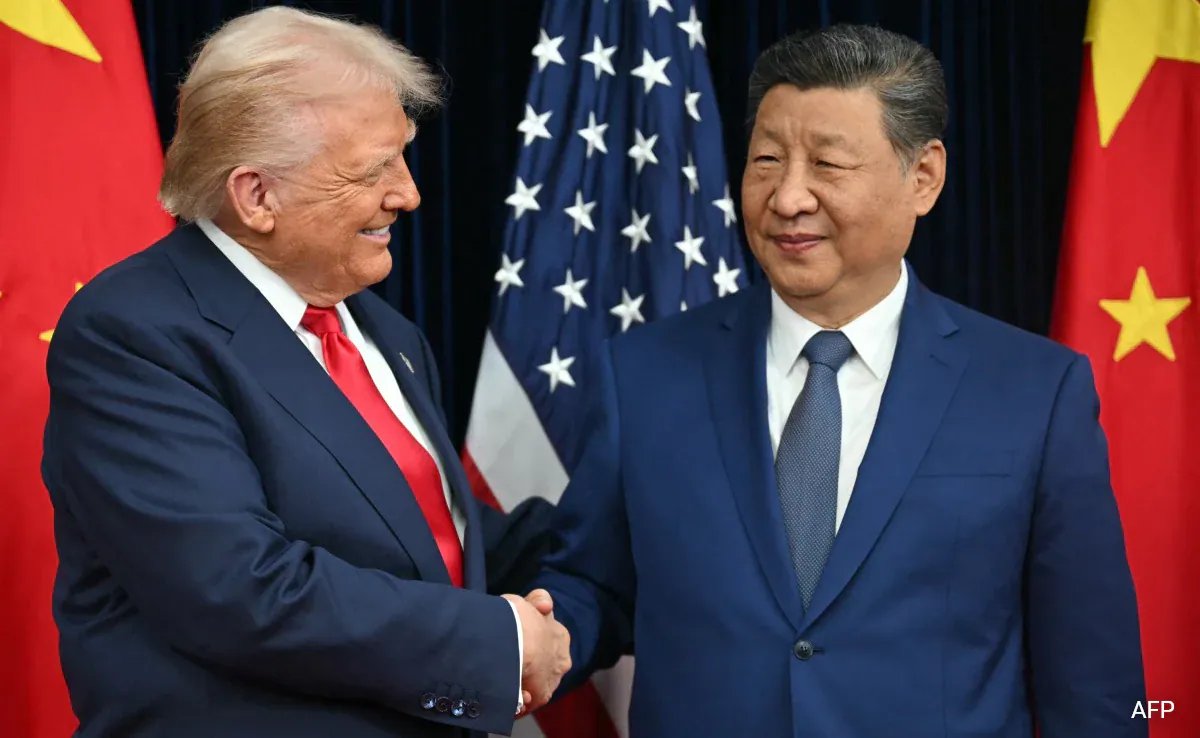
President Donald Trump boasted on Truth Social about a "very productive" session with Xi Jinping, highlighting a bizarre but significant point of agreement: the renaming of Artificial Intelligence. "Like almost everyone else, he seemed to like calling the poorly and inaccurately named Artificial Intelligence to a far more accurate and important name, SUPER INTELLIGENCE," Trump wrote. The tweet framed the two-hour morning discussion on September 24 as a turning point in bilateral tech relations, with the US President insisting that "tremendous things will be happening" as a result.
Xi offered a more measured, bureaucratic counter-narrative through the Chinese Foreign Ministry. He emphasized that both nations possess formidable AI capabilities and argued that competition must coexist with deeper cooperation. "The right thing to do is to draw on each other's strengths, not guard against each other," Xi stated. He proposed structured dialogue on the risks and benefits of the technology, explicitly demanding that AI remain under human control and serve a "people-centred" approach for humanity's progress.
The talks occurred against a tense backdrop of rapid model releases and growing Western anxiety over Chinese open-source systems. While the US focuses on containment, Beijing is pushing for a multilateral oversight mechanism. The meeting also touched on the most explosive issue in the relationship; Xi urged Washington to oppose "Taiwan independence" and handle the matter with extreme caution. This was the second time the leaders had met in under six months, a frequency that signals the high stakes of the current geopolitical landscape.
Diplomats are now watching for the implementation of the proposed "joint efforts" to prevent AI misuse. The next concrete step involves the technical delegations meeting to draft the specific terms of the exchange on AI risks, a process that will determine whether this nomenclature swap signals genuine partnership or merely a temporary truce in the tech war.