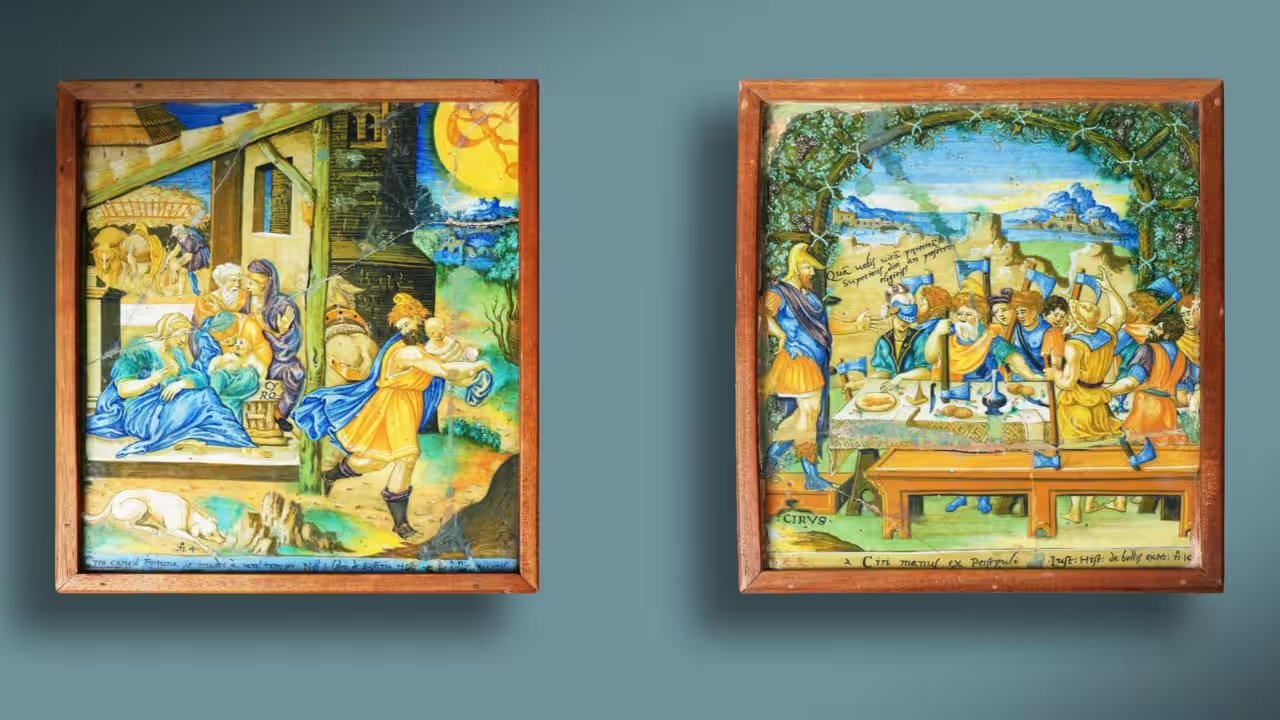
Two 16th-century maiolica plaques sold for a combined £100,000 at Woolley and Wallis, ending a 142-year mystery. The ceramic pieces, painted by Francesco Xanto Avelli in 1536, had hung unnoticed in a Dorset family hallway for decades. The owners sent photos to the auction house, unaware of the artifacts' historical weight.
John Axford, chairman and European ceramics specialist at Woolley and Wallis, recognized the signature initials "F.X.R." immediately. "When I opened the email containing images of the two plaques, I could hardly believe what I was looking at," Axford said. The plaques are pieces 4 and 10 from Xanto’s famous series depicting Cyrus the Great.
The provenance traces back to a 1884 London auction where General Augustus Henry Lane Fox Pitt Rivers bought the works. Pitt Rivers, founder of the Oxford museum that bears his name, kept the pieces in his family. Over 140 years, the lineage faded, and the plaques became ordinary wall decor in the West Country.
Xanto’s tin-glaze technique allowed no room for error; pigments absorbed instantly upon firing. Despite decades in a public hallway, the Dorset fragments retained vivid blues and copper-lustre shades. Two matching panels from the same series sit in the Louvre, accession numbers OA9028 and OA9029, highlighting the rarity of private holdings.
The sale concludes the search for these specific panels but leaves other missing pieces of the 39-panel series unresolved. Collectors and historians now turn to remaining archives to track down the rest of Xanto’s Urbino masterwork.