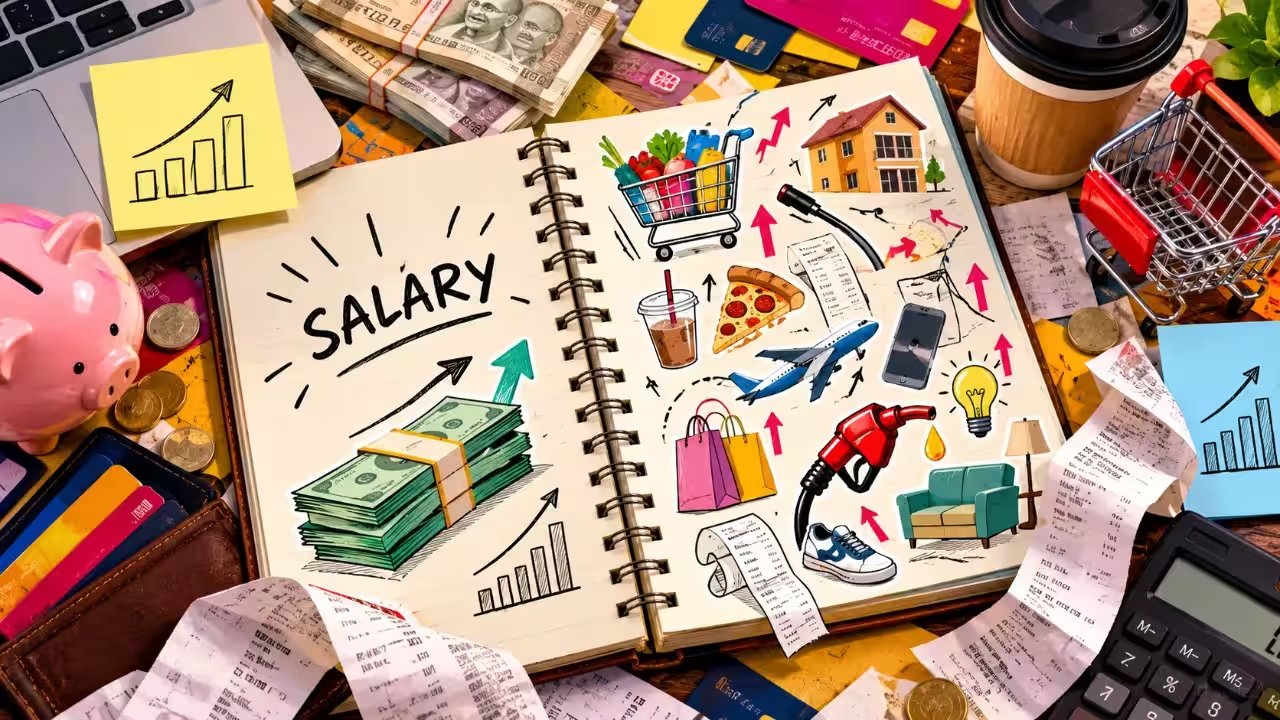
Companies across India lifted average salaries by 9% in 2026, according to Aon and Deloitte surveys, with a 9.1% hike pencilled in for 2027. Yet the boost in nominal pay barely translates into higher purchasing power when inflation runs ahead.
The Reserve Bank of India recorded retail inflation above 5% in September 2026, with food prices surging to 5.54% – the highest under the new CPI framework and the fourth straight month above the 4% target. Food inflation itself hit 7.74%, sparking a spike in staples such as onions, which saw a 108% year‑on‑year hike.
Jyoti Prakash Gadia, managing director of Resurgent India Limited, warned that rising basic costs are eating into the disposable income generated by wage hikes. "Housing, healthcare, education, transport, EMIs and insurance premiums are now consuming a larger slice of household budgets," he said. The RBI’s September 2026 survey found that 90.1% of urban households spent more on essentials, while 54.5% felt the economic outlook had worsened.
The gap between earnings and expenses is most acute for families with large fixed commitments. Even as salaries climb, monthly outlays on groceries, fuel and credit repayments leave little margin for savings or discretionary spending.
The RBI will release its next inflation report in October, and the Ministry of Labour is slated to convene a panel in early November to reassess wage adequacy in light of the widening cost‑of‑living gap.