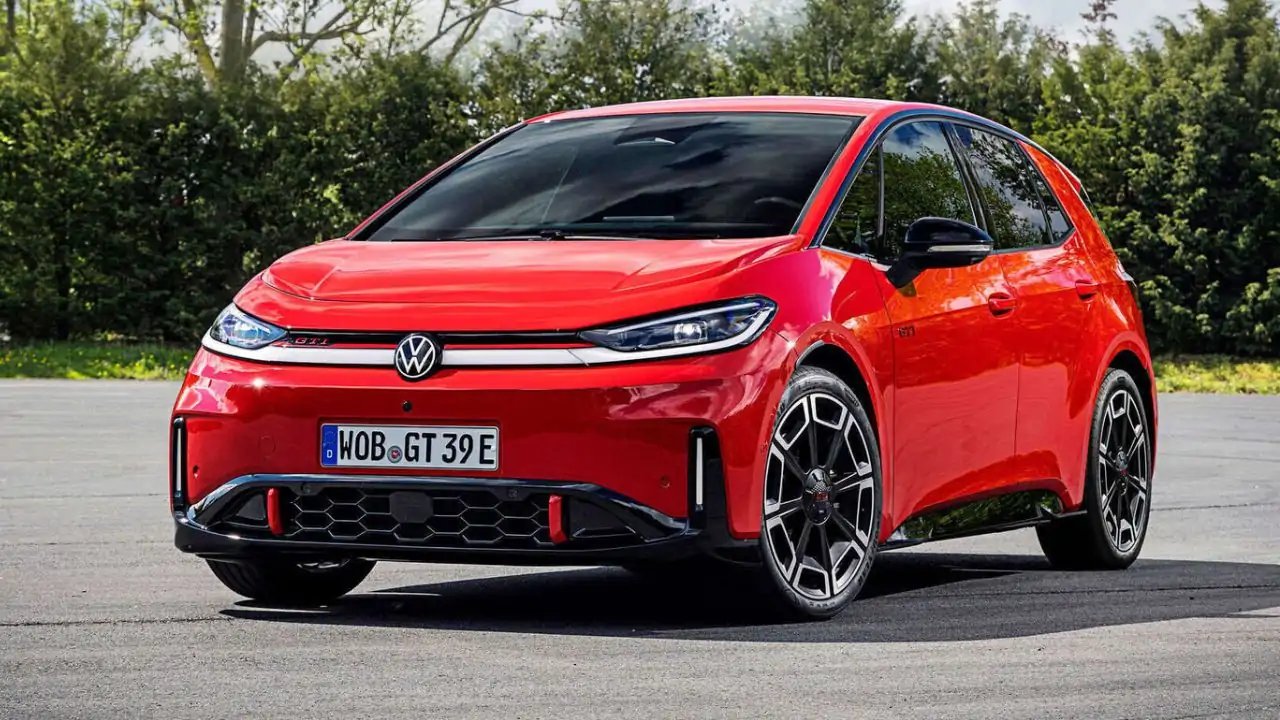
Volkswagen just broke its own rulebook. For 50 years, the GTI badge meant front-wheel drive, a specific character that enthusiasts know cold. But the new ID.3 GTI, revealed as a near-production concept, drops the front axle entirely. It’s rear-wheel drive now. That single shift signals VW isn’t just slapping a badge on an existing electric platform; they’re engineering a new mechanical identity for the electric era. It’s a bold move for a brand that has historically played it safe with heritage names.
The numbers back up the aggression. A 79 kWh battery feeds a rear motor producing 321.5 hp and 545 Nm of torque. The car sprints from 0 to 100 km/h in 5.6 seconds, with top speed capped at 200 km/h. Launch Control is standard, a first for a mainstream electric GTI. Range is pegged at 601 km, and you can recharge from 10 to 80% in about 29 minutes using 183 kW DC fast charging. These are preliminary figures, but they suggest a car that prioritizes performance without sacrificing daily usability.
Visually, it’s a love letter to the past with a digital twist. The red front stripe is there, along with a tartan seat pattern nodding to the 1976 original. But it’s dressed in vertical LED strips and 20-inch wheels named after the Wörthersee GTI meet. A dedicated GTI drive mode, accessible via a steering wheel button, tweaks throttle, steering, and suspension in real-time. It’s designed to feel engaged, not just fast.
Here’s the catch for Indian buyers: there’s no price tag, and no confirmation it will reach our shores. The regular ID.3 hasn’t been sold in India, so the GTI is a long shot. Pre-sales start in early 2027, and these concept-stage specs might shift before production. For now, it’s a European statement piece, but it sets a new benchmark for what a performance electric hatchback can be.