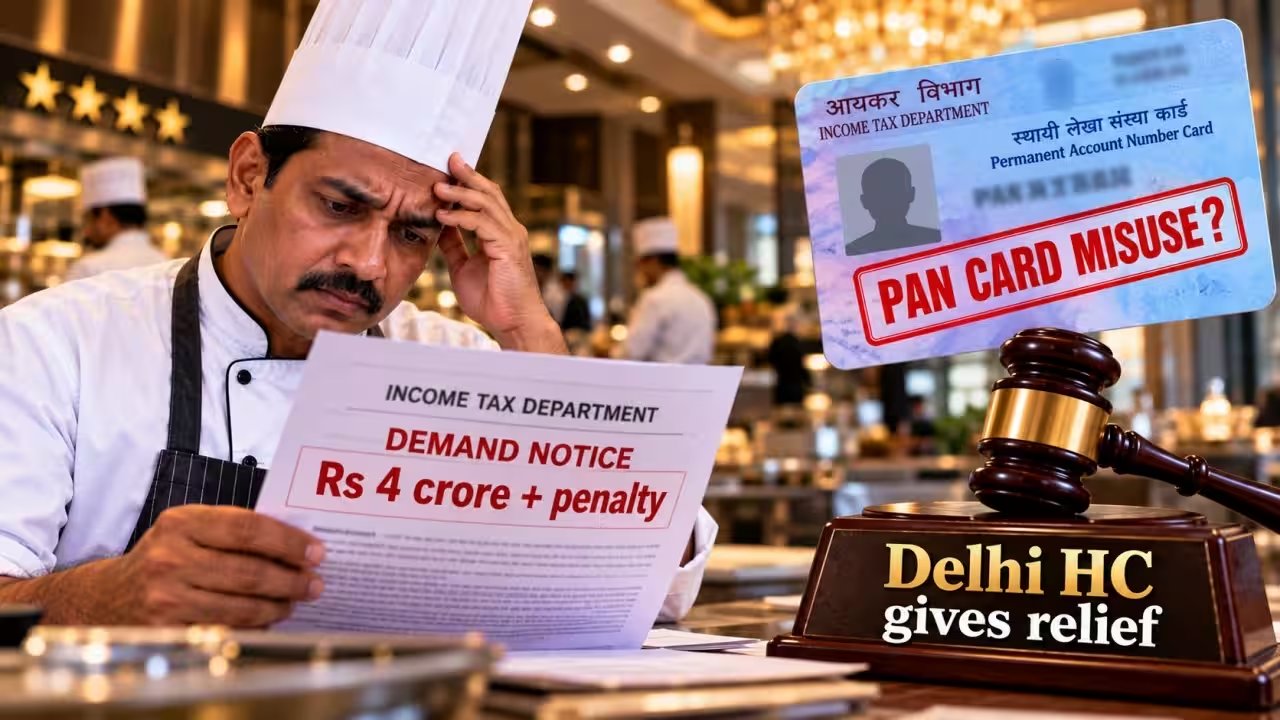
The notice, issued by the Income Tax Department, demanded nearly ₹4 crore in tax plus a penalty, alleging that the cook had generated ₹24.62 crore in cash sales through a packing‑materials firm—an activity he denied entirely.
He immediately combed through his Form 26AS, spotting the same cash‑sale figure flagged against his PAN. Suspecting identity theft, he filed complaints with Greater Kailash Police and the Delhi Police Cyber Cell, yet the Assessing Officer dismissed his claims and pressed him to either pay the tax or appeal.
With a liability of ₹4 crore, the cook would have been required to deposit about ₹78 lakh in advance—a sum far beyond the earnings of a contractual kitchen staff. He therefore turned to the Delhi High Court, arguing that the tax demand was based on a misused PAN and that no independent evidence linked him to the alleged transactions.
In its hearing, the court heard the cook’s lawyer, Pranshu G, who highlighted the absence of any trace of the packing‑company’s involvement in the cook’s banking or employment records. He pointed to bank statements, payroll details, and the fact that the cook had supplied copies of his PAN to multiple contractors—any of whom could have duplicated the credentials.
The High Court found that the assessment depended solely on the Form 26AS entry and the tax portal’s data, with no corroborating investigation of the alleged buyer or seller. It noted the Assessing Officer’s failure to issue a Section 133(6) notice to the packing company or to record its owner’s statement, thereby violating procedural safeguards.
The court cancelled the entire tax demand, freeing the cook from liability and setting a precedent for cases involving PAN misuse. The ruling also signals to the Income Tax Department that it must substantiate claims with independent evidence before levying such heavy penalties.