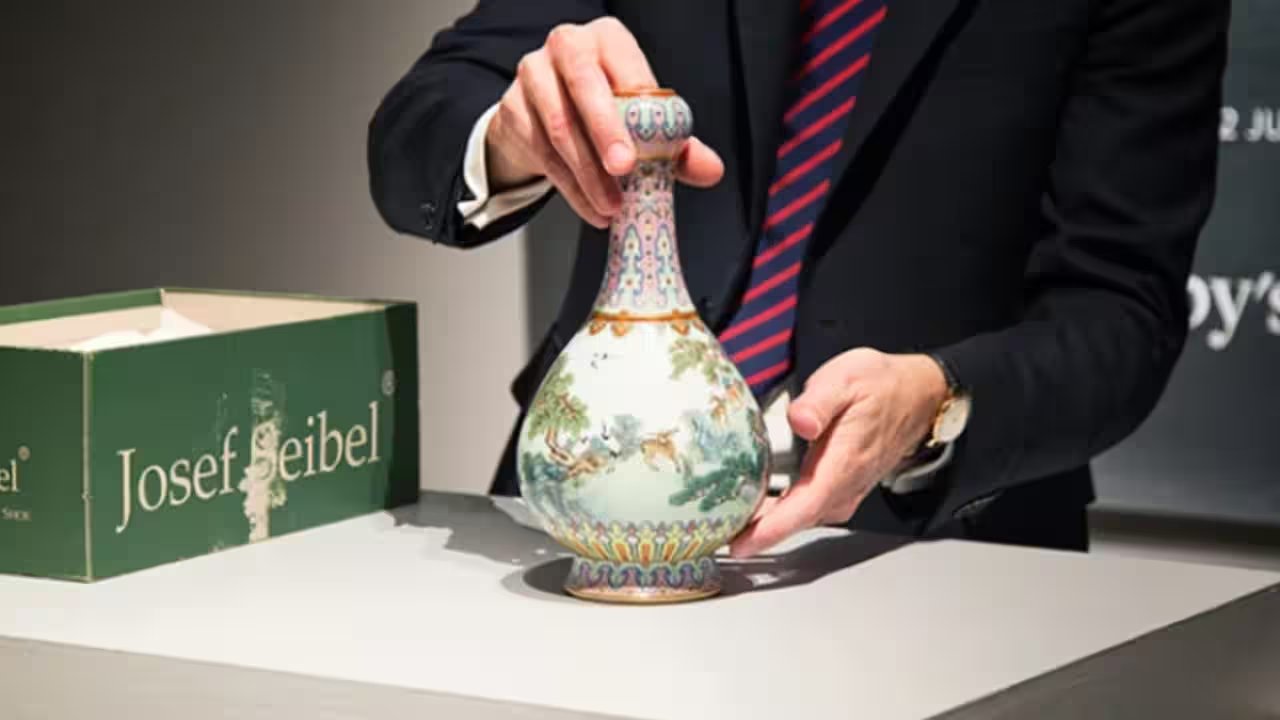
The French family sold an 18th‑century Chinese porcelain vase at Sotheby’s Paris on 28 March 2026, earning €16.18 million in a 20‑minute bidding frenzy. The vase, wrapped in newspaper and slipped into an old shoebox, was discovered in the attic of the family home in 2018.
Sotheby’s Asian‑art specialist Olivier Valmier first flagged the item after a widow from the family called in March 2018 to ask about the value of her inherited objects. Valmier urged her to bring the vase to the house, and despite train strikes the owner arrived with the fragile piece in a plastic bag.
Experts instantly recognized the vase as a rare Famille‑Rose piece made for the Qianlong Emperor’s court, with nine deer and five cranes painted in Yangcai blue. The inventory records from 1765 and 1769 confirm it was commissioned for the emperor’s Buddha Hall and birthday gift.
The sale eclipsed the previous French record for Chinese porcelain and will be remembered as a landmark auction for imperial Chinese art. A single similar vase resides at Musée Guimet, underscoring the rarity of the Paris find.
The family, who had kept the vase for decades, described it as “too pink” and had never imagined its worth. The discovery has reinvigorated interest in the family’s collection, which includes a Japanese Satsuma censer from the 1867 Universal Exhibition.
Sotheby’s will feature the sale in its 2027 catalogue, and the record price may influence valuations of other Qing‑dynasty porcelains.