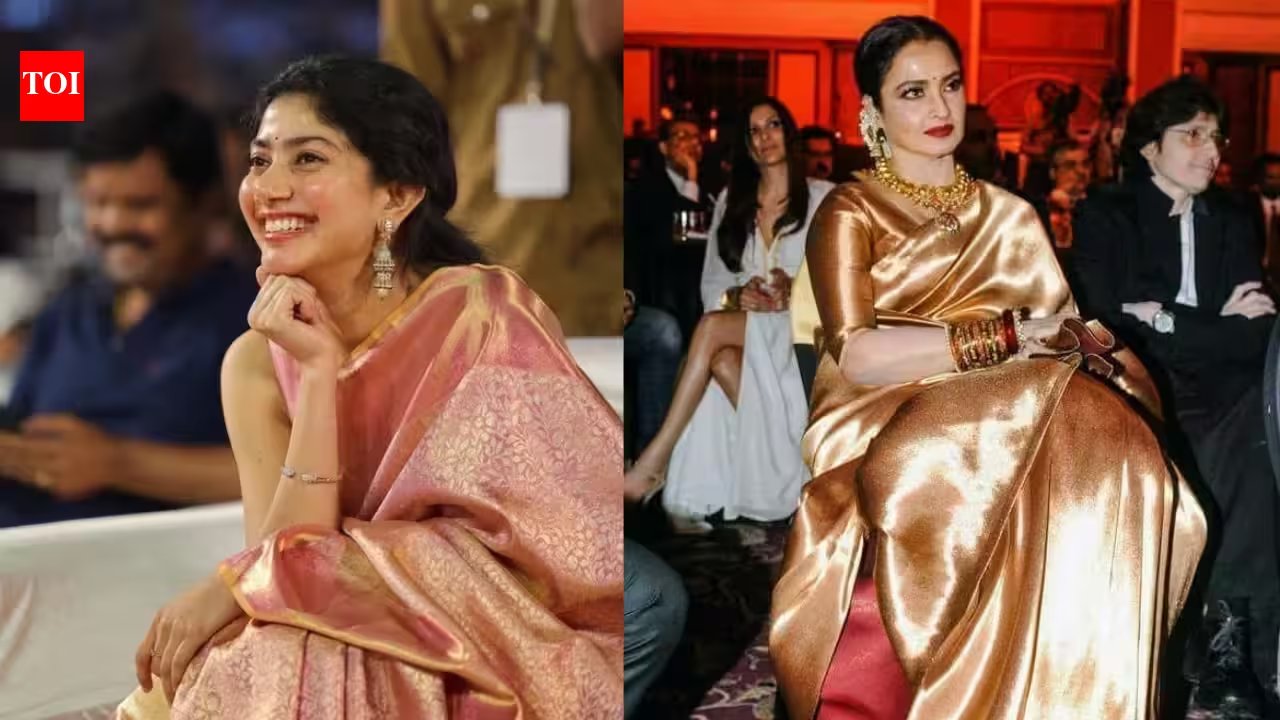
Run your fingers along the reverse side of the border. If you feel stitched embroidery threads instead of a continuous weave, put the saree down. Authentic Indian silks reveal their heritage not through surface sheen or price tags, but through the mechanics of the loom itself. Across five distinct weaving belts, regional artisans leave unmistakable technical signatures—from the structural interlocking of threads to the density of the mulberry silk yarn.
Tamil Nadu’s Kanchipuram district anchors the heaviest of these traditions. A genuine Kanjeevaram saree uses pure mulberry silk paired with solid zari, yielding a substantial, structured drape that holds its shape instantly. Look closely at the boundary where the body meets the border. Traditional weavers use the korvai technique, manually interlocking contrasting dyed yarns so the border and central body fuse seamlessly. The motifs pull directly from temple architecture: stylized rudraksha beads, temple spires, checks, and peacocks woven into bold, high-contrast palettes.
Varanasi takes a fundamentally different approach. Banarasi silks reflect historic Mughal design, relying on dense brocade where patterns are woven directly into the fabric using gold and silver zari threads. Real Banarasi work features continuous floral jaal networks, butidar drops, and kalga or paisley motifs. Turn the saree over. A genuine handloom brocade will show floating zari threads integrated directly into the foundational wrap, never sitting as an aftermarket patch.
| Saree Style | Region of Origin | Primary Fiber | Distinguishing Weave Marker |
|---|---|---|---|
| Kanjeevaram | Kanchipuram, Tamil Nadu | Mulberry Silk | Interlocked korvai border; heavy body weight |
| Banarasi | Varanasi, Uttar Pradesh | Woven Silk Brocade | Mughal floral jaal; gold and silver zari |
| Chanderi | Chanderi, Madhya Pradesh | Silk and Cotton Blend | Translucent sheer texture; coin and floral butis |
| Paithani | Paithan, Maharashtra | Fine Silk | Interlock tapestry weave; bangadi mor border |
| Mysore Silk | Karnataka |
Prever light, breathable drapes? Head to Madhya Pradesh. Weavers in the historic town of Chanderi craft semi-transparent, airy textiles by alternating raw silk with cotton warps. The result is a sheer gossamer fabric that catches the light with a subdued glow. Instead of overwhelming brocade fields, authentic Chanderi uses dainty motifs—small coins, birds, and geometric roundels—bordered by narrow, delicate ribbons of zari. It remains the ideal choice for warm-weather formal wear.
Further west in Paithan, Maharashtra, the hallmark lies entirely in the pallu. Paithani sarees rely on an intricate interlock technique akin to fine tapestry weaving, where artisans create opaque, mirror-like designs of parrots, lotuses, and peacocks. Traditional weavers complete the design with distinct bangadi mor (peacock in a bangle) motifs and narali (coconut) patterns along the borders. For everyday elegance, Karnataka's Mysore silk shifts focus entirely to touch. Spun from top-grade mulberry silk, a pure Mysore saree foregoes dense surface patterning entirely, letting an unblemished, liquid fall and a sharp, metallic border speak for the craft.
| Single-Tone Mulberry Silk |
| Featherweight drape; solid hue with clean zari edge |