Wakode, a second-year student in the Department of Energy Science and Engineering, was found dead in his hostel room on the Powai campus after a brief counselling session with his instructor and Head of Department. The administration confirmed that Wakode had uploaded an examination question paper to ChatGPT to obtain answers, a violation of exam rules. Crucially, IIT Bombay stated that no disciplinary proceedings were initiated against him. The faculty explicitly assured him the incident would not impact his academic career. He returned to his room and was discovered lifeless later that evening.
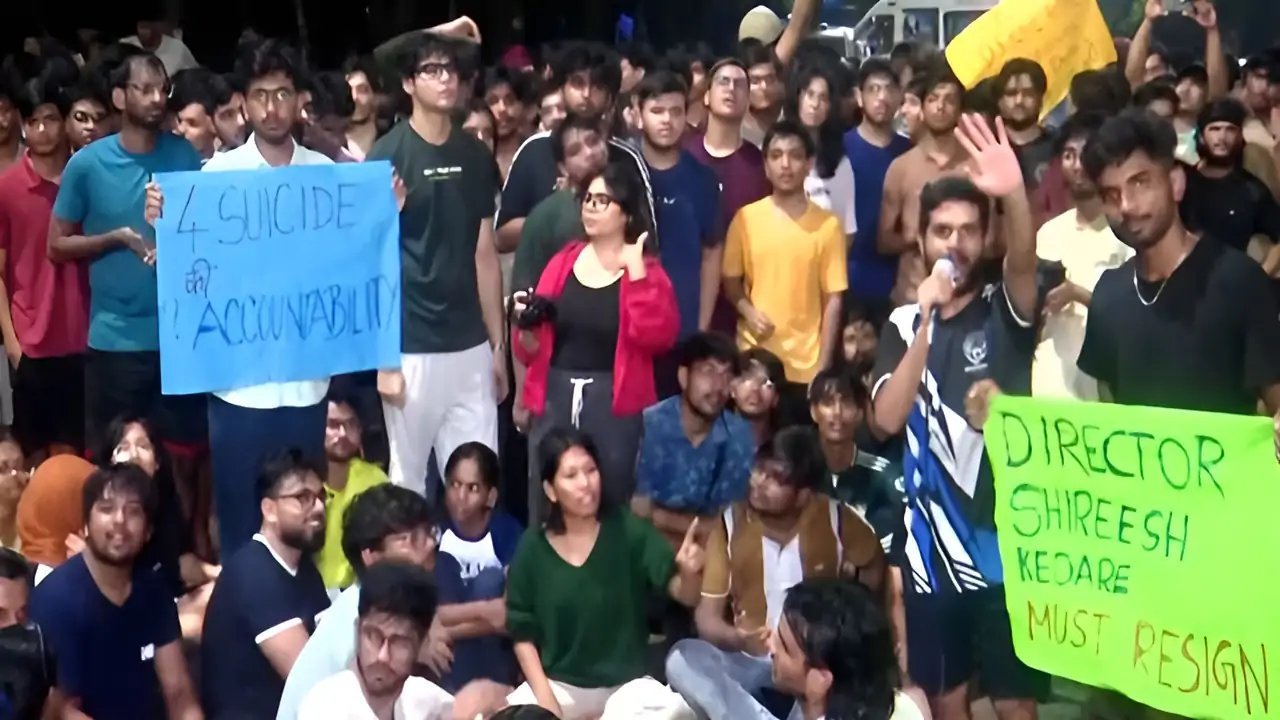
The death has ignited outrage on campus, with students staging protests and demanding the immediate resignation of the institute’s Director. Congress leader Pawan Khera seized on the tragedy to attack the government’s handling of student welfare. In a post on X, Khera noted that this is the third reported student suicide at IIT Bombay in just six months. He questioned why mental health support remains so thin at India's premier technical institutions. "How many more suicides before student mental health stops being an afterthought for this government?" Khera asked.
The political fallout is backed by stark data cited by the Congress party. Between October 2022 and October 2025, 1,54,046 college students aged 18–25 contacted the Tele-MANAS helpline. Of those, 5,642 calls involved suicidal concerns. Khera argued that the scale of this distress proves the current system is failing students under immense academic pressure. The incident forces a reckoning with how institutions handle stress, even when they claim to offer support.
IIT Bombay issued a statement expressing grief and confirming that it is supporting the student's friends, classmates, and faculty affected by the tragedy. The institute said the circumstances surrounding the death are being examined by appropriate authorities. The next step is clear: the administration must address the mounting student demands for leadership change, while the broader question of academic pressure versus mental health infrastructure remains unresolved in policy circles.