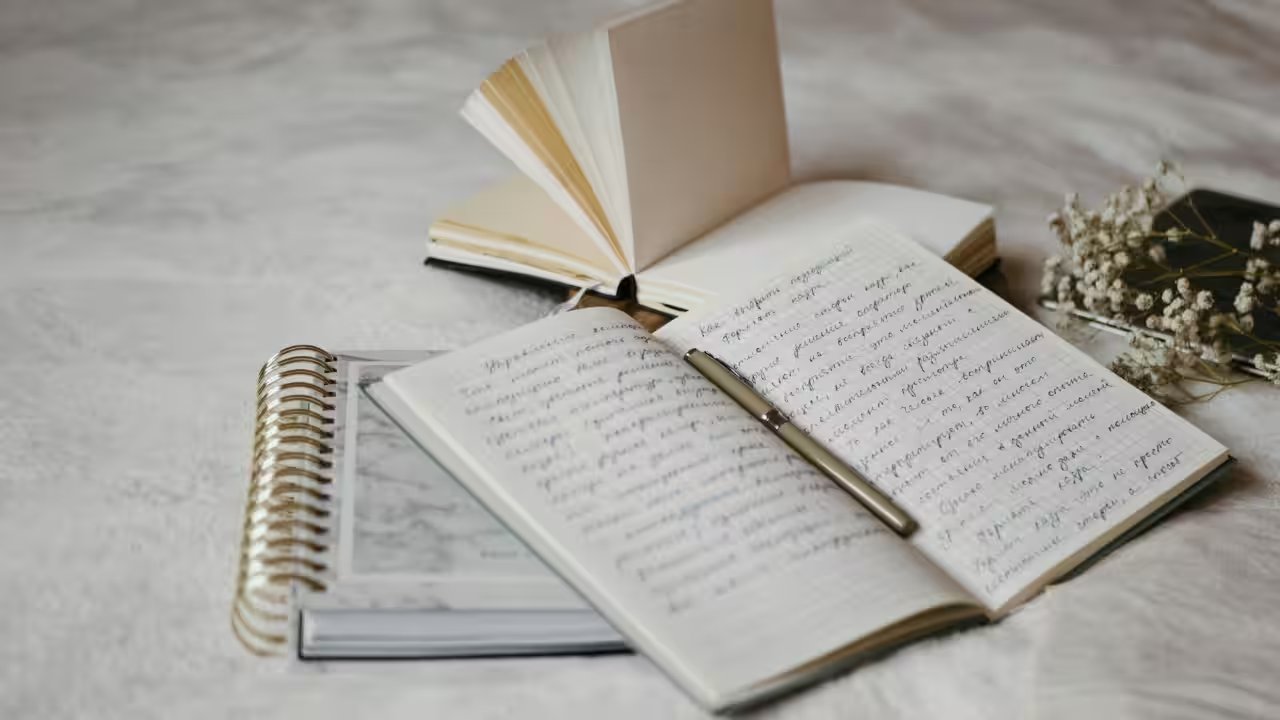
You do not need another blank notebook.
Yet your shelf holds three bound journals with crisp, untouched heavy paper—silent sentinels bought on impulse and saved for some unspecified, immaculate future project. Your phone houses a notes app that opens in two seconds flat. It tracks grocery lists and meeting memos without costing a rupee. But tapping on glass leaves the senses cold. The urge to pick up a textured vintage diary, slide a weighted metal pen across thick cream grain, and claim a clean page remains stubbornly immune to screen culture.
Psychoanalysts now have an explanation for that desk drawer stuffed with gel pens and fountain ink. The habit leans directly on symbolic self-completion theory—a concept pioneered by psychologists Robert Wicklund and Peter Gollwitzer. People do not buy physical tools simply to scratch marks on a surface. They collect possessions to anchor and broadcast who they believe they are. A visual creator grabs vibrant brush pens to validate their artistic pulse. A meticulous planner lines up ribbon-bound, dated folios to summon order out of chaos. The notebook is not an errand. It is a physical anchor for personal identity.
A 2025 study led by researchers Koksal, Koskie, and Locander in the Journal of Retailing and Consumer Services drilled into this exact impulse across 328 surveyed consumers. The data revealed that when people prize visual aesthetics, the emotional bridge between brand appreciation and genuine personal attachment tightens dramatically. That visual hunger explains why two journals with identical page counts feel entirely different in hand. A cheap pad feels like office drudgery; an embossed, thread-sewn spine feels like private sanctuary.
Self-expression delivers a tangible emotional reward every time the nib hits paper. A 2022 research review by Carter Morgan and Claudia Townsend pinpointed two distinct perks from these aesthetic choices: establishing who you are, and unlocking raw enjoyment during daily use. Selecting an instrument that mirrors your personal taste transforms an otherwise grating daily to-do list into a small pocket of tactile pleasure. The physical drag of pigment against paper slows the breath. It carves out friction in an era where digital life moves too fast to feel.
So stop feeling guilty about that unblemished leather notebook resting on your nightstand. Do not wait for a life-altering epiphany to break the spine. Pick up your favorite pen tonight, scribble through the opening leaf, and let the page do what it was actually designed to do.