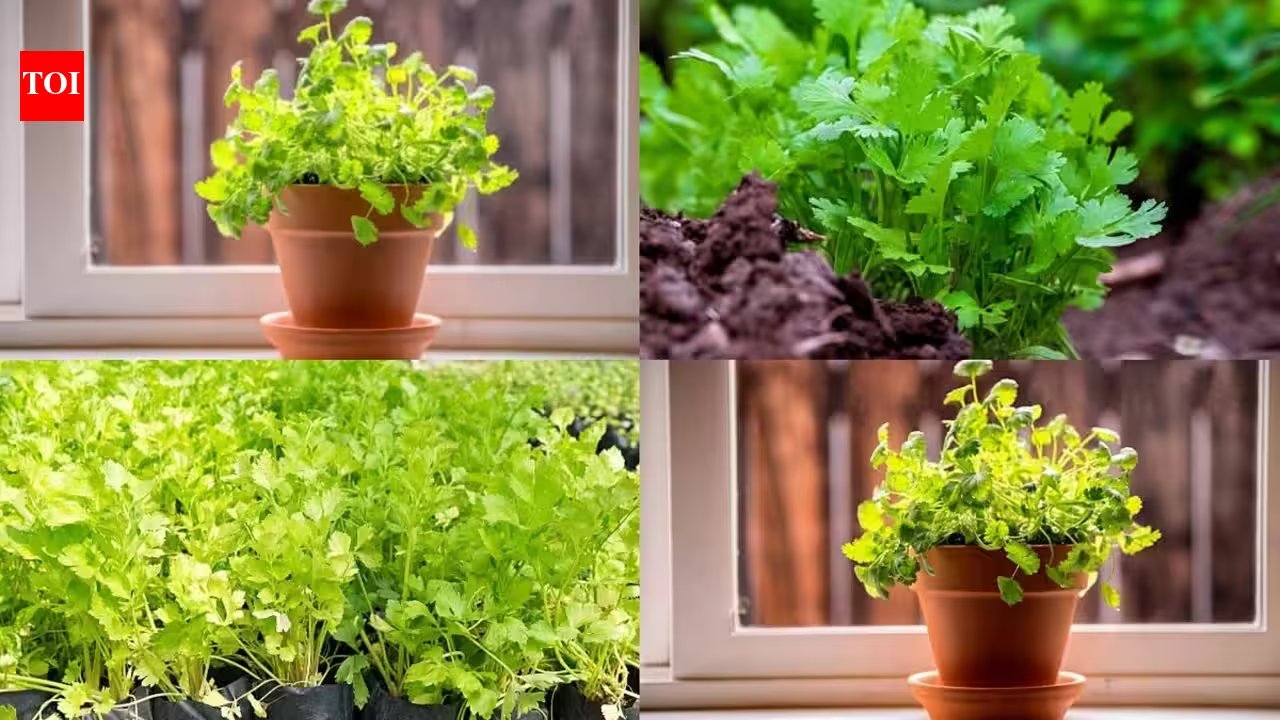
Summer heat ruins coriander. The plant bolts, flowers in panic, and leaves turn bitter before you can pluck a handful for evening dal. Winter changes everything. Crisp morning air slows growth, sweetening the stems and thickening foliage into lush, fragrant bunches. Anyone with a sunny windowsill or an eight-inch balcony planter can master it. You do not need a backyard plot. Just cracked dhania seeds, loose soil, and four to five hours of direct morning sun.
The entire operation hinges on root depth. Coriander drives down a single, sensitive taproot that rots in shallow, waterlogged mud. Pick a pot at least 8 to 10 inches deep with open drainage holes. Pack it with a loose, well-draining potting blend enriched with cocopeat and seasoned compost. Before sowing, grab a kitchen rolling pin. Every spherical dhania pod actually encases two separate seeds. Press and roll them lightly across a flat board until the hulls split, then soak them in water overnight. Scatter the split seeds half an inch deep, spaced a couple of centimetres apart, and dust them under a light layer of soil. Mist the surface gently with a hand sprayer so the seeds stay put. In cool weather, sprouts push through the dirt within one to two weeks.
Patience pays off. Once the emerald seedlings rise, thin the crop so plants stand two to three centimetres apart. Crowded stalks choke each other into spindly threads. Never throw those pulled thinnings away—rinse and toss them directly over hot curries as intensely fragrant microgreens. Overwatering kills more winter herbs than frost. Because winter chill slows down evaporation, wet the soil only when the top layer feels dry to the touch. Always water in the morning. Leaves that sit wet through cold nights invite fungal spots, black mould, and fatal root rot. If your planter rests in a base saucer, drain out standing runoff immediately. Mulch the topsoil with a scattering of dry leaves or straw to lock in balanced moisture without creating muck.
Brisk winds toughen the stems, but hard frost ruins tender leaves. On freezing nights, tuck containers close to exterior building walls or drape a light cotton cloth across the foliage, pulling it away once morning sun breaks through. Keep a sharp eye on tender stem tips for clusters of sap-sucking aphids. Knock them off with a firm jet of water, or douse the leaves with a mild neem oil spray. Avoid chemical pesticides entirely on greens heading straight to your kitchen table.
Coriander reaches harvest readiness within three to four weeks, once stalks climb six to eight inches high. Put down the garden trowel. Never pull the plant up by the roots. Snip only the outer mature stems using clean kitchen scissors, leaving the central young shoots untouched to fuel continuous leaf production. Never trim away more than a third of the plant at once. Sow a fresh batch of split dhania in a second container every two weeks to maintain an unbroken harvest right through spring.