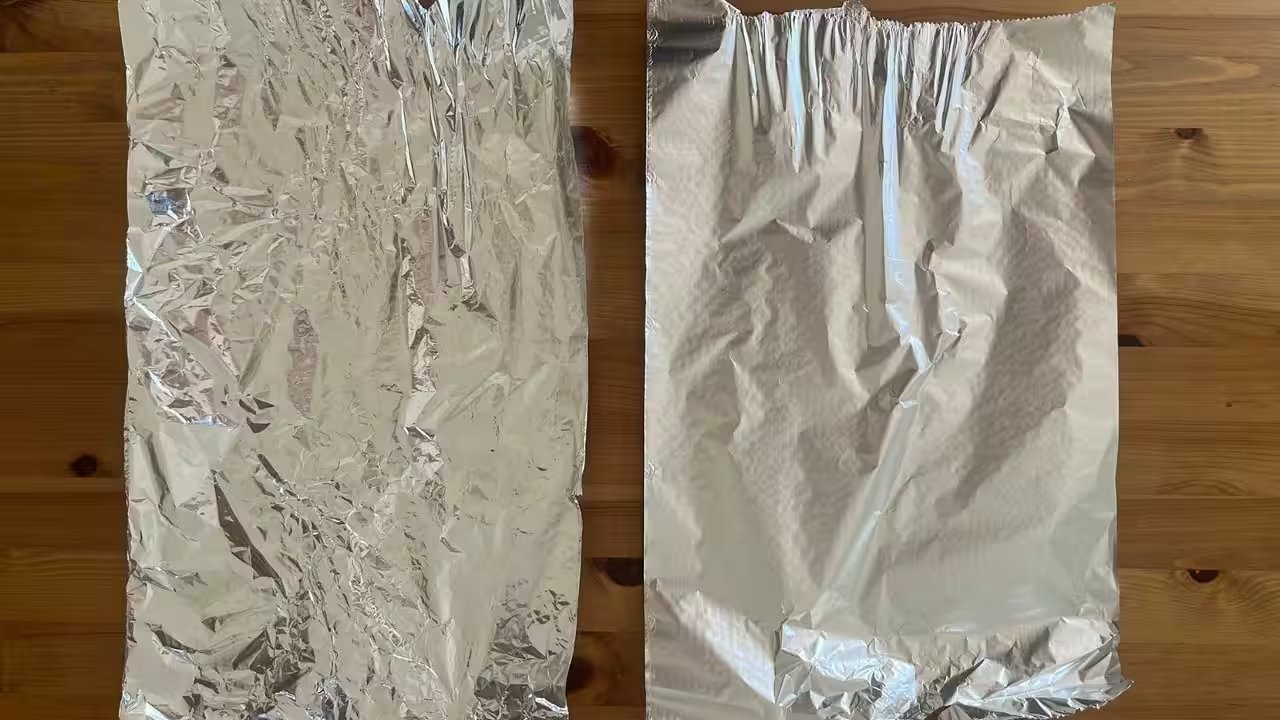
Flip the sheet over all you want. The truth is simple: standard aluminium foil cooks, bakes, and freezes food identically no matter which side faces up. Home cooks across generations grew up hearing rigid kitchen rules about heat reflection, locked-in moisture, and ruined roasts. Yet those old habits rest entirely on a manufacturing byproduct rather than thermal science. Whether you wrap a warm breakfast paratha, seal spiced fish for the oven, or cap a deep casserole dish, both faces deliver the exact same outcome.
The stark visual contrast boils down to factory mechanics. During the final milling stage, industrial equipment passes two separate layers of foil through heavy rollers at the same time to keep the ultra-thin metal from tearing under pressure. The exterior surface pressed directly against mirror-polished steel rollers emerges with a dazzling gleam. Meanwhile, the interior side rubbing against the twin sheet turns out soft and matte. That textural split looks deliberate—almost scientific—but it remains an accidental fingerprint of the press.
Both textures absorb and conduct oven heat at virtually identical speeds. Lab testing confirms the difference in reflectivity between the mirror side and the matte surface registers so faintly that home ovens show zero measurable cooking variance. Your curries will not simmer faster, your potatoes will not bake quicker, and your leftover chicken will not dry out simply because you faced the matte side outward. Kitchen veterans who meticulously flip sheets before lining baking trays waste precious prep minutes on pure myth.
But one distinct kitchen scenario actually demands strict attention. Non-stick foil carries a specialised non-stick food release coating applied to just one surface—the dull side. If you line a roasting sheet with the gleaming side facing your marinated paneer or delicate baked goods, the food will weld straight to the hot metal. Manufacturers print quick identification marks directly on the exterior carton to prevent messy burns and torn bakes. A reliable rule of thumb applies here: if the printed text on the sheet reads upright to your eye, the proper non-stick surface faces up.
Sloppy wrapping ruins food far faster than finish placement. Always fold and crimp foil margins tightly over pan edges to trap internal steam and retain natural roasting juices without leaks. And when you pull that scalding tray from the oven grate, pause for two minutes before peeling back the sealed foil. Trapped steam shoots out fast and scalds bare skin within seconds.