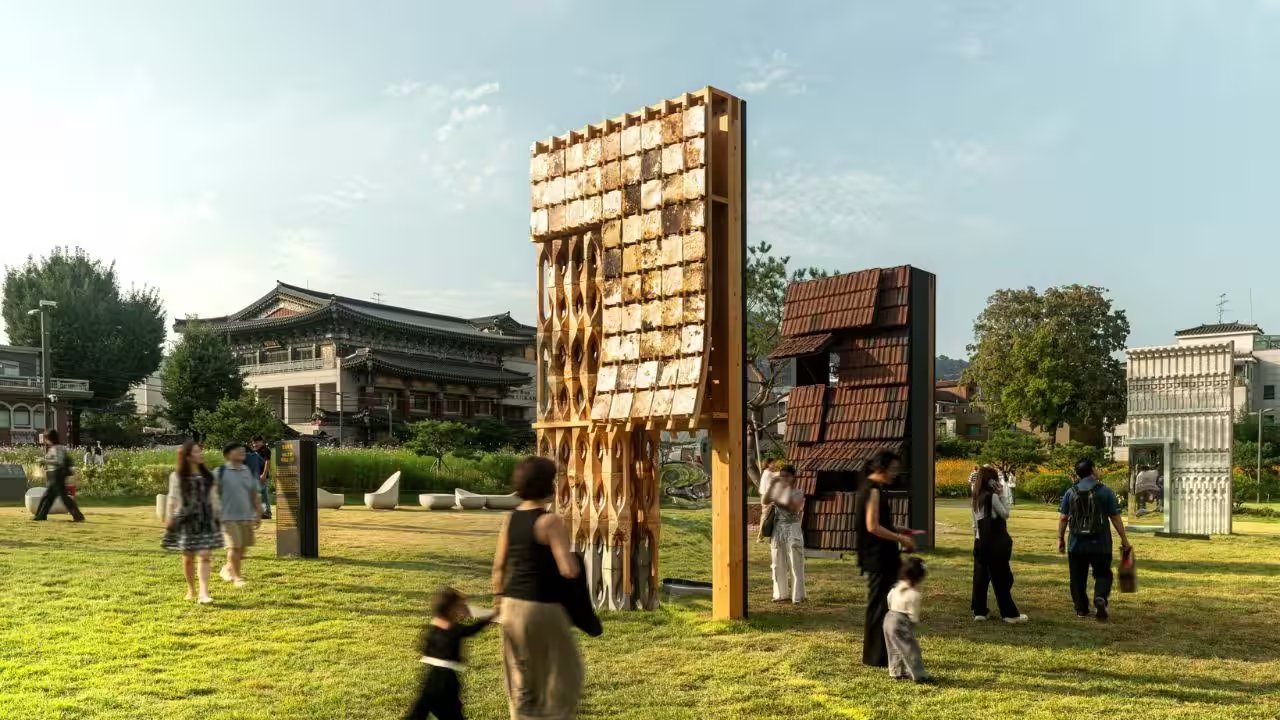
Anomalia studio erected 24 mycelium walls in Songhyeon Green Plaza for the 2025 Seoul Biennale, each block weighing 1.5 kilograms while incorporating 2.1 kilograms of agricultural waste. The walls achieved a compressive strength of up to 1.5 tons, a figure the studio cites as proof that biologically grown materials can meet structural demands.
Thomas Heatherwick, the Biennale curator, selected Anomalia after a review of 24 proposals, positioning the installation as the opening piece of the event’s outdoor exhibition. The project’s scope extended beyond a single country, with design work in Mumbai, material cultivation in Bandung, and final assembly in Seoul.
The mycelium, a fungal root network, bound the crop waste into lightweight blocks through a low‑energy growth process that required no high‑heat manufacturing. MYCL, the Indonesian partner, described the façade as breathable and porous, allowing light and air to permeate while offering a tactile, uneven surface that challenges conventional wall aesthetics.
In addition to its structural merits, the wall’s composition is biodegradable and carbon‑negative, with MYCL noting that the materials are engineered to return to the earth at the end of their useful life. Anomalia highlighted that the modular wooden framework enabled rapid assembly and potential scalability for future projects.
The installation will remain on display until the Biennale’s conclusion in late 2025, after which the walls are expected to be dismantled or repurposed. The exhibition aims to spur dialogue about sustainable building practices, and industry observers predict the mycelium approach could inform next‑generation construction materials.