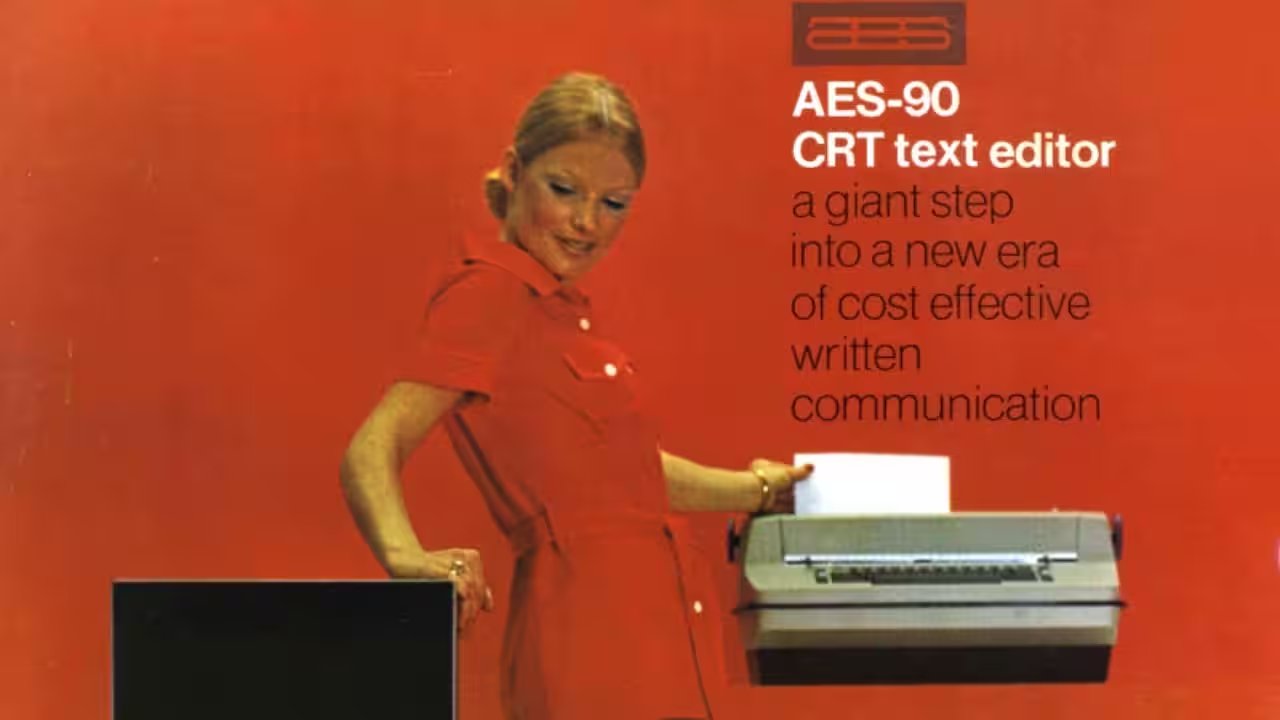
Carleton University’s School of Computer Science released a statement on 2 September 2026 that a 45‑year‑old AES Alphaplus 12, sealed in its original shipping box, was unearthed from a dusty barn near Edmonton’s outskirts. The machine had been on display at the Northern Alberta Institute of Technology before falling into neglect.
AES Data Ltd., the Montreal‑based firm that pioneered the AES‑90 word processor, engineered the Alphaplus 12 to embed a printer directly into its monitor – a rarity in the early 1980s. The design introduced automatic line wrapping, text justification and numerical alignment, features that were uncommon in word‑processing equipment of that era.
Only two references to the Alphaplus 12 survive: a 1981 Canadian trade magazine listing and a catalogue entry in a British museum archive. Ingenium, Canada’s national science museum, holds AES models but makes no mention of the 12, underscoring the rarity of the find.
Dr. Maya Singh, chair of Carleton’s Computer Science department, said the upcoming unboxing on 2 October at 2 pm in room 4155 of the Herzberg Building will allow technicians to peer into the machine’s circuitry, hoping to document its architecture for the first time in four decades. A livestream will broadcast the proceedings to a global audience.
The discovery echoes earlier vintage‑computer recoveries, including the 2,200 NABU machines uncovered in a Massachusetts barn in 2023 and two Q1 microcomputers found at Kingston University in London. Those finds highlighted how much of Canada’s early computing history remains buried in rural sites.
After the unboxing, Carleton plans to archive the Alphaplus 12 in its own museum and will present preliminary findings at the forthcoming Canadian Computing History Conference in November. The event is expected to fill a 40‑year documentation void and shine a light on AES Data’s legacy.