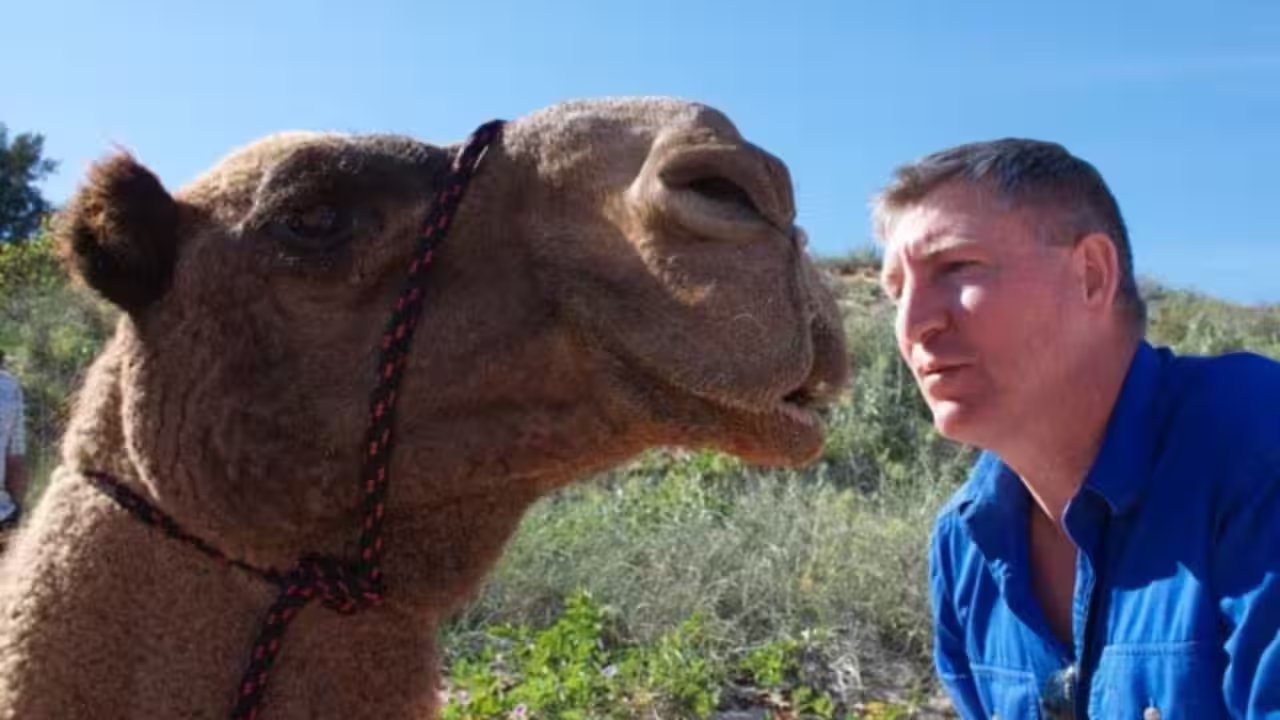
David Mason stood before Kabul in Broome, tears welling up as he faced the 17-year gap since they last walked side by side. It was 2015, and the camel—once the lead of three beasts carrying Mason’s supplies across the Australian desert—was now under the care of cameleer John Geappen on the Kimberley coast. The reunion marked a full circle for the 1999 Australian Geographic Adventurer of the Year, who had completed a 236-day, 5,500-kilometre solo trek in 1998, the first person to do so with camel companions.
The journey began not with a map, but with a moment of disillusionment. Mason, then a French Foreign Legionnaire, sat atop a hill overlooking Ethiopia and realized there was "a heck of a lot more to life than this." The idea struck him with blunt simplicity: catch some camels, walk across Australia. It took months of preparation to turn that impulse into reality, but the result was a grueling eight-month slog that raised thousands for the Fred Hollows Foundation.
Kabul was the anchor of that expedition. Mason described the animal as "phlegmatic, powerful and utterly trustworthy," noting that without the camel’s steady presence through cold nights and scorching days, the crossing would have been impossible. The trek wasn't just a physical feat; it was a spiritual recalibration. Mason compared the solitude to a single-handed yachtsman’s ocean crossing, finding a sense of ownership over his days that he couldn't replicate in civilian life.
Life after the walk did not slow Mason down. He traded the desert for the battlefield, completing four tours of Iraq with the Australian Defence Force. He eventually settled in Canberra, working as a military lawyer. Yet, the freedom of those 236 days remained a constant reference point. "I think about it all the time," Mason told ABC News, acknowledging that the trek defined a part of him that no amount of overseas service could replicate.
The story of the 1998 crossing has since been documented in two books, cementing Mason’s place in Australian adventure history. But for Mason, the legacy isn’t the award or the books. It’s the memory of walking into the horizon with a camel who never complained, a bond that survived nearly two decades of separation, war, and career shifts. Kabul’s later years on Cable Beach, part of the tourist camel trains, offer a quiet, dignified epilogue to a journey that started with a simple, radical question: why not?