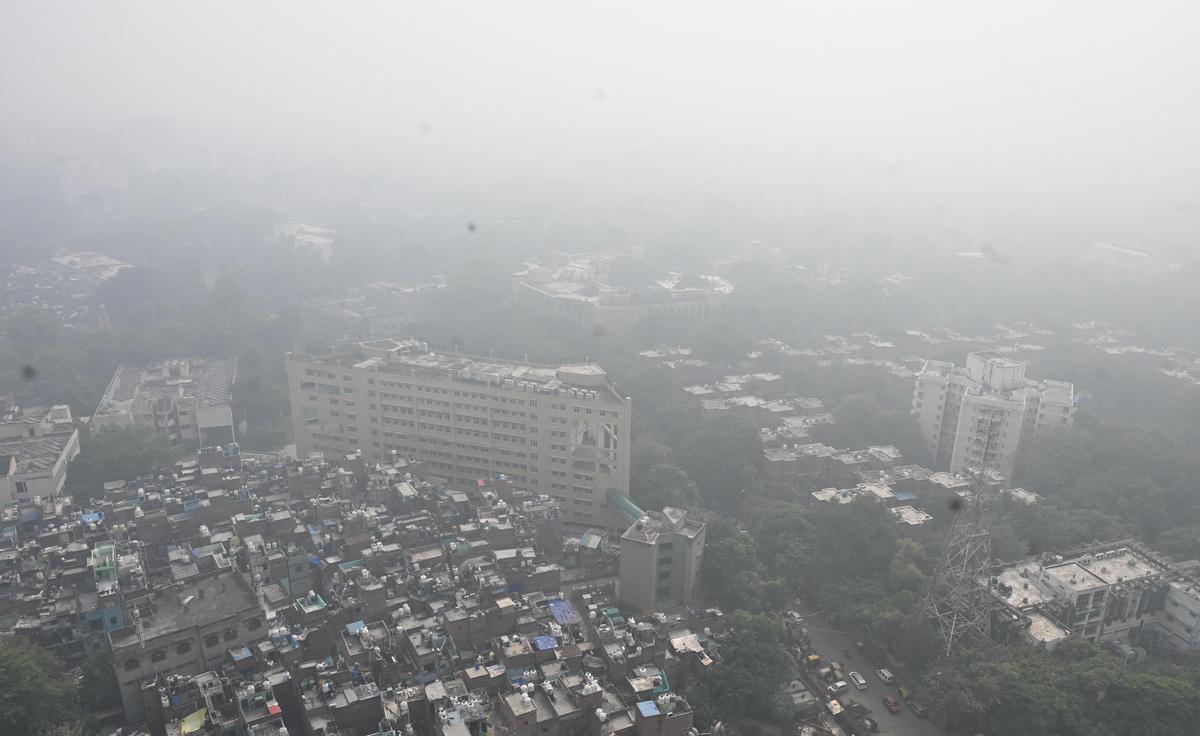
A dense sheet of acrid smog settled over the capital on Friday morning, pushing the city's 24-hour average Air Quality Index to 391. The Central Pollution Control Board classified the overall reading as very poor, but ground stations across several neighborhoods breached the severe threshold. Toxic air gripped residential sectors and transit corridors alike. Breathing became an ordeal. The morning count marked a steep jump from Thursday's 4 p.m. reading of 369 and Wednesday's 377, reversing brief gains and plunging millions into unsafe air.
Public health risks climb rapidly once readings enter this bracket. According to the CPCB, severe-grade air pollution inflicts physical harm on healthy individuals and seriously impacts patients with pre-existing cardiovascular or respiratory ailments. Fine particulate matter suspended in sluggish air penetrates deep into the lungs, triggering throat irritation, wheezing, and acute chest tightness. For asthmatics and elderly citizens, prolonged exposure can induce severe bronchospasms. Medical guidelines urge vulnerable groups to halt outdoor exercise, seal living quarters during peak morning hours, and monitor oxygen levels when respiratory distress surfaces.
Pockets across north, west, and south Delhi clocked severe pollution levels before daybreak. Monitoring stations at IIT Delhi, ITO, Dwarka, Rohini, Punjabi Bagh, Alipur, Bawana, and Jahangirpuri all logged hazardous particulate concentrations. The foul air did not stop at state boundaries. Satellite cities across the National Capital Region choked under identical pressures, with Noida, Gurugram, and Faridabad registering very poor readings through the morning rush. Stagnant winter conditions—marked by plunging mercury and vanishing surface winds—trapped vehicle exhaust, construction dust, and smoke from seasonal stubble burning close to the pavement.
Yet protective gear remains financially out of reach for a vast majority of households. Despite formal observations from the Delhi High Court and an advisory report by a Parliamentary Standing Committee urging authorities to slash the tax on air purifiers and HEPA replacement filters from 18% to 5%, the GST Fitment Committee retained the higher 18% levy. That decision leaves medical-grade indoor air filtration taxed as a luxury item, even as clinicians recommend mechanical air scrubbers to shield infants and pulmonary patients from indoor particulate accumulation.
Relief will not arrive quickly. Projections from the Central government's Air Quality Early Warning System for Delhi show the capital's atmosphere is likely to hover in the severe category for the next three days. Emergency measures under Stage 3 of the Graded Response Action Plan have snapped into place across Delhi-NCR to check the slide. Enforcement squads are now turning back BS-III petrol and BS-IV diesel light motor vehicles at checkpoints, keeping high-emission four-wheelers off the tarmac until regional winds pick up.