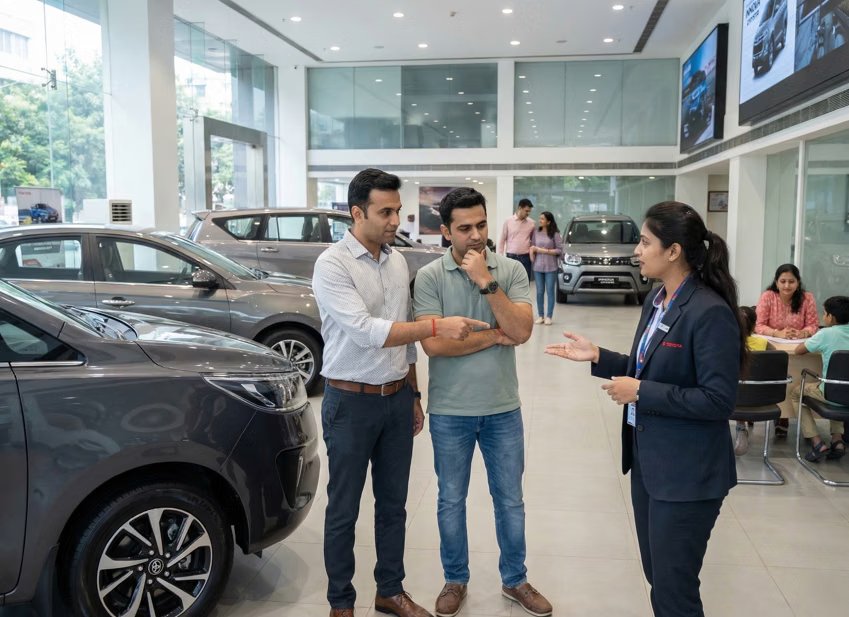
Passenger vehicle sales in India leapt 30.7% year‑on‑year to 13.6 lakh units in the July‑September quarter, according to SIAM. Total domestic sales across all categories hit 83.9 lakh units, an 18.2% rise from the same period last year.
Utility vehicles still dominated the passenger segment, making up 68% of sales with 9.2 lakh units, up 34.2%. Passenger cars sold 3.99 lakh units, up 24.9%, while vans dipped modestly at 42,988 units, a 15.3% gain.
Two‑wheelers grew 15.2% to 64.3 lakh units. Scooters surged 27.7% to 26.61 lakh units, motorcycles rose 7.4% to 36.20 lakh units, and mopeds climbed 15.4% to 1.52 lakh units. Export sales for two‑wheelers hit 1.65 million units, up 27.7%.
Three‑wheelers saw a 23.6% jump to 2.85 lakh units, with passenger carriers up 22.9% and goods carriers up 33.8%. Commercial vehicles were the strongest driver, climbing 28.7% to 3.09 lakh units; medium and heavy commercial vehicles rose 37.0% to 1.21 lakh units, while light commercial vehicles grew 23.8% to 1.88 lakh units.
The lift is largely attributed to GST 2.0 price cuts, a lower base from last year, and aggressive financing schemes that cut the cost of ownership. Rural and urban demand swelled, while infrastructure spending helped pull freight and logistics into the spotlight. Exporters noted that the West‑Asia crisis and logistics constraints kept passenger vehicle exports down by 5.2%, yet two‑wheelers and three‑wheelers still saw double‑digit gains.
Looking ahead, SIAM expects a tempered but positive growth in the second half of FY2026‑27, with the festive season, new launches, and fleet replacement acting as key catalysts. The PARIVARTAN scheme will keep commercial vehicle demand buoyant, though a rise in interest rates could dampen three‑wheeler sales. Buyers should keep an eye on upcoming models like the Tata Tigor EV and MG ZS EV, which are slated to roll out in the coming months, riding the wave of lower prices and improved charging infrastructure.