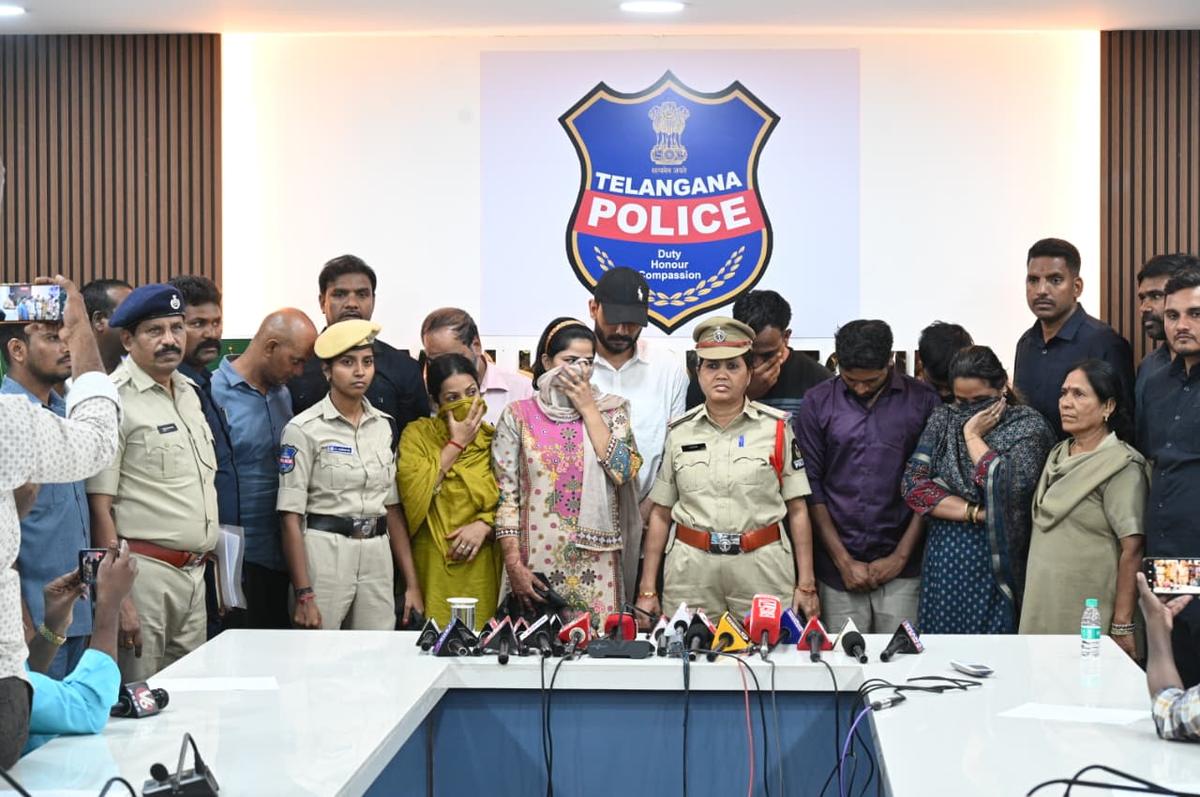
Malkajgiri police have cracked open a sprawling illicit human egg harvesting racket in Hyderabad, where commercial brokers profited up to ₹3 lakh per cycle while paying impoverished donors a mere ₹20,000 to ₹30,000. Simultaneous police raids across the city led to the rescue of over 40 women, exposing calculated exploitation within unregulated corridors of assisted reproductive technology. Medical teams immediately initiated blood-group profiles, clinical fitness evaluations, and treatment history verifications to assess the donors' physical condition.
Brokers targeted women from economically weaker backgrounds, luring them from West Bengal, Uttar Pradesh, and Maharashtra before transporting them into Hyderabad. The exploitation was methodical. Intermediaries housed the donors, shuttled them between clinical visits, and frequently forged patient signatures on mandatory documentation to bypass scrutiny. Police confirmed that most donors had no medical comprehension of the ovarian stimulation protocols or the invasive retrieval surgeries they were subjected to undergo.
Eight intermediaries arrested during the raids have been remanded to judicial custody, with detectives tracing financial trails directly into licensed fertility establishments. The web runs deep. Investigators are examining connections to operators tied to Universal Srushti Fertility Centres—a network previously implicated in unauthorised surrogacy. While several private clinics moved swiftly to fire implicated staff once enforcement teams moved in, police are expanding inspections to establish how doctors and embryologists processed donors with forged credentials.
And regulatory scrutiny is intensifying across Telangana. Police are serving formal notices to the District Medical and Health Officer (DMHO) to initiate on-site audits of Assisted Reproductive Technology (ART) and fertility clinics. The enforcement follows a broader state sweep that flagged 50 fertility clinics for violating statutory clinical guidelines, leading to the cancellation of two facility registrations.
Health officials emphasize that repeated oocyte retrieval cycles carry acute clinical hazards—including ovarian hyperstimulation syndrome, pelvic infection, and long-term endocrine dysfunction. Legitimate reproductive procedures demand documented clinical intervals, independent medical counseling, and rigorous verification under statutory ART rules. Police stated that additional clinic heads and financial intermediaries will be summoned as bank statements and treatment logs are matched against donor statements.