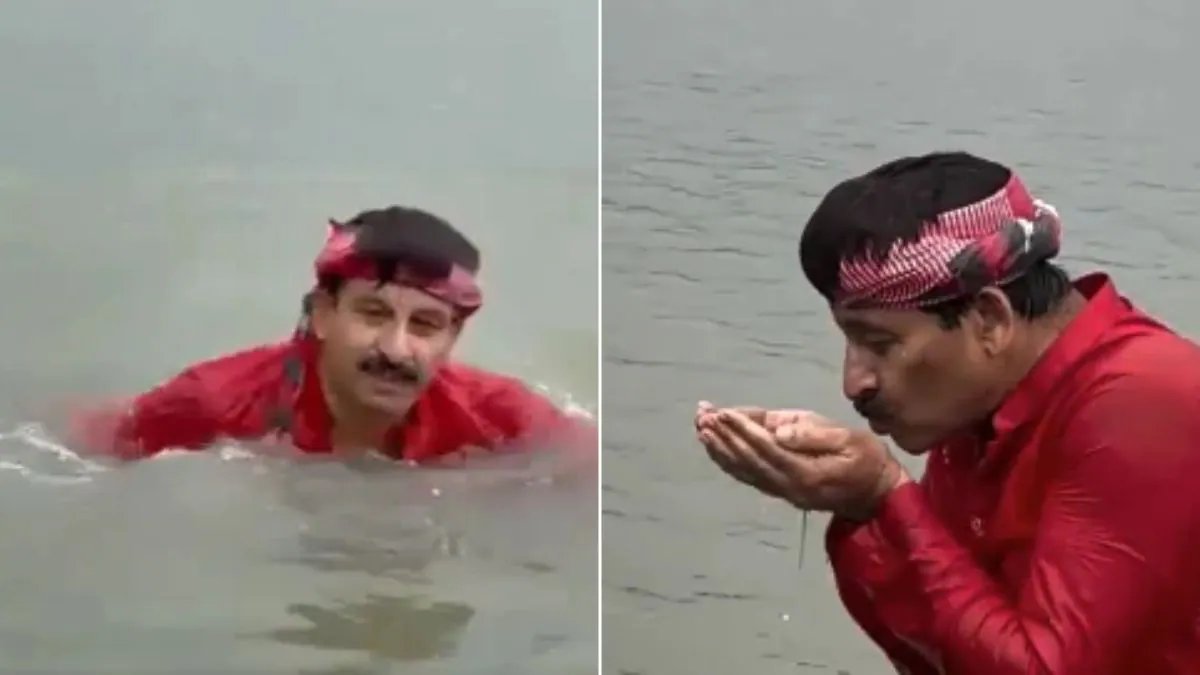
BJP MP Manoj Tiwari announced that the Yamuna’s pollution levels had dropped by half after a cleanup drive, citing a dip he took at Sonia Vihar Ghat on Oct. 29, 2026. He said the presence of migratory birds and a dramatic change in Biochemical Oxygen Demand readings confirmed the improvement.
The Delhi government claims that it has cleaned 50% of the Yamuna in a year and a half, a figure that Tiwari highlighted as evidence of its success. He blamed the AAP for failing to maintain the river’s cleanliness, alleging that the opposition’s track record was worse.
AAP’s spokesman Saurabh Bharadwaj fired back with a challenge, calling the BJP’s claim a fraud and pointing to DPCC data that showed the 26‑km stretch from Palla to Wazirabad was cleaner under the previous AAP administration. He urged Tiwari and Water Minister Parvesh Verma to prove the claim by drinking at Kalindi Kunj Ghat.
According to NDTV Datafy’s analysis, BOD levels at the ISBT Bridge reached 30 mg/l and at ITO 18 mg/l—well above the 3 mg/l bathing‑water standard—contrasting sharply with the 2 mg/l reading at Palla. These figures suggest that while upstream the river meets safety limits, downstream it remains heavily polluted.
The debate has moved beyond rhetoric; the AAP challenge will be tested in the next parliamentary session where water‑quality reports and independent assessments are slated for presentation. Both parties have promised to present empirical evidence, turning the Yamuna’s fate into a high‑stakes political contest.