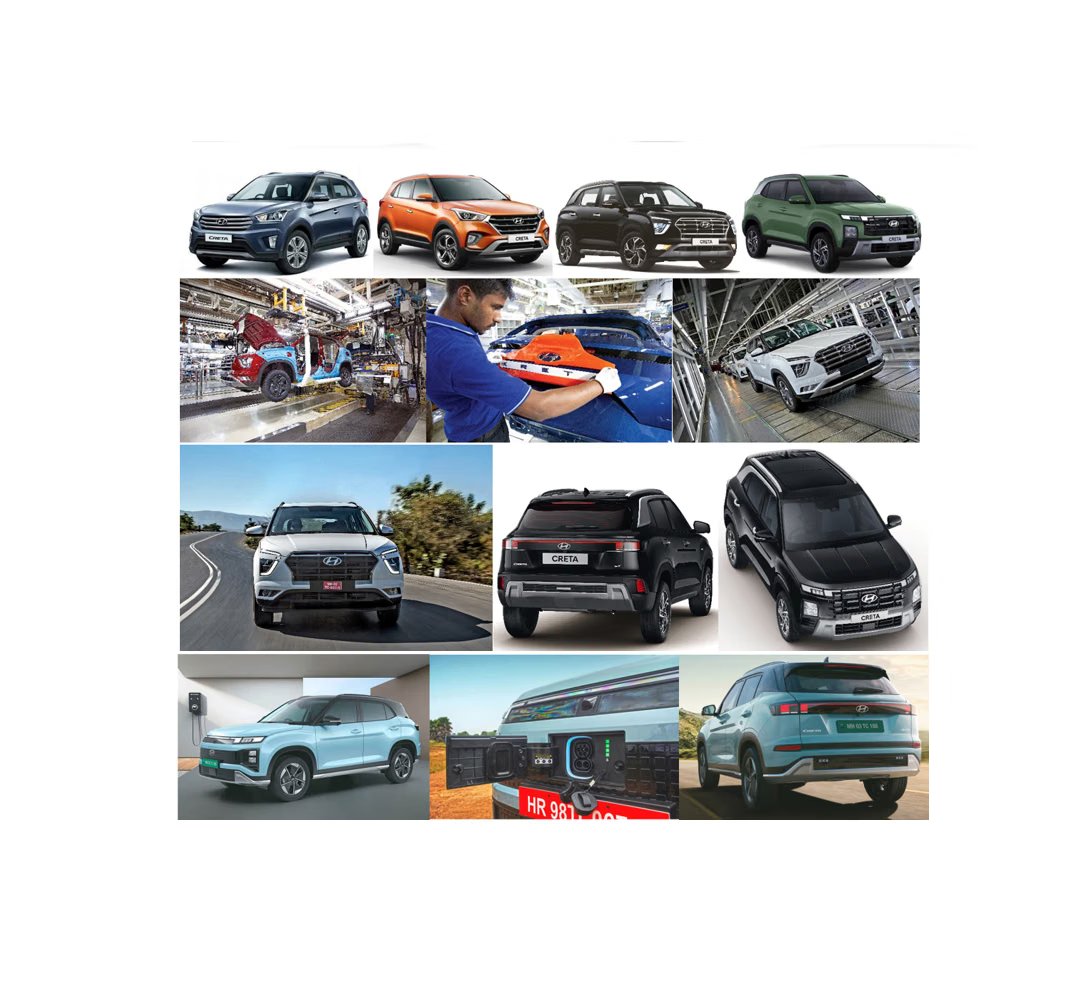
₹10.91 lakh for the Petrol‑Manual version puts the Creta at the bottom of the price ladder for midsize SUVs. The top‑end Diesel King Knight AT tops out at ₹20.14 lakh, while the electric avatar starts at ₹18.03 lakh, giving buyers a spectrum from budget to premium.
The price gap between the Creta and its closest rivals is striking. Tata Nexon’s entry point is ₹12.20 lakh, Maruti Grand Vitara starts at ₹13.05 lakh, and the Kia Seltos hovers around ₹12.50 lakh. Yet, the Creta’s 27 variants and four gearboxes—manual, CVT, DCT, and automatic—offer a breadth of choice that rivals struggle to match.
Since its 2015 debut, the Creta has racked up 1.51 million domestic sales, accounting for 55% of Hyundai’s SUV output. That figure translates to a market share of roughly 35% in the midsize segment, eclipsing the next best seller, the Tata Nexon, by a margin of about 10,000 units in FY2026.
Hyundai’s latest facelift, launched in January 2024, refreshed the exterior and upgraded the interior, propelling sales to 100,000 units in just six months—a record for the segment. The company also hinted at a third‑generation model before 2030, likely to sit on the same K3 platform as the Kia Seltos, adding hybrid options and a new infotainment stack.
The Creta is already available across India, with the new electric version rolling out in major metros this year. Buyers can expect the forthcoming third‑gen SUV to hit showrooms by 2029, offering a larger chassis and a stronger powertrain that may tilt the balance further in its favour.