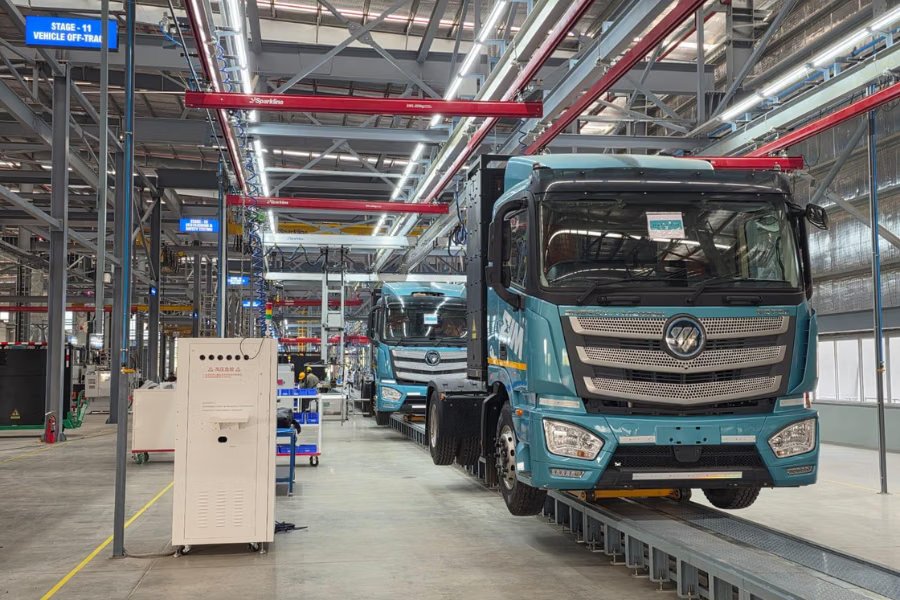
The new plant in Talegaon, Pune, broke ground last year and opened on October 14, 2026, after a ₹500 cr investment. It can churn out 5,000 electric heavy‑truck chassis per shift, laying the groundwork for a full‑scale rollout of E‑Motion’s fleet.
The facility is more than just an assembly line; it houses a lithium‑ion battery pack unit and an independent testing lab, all under one roof. That integration cuts lead times for battery‑pack integration and lets the company run real‑world tests on its own chassis.
Battery swapping is a headline feature. E‑Motion’s megawatt‑scale hubs will swap batteries in under seven minutes for both its own trucks and other CCS‑2‑standard vehicles. The partnership with Shanghai Enneagon supplies the robotic swap system, while CATL provides the chemistry that keeps the packs lightweight and durable.
The plant is the first phase of a ₹1,000 cr expansion plan in Maharashtra, expected to create more than 2,000 direct and indirect jobs. R&D and IT teams will also grow, feeding a broader ecosystem of design and software support for the truck line.
In the broader market, Tata’s Strada EV and Mahindra’s eT2 have already taken market share in the 4,000‑to‑5,000 km freight segment. E‑Motion’s entry with a dedicated plant and a rapid swap network gives operators a new option to hit the road quicker and with lower upfront battery costs.
Policy support is also in play: the Indian government’s EV mandate for 30% of heavy goods vehicles by 2030, coupled with tax incentives for battery production, nudges operators toward these new trucks. The plant’s launch on October 14, 2026, marks the first tangible step in that direction.
What to watch next? The rollout of the swapping hubs across major highways, the first delivery of E‑Motion trucks to logistics fleets, and how quickly the company can scale from 5,000 vehicles per shift to full production will determine its market impact.
Buyers looking at an electric freight solution should keep an eye on E‑Motion’s pricing, range, and charging times once the first trucks hit the road in early 2027.