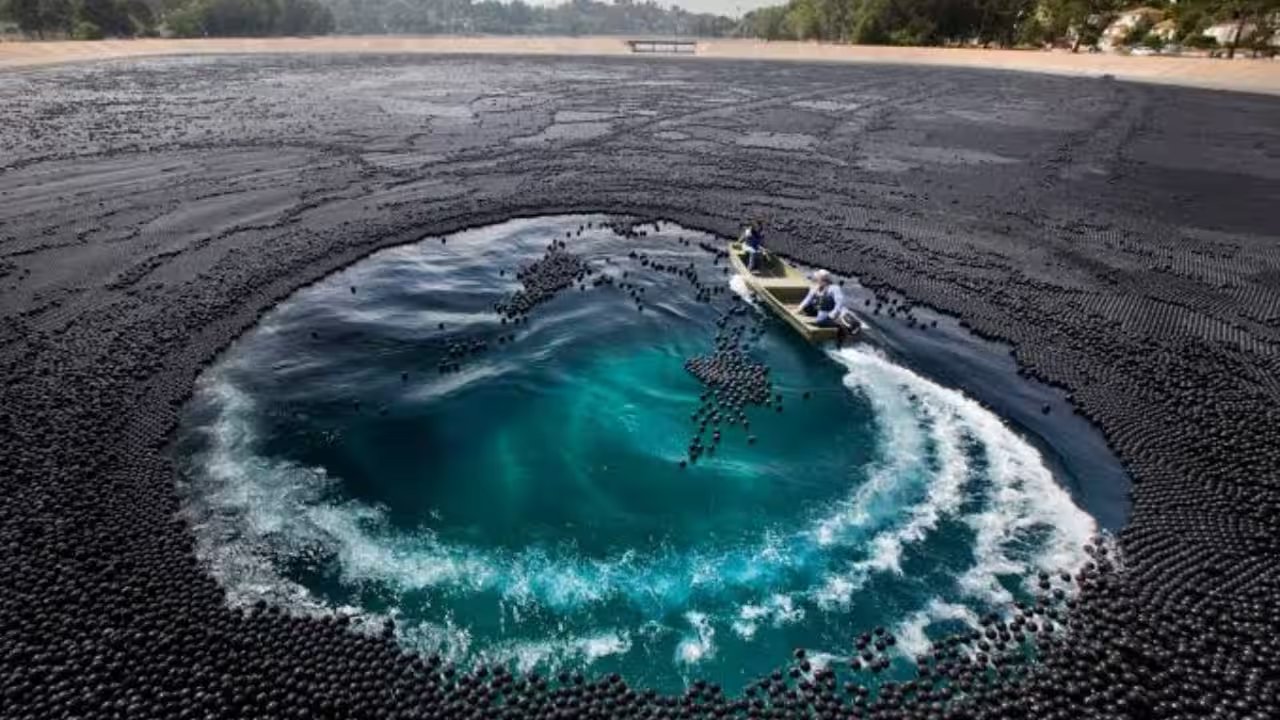
Los Angeles had been sprinkling black polyethylene balls over its reservoir since 2008, but in 2015 the city mounted a full‑coverage assault, deploying 96 million units across 175 acres to curb evaporation and keep harmful bromate levels in check. The Department of Water and Power estimates the coating cuts evaporation by 85‑90% during drought, saving roughly 300 million gallons a year—enough for 8,100 households.
In a 2018 Nature Sustainability study, researchers from MIT, Imperial College London and the University of Twente traced the water that went into making those balls. Polyethylene’s production chain—oil, natural gas and electricity—drains water at different rates, and the team found that the 96 million balls required somewhere between 66 and 766 million gallons of water. That range hinges on ball thickness and where the plastics were manufactured, the paper noted.
The research team compared the footprint to Olympic‑sized swimming pools, estimating that the balls used the equivalent of 100 to 1,000 pools. They also calculated that it would take one to 2½ years of reduced evaporation for the water saved to equal the water spent producing the balls. By 2018, the balls had been in place for three years, so they were likely already past the breakeven point—though the benefit ebbs and flows with temperature and humidity.
A longtime resident of the San Fernando Valley, who has watched the reservoir for three decades, told a local paper that the shade balls have made the water look cleaner and less cloudy, even though he knows the hidden cost behind the glossy surface.
City officials say they are now testing alternative materials—such as biodegradable aggregates and solar‑powered shade nets—to reduce the future water footprint. The Los Angeles Department of Water and Power plans to monitor evaporation rates closely and will consider installing solar panels on the reservoir to offset the energy used in ball production.