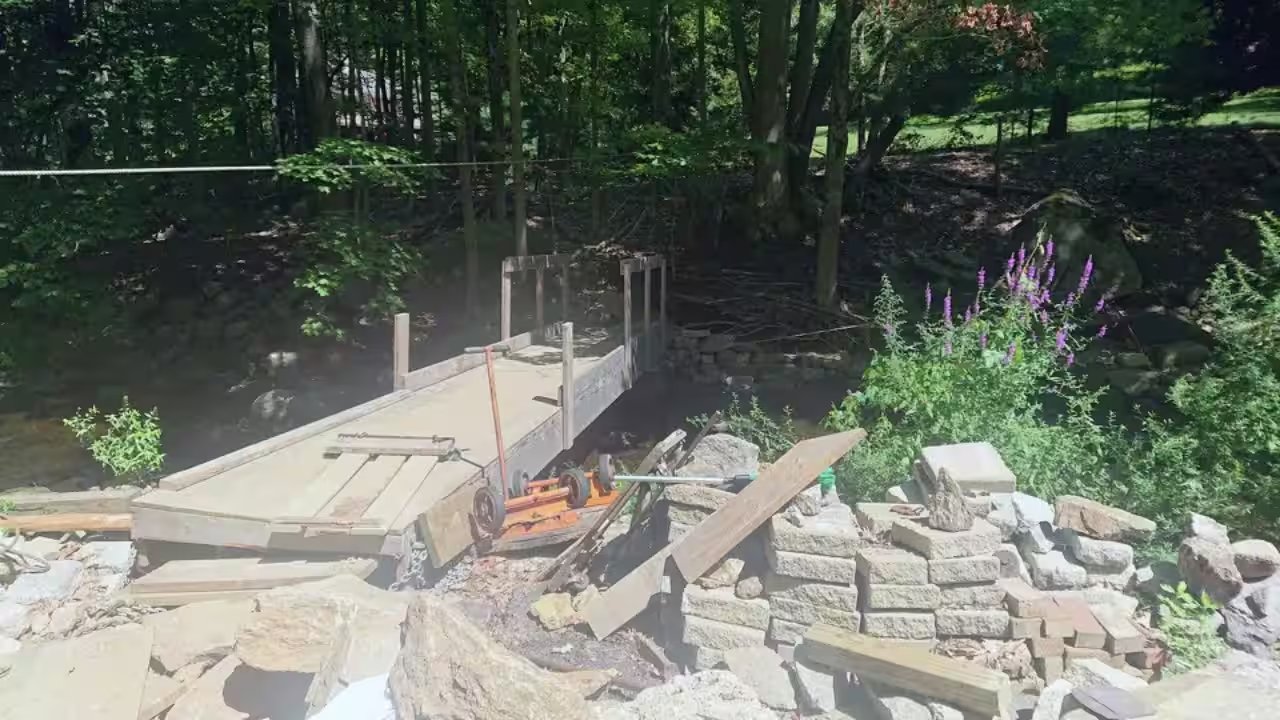
Mark Bjorken, a 74‑year‑old tree‑service entrepreneur, erected a wooden bridge over Limekiln Brook in 2023 after a neighbor reported he had moved rocks and reinforced both banks. The town’s wetlands commission found the work altered the waterway’s flow and directed Bjorken to either restore the brook to its pre‑work state or secure a permit.
Bjorken argued the construction was routine maintenance—removing debris, clearing diseased trees, and repairing stones that lined the bank—meant to protect his home from erosion. He claimed the bridge and stonework were part of his professional practice as a “land artist,” describing the property as an artistic canvas.
The commission rejected his request, saying the activities exceeded ordinary landscaping and required formal approval. Bjorken failed to provide sufficient documentation to qualify for an exemption under residential maintenance.
On September 10, 2026, Connecticut Superior Court Judge Barbara Brazzel‑Massaro issued a 10‑page ruling that upheld the commission’s decision. She held that the burden of proof lay with Bjorken to demonstrate an exemption, and that the wetlands authority had properly ruled that the work could not be authorized without a permit.
The ruling obliges Bjorken to restore Limekiln Brook to its original condition or apply for a wetlands permit. He may appeal the judgment, but any future work on the waterway will require the town’s approval.