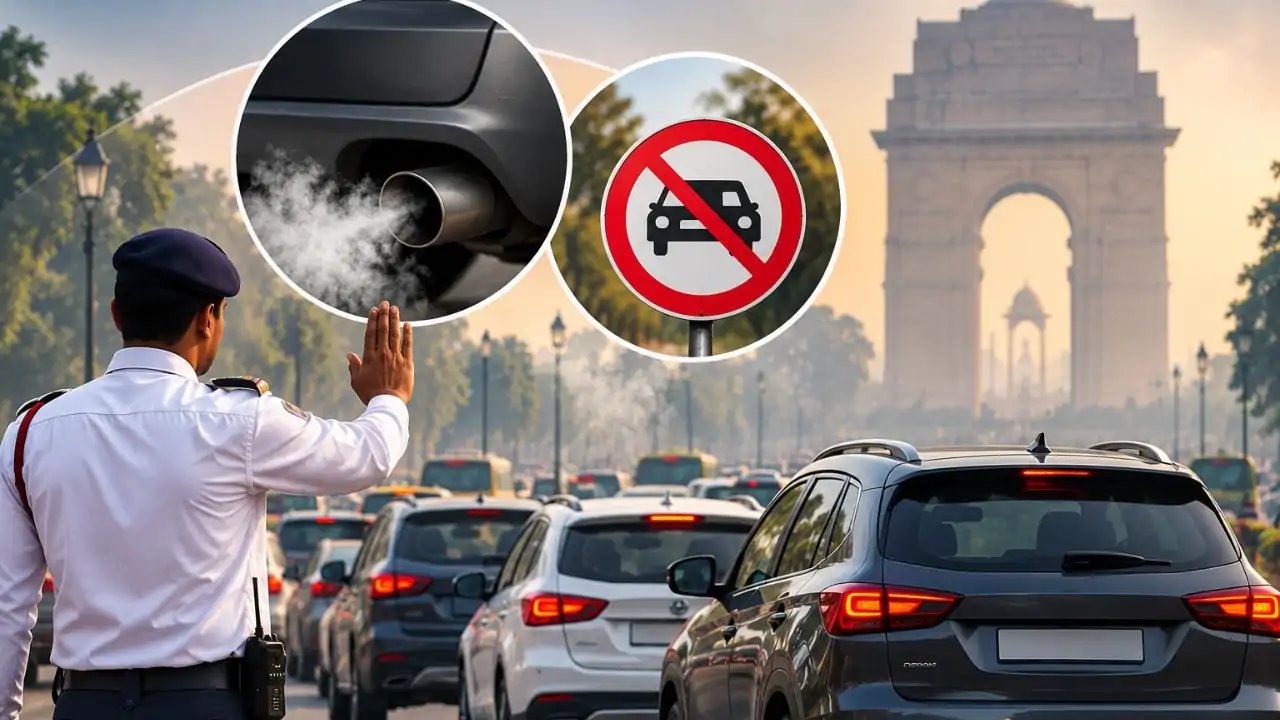
If you commute from Noida, Gurugram, or Ghaziabad, the date on your calendar matters more than the one on your RC. From November 1, Delhi is barring petrol and diesel cars registered outside the capital if they don't meet the BS-VI emission standard. CNG and electric vehicles are safe, but for everyone else, this is a hard stop. The panic? Knowing exactly where your car sits on that BS4 vs. BS6 line. It’s not just about the year you bought the car; it’s about the specific emission certificate.
Don’t guess based on the registration year. That’s the biggest trap. BS-VI became mandatory on April 1, 2020, but dealers were still clearing BS-IV stock at discounts right up until that deadline. A car registered in 2019 or even early 2020 could very well be a BS-IV unit. Check the manufacturing date on your papers. If your car was built before its model line switched to BS-VI, you’re stuck with the older emission norm. For instance, some SUVs didn’t switch to BS-VI production until late January 2020. If your VIN shows an earlier date, it’s likely BS-IV.
The quickest way to settle this is the government’s Vahan portal. Go to 'Know Your Vehicle Details,' punch in your registration number, and look for the 'Emission Norm' field. It will explicitly state 'Bharat Stage IV' or 'Bharat Stage VI.' This is your primary source of truth. The windscreen sticker is a secondary check: a 1cm green strip at the top means BS-VI. But stickers get replaced, damaged, or lost. If your sticker is missing or you’ve bought a used car, don’t trust the visual cue alone. Cross-reference with Vahan or Form 22, the manufacturer’s compliance certificate, which has a dedicated field for emission norms.
If your documents are silent on the issue, take your chassis (VIN) number to an authorized dealer. They can pull the certification for that specific vehicle. You can also decode the VIN online to find the exact manufacturing month. If you’re driving a goods vehicle, the rules are stricter; CAQM has removed exemptions for older BS-IV and pre-BS-IV goods vehicles under GRAP Stages III and IV. For private cars, the Nov 1 ban is the immediate concern. Keep a screenshot of your Vahan record handy. If a traffic officer asks, showing that digital proof is faster and more reliable than arguing about your car’s age.