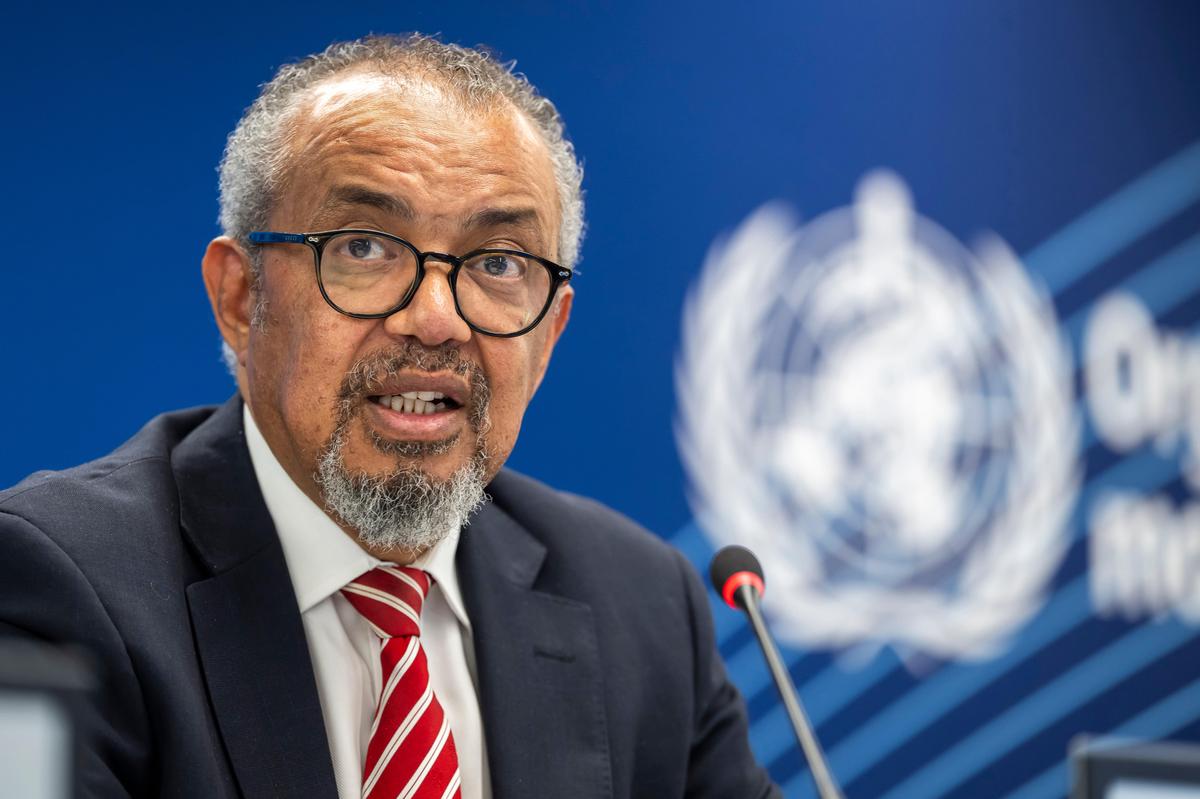
GENEVA — Disease outbreaks do not negotiate with borders. Speaking before delegates at the opening of the ninth treaty negotiation round on Monday, World Health Organization Director-General Tedros Adhanom Ghebreyesus issued a blunt warning to national delegations: settle your differences and finish the global pandemic accord now.
The stakes are mounting on hospital wards thousands of miles away. In the Democratic Republic of Congo, a brutal Ebola epidemic declared in May has already killed nearly 5,000 people out of more than 10,000 confirmed infections. Seven months earlier, an April hantavirus flare-up claimed three lives aboard a cruise ship—a stark reminder of how rapidly airborne and viral killers hitch rides along global transit corridors.
"A pathogen threat anywhere can become a threat everywhere, to people of every country," Tedros warned negotiators, stressing that completing the pact is fundamentally about safeguarding human lives. "The outbreak of hantavirus earlier this year, and the ongoing Ebola epidemic in DRC remind us of this threat."
The lesson of Covid-19 was simple. No single country can wall itself off from infectious disaster. Yet wealthy capitals and developing nations remain deadlocked over basic mechanics. While member states adopted an overarching Pandemic Agreement framework in May 2025, they punted the most combustible dispute down the road—leaving public health systems exposed to the next fast-moving contagion.
The sticking point is the treaty's Pathogen Access and Benefit-Sharing system, known across diplomatic circles as PABS. Under the proposed mechanism, countries that identify dangerous emerging pathogens agree to upload biological samples and genomic sequences to international repositories immediately. In return, drugmakers and developed nations must guarantee low- and middle-income countries real-time access to a fixed share of resulting vaccines, diagnostic tests, and antiviral therapies.
Tedros labeled PABS the final missing piece of the global architecture. During the Covid crisis, pharmaceutical laboratories synthesized inoculations in record time, yet high-income governments hoarded supply while vulnerable populations waited empty-handed. That disparity cost millions of lives, prolonged community transmission, and provided breathing room for dangerous variants to mutate.
Whether negotiators can close the divide remains the central test of the Geneva summit. With delegations gathered for their ninth formal round of talks, the WHO leadership is demanding a clean text that binds governments to concrete supply commitments before the next pathogen strikes.