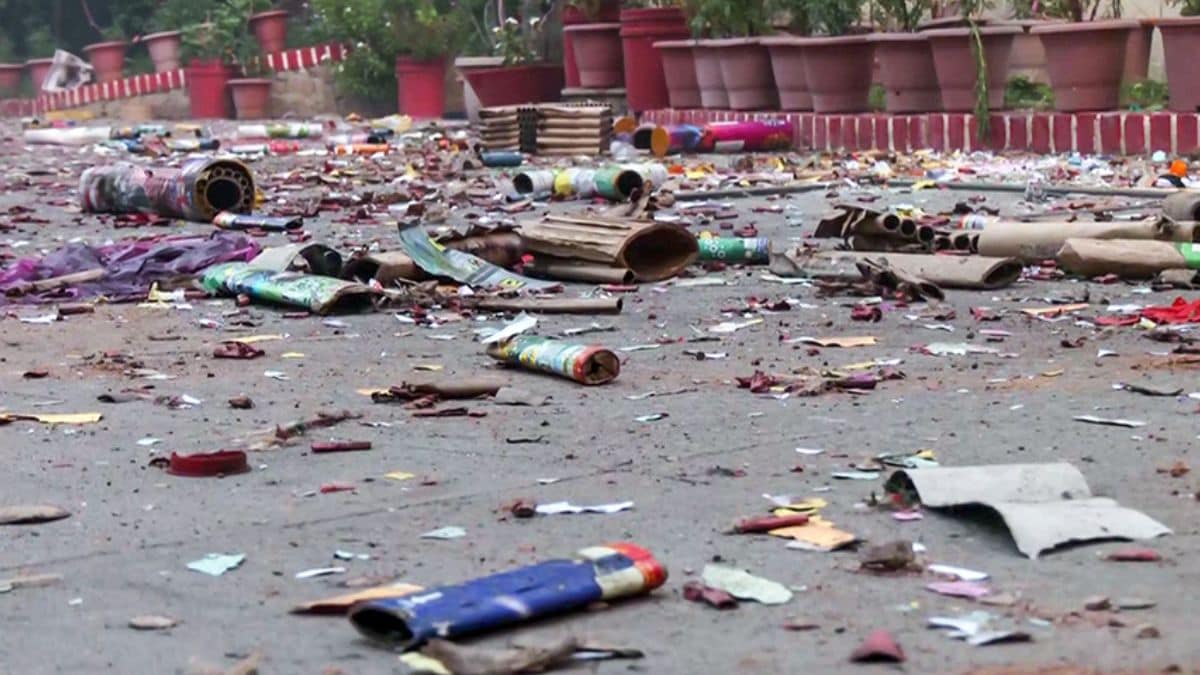
One night of dense smoke does not simply blow away with the morning breeze.
Even as shifting winds begin to clear the post-festival haze, environmental scientists and pulmonary specialists warn that inhaling thick firecracker fumes inflicts lasting damage on human respiratory tracts. The damage starts immediately. Fine particulate matter—chiefly microscopic PM2.5 particles—punches past the body's natural nasal defenses, driving chemical irritants deep into lung tissue and triggering acute flare-ups for anyone with underlying cardiovascular or bronchial conditions.
Post-festival hospital records show the physical toll. Across urban centers and rural districts alike, emergency rooms log a sharp rise in patient admissions for acute wheezing, bronchial asthma attacks, and sudden escalations of chronic obstructive pulmonary disease. The smoke hits unevenly. Children and the elderly bear the brunt of the toxic plume.
Anumita Roychowdhury, Executive Director of the Centre for Science and Environment (CSE), pointed out that while changing atmospheric currents eventually disperse accumulated pollutants, the short-term biological fallout remains severe. Children breathe faster and possess developing respiratory tracts that lack adult defense systems. Elderly residents, meanwhile, face depleted physical endurance, meaning their lungs and circulatory systems struggle to clear dense soot and metallic residues.
Every exploding firecracker detonates a toxic cocktail. Manufacturers pack these devices with primary propellants such as charcoal, sulfur, potassium nitrate, chlorate, perchlorate, and manganese. Yet the most hazardous toxins stem from the metal salts blended into the powder to produce vivid colors. Barium compounds yield intense green flashes. Strontium carbonate and lithium carbonate produce deep red, calcium chloride burns orange, sodium chloride turns bright yellow, and copper compounds spark blue. When iron burns, it leaves golden glitter trails, while aluminium, magnesium, and titanium powders blast silver and brilliant white light across the sky.
Upon detonation, these metals shatter into an invisible, inhalable mist. Firecrackers release a mixture of coarse PM10 dust, fine PM2.5 particles, ultrafine particles, and nanoparticles. Because PM2.5 particles remain suspended in the air for extended periods, they remain active long after the street celebrations end.
Winter weather will compound the threat in the coming weeks. Seasonal temperature inversion—where cold, stagnant surface air traps pollutants beneath a layer of warm air—prevents chemical particulates from rising and dispersing. Without continuous, year-round controls on baseline emission sources, toxic residues linger over residential neighborhoods, leaving doctors to recommend that high-risk individuals keep rescue inhalers within reach and avoid strenuous outdoor exercise during early morning hours.